
Why Is My Newborn Gagging While Sleeping? Causes & Fixes
Why is my newborn gagging while sleeping? It’s a concern many parents have, but in most cases, it’s completely normal. Newborns have a highly sensitive gag reflex that triggers easily when milk, saliva, or mucus touches the back of the throat, even during sleep. This reflex is a built-in safety mechanism that protects your baby's airway from blockage. Occasional gagging that resolves on its own is not a cause for concern. However, if gagging is frequent, forceful, accompanied by breathing difficulty, or your baby seems distressed, it is worth speaking to your pediatrician.
Table of Content
Is It Normal for Newborns to Gag While Sleeping?
Common Cause of Newborn Gagging While Sleeping
Age-by-Age Guide: Gagging in the First Months
What to Do When Your Newborn Gags While Sleeping
Newborn Gagging vs Choking
Starting Solids & Gagging

Is It Normal for Newborns to Gag While Sleeping?
Yes, in most cases, newborn gagging during sleep is completely normal and expected. Newborns are still developing the coordination needed to manage swallowing, breathing, and digestion simultaneously. Their gag reflex is also positioned further forward in the mouth compared to adults, which makes it more sensitive and easier to trigger. Even a small pool of saliva or a tiny amount of milk coming back up the food pipe is enough to set it off.
Think of the gag reflex as your baby's built-in alarm system. When something approaches the airway, it contracts the muscles at the back of the throat and pushes the material forward and out, protecting your baby from choking. This is a good thing, even when it looks frightening to watch. That said, it is important to track the pattern. Gagging that happens occasionally and resolves on its own is normal. Gagging that is frequent, increasing in intensity, paired with poor feeding, poor weight gain, or breathing changes calls for a pediatrician visit.
Common Reasons for "Why Is My Newborn Gagging While Sleeping"
There is rarely one single cause, usually it is a combination of factors related to your baby's developmental stage and feeding patterns.

Immature and Sensitive Gag Reflex
Newborns have a gag reflex that is stronger and positioned more towards the front of the mouth compared to adults. This means it can be triggered even without a clear cause, sometimes just from normal swallowing movements or throat vibrations during sleep. As your baby matures, the reflex becomes less hair-trigger sensitive, typically settling down around 4-6 months of age.
Gag Reflex - A natural protective reaction where the throat automatically contracts when something touches the back of the tongue or throat, helping prevent choking.
Milk or Saliva in the Throat
When your baby lies flat, gravity is no longer helping keep fluids in the stomach and away from the airway. Small amounts of milk or saliva can move toward the back of the throat and trigger gagging. Swallowing slows during sleep, so the throat is clearing itself slow than it would be while awake.
Gastroesophageal Reflux (GER and GERD)
Reflux is one of the most common causes of newborn gagging during sleep. The valve between the esophagus and stomach is underdeveloped in newborns, allowing stomach contents to travel back upward. This can trigger gagging even without visible spit-up. often referred to as silent reflux. According to the American Academy of Pediatrics (AAP), gastroesophageal reflux is very common in infants and usually improves on its own by 12-18 months as the digestive system matures.
Signs that reflux may be behind the gagging include:
Gagging that consistently happens after feeds
Frequent swallowing or throat-clearing movements
Arching the back during or after feeds
Irritability during feeding
Poor weight gain
Excess Saliva or Nasal Mucus (Post-Nasal Drip)
Newborns produce more saliva than they can swallow, especially during the early weeks. During a cold or congestion, mucus from the nasal passages can drip down into the throat (post-nasal drip) and trigger the gag reflex during sleep. This is especially common between 2-4 months when saliva production increases more as the body prepares for teething and solids.
Gagging can sometimes be due to post-nasal drip during a cold. Using a humidifier and keeping the baby comfortable can help. - from our Mom Insider community
Lung Fluid After Birth
This is a cause many parents don't know about. Before birth, a baby's lungs are filled with fluid. During labor and delivery, most of this fluid is squeezed out during a vaginal birth or absorbed by the body. However, in some newborns (particularly those born via C-section or very quickly), some fluid remains in the lungs for a day or two after birth. As the body continues clearing this fluid, it can collect at the back of the throat, causing gagging and a distinctive gurgling sound. This typically resolves within 48-72 hours without intervention, but mention it to your baby's care team if it continues.
Overfeeding
A newborn's stomach is approximately the size of a walnut in the first weeks of life, around 20-30ml. When a baby takes in more milk than the stomach can hold, the excess is more likely to reflux back up and trigger gagging. Overfeeding can happen unintentionally, especially when feeding is used to comfort a fussy baby or when milk flow is fast.
Feeding methods can also play a role, understanding the possible side effects of bottle feeding can help you identify triggers behind gagging episodes.
Fast Milk Flow
During breastfeeding, a strong let-down reflex can release milk faster than the baby can swallow, causing them to gulp, sputter, and gag. With bottle feeding, a nipple with too large a hole can have the same effect. The excess milk may trigger gagging later during sleep.
Gas and Digestive Discomfort
Trapped gas causes abdominal pressure that can push stomach contents upward toward the esophagus. A gassy, uncomfortable baby may squirm, arch, and potentially gag as a secondary result of this internal pressure, especially during sleep when nothing is distracting them from the discomfort.
Laryngomalacia (Less Common)
Laryngomalacia is a condition where the tissue above the voice box (larynx) is soft and floppy, and partially collapses during breathing. It is the most common cause of noisy breathing in newborns. In some cases, it can also cause gagging, especially during feeds and sleep. Most cases are mild and resolve by 18-20 months without treatment, but a pediatrician or ENT should evaluate it if noisy breathing is persistent.
Newborn Gagging After Feeding
Gagging is more common after feeds. When a baby lies down soon after feeding, milk can come back up slightly, triggering the gag reflex. This is especially common if the baby falls asleep while feeding.
Growth Spurts & Feeding Changes
During growth spurts, babies feed more often and sometimes in larger amounts. This sudden change can temporarily overwhelm their digestive system, leading to more spit-up and gagging episodes. This phase usually settles as the baby adjusts.
Growth Spurts - Short periods when a baby or child grows quickly in size and development. During growth spurts, babies may seem hungrier than usual, feed more often, sleep differently, or become fussier, as their body is rapidly developing.
Age-by-Age Guide: Gagging in the First Months
Newborn to 2 Week Old
Gagging at this stage is very common. The gag reflex is at its most sensitive, swallowing coordination is new, and residual birth fluid may still be clearing. As long as your baby is feeding well and breathing comfortably between episodes, occasional gagging is typically not a concern.
1 Month Old Baby Gagging in Sleep
By 1 month, gagging can still be common, especially due to feeding-related reasons. Reflux (including silent reflux) and lying flat after feeds are the most frequent contributors. Not burping effectively can also play a role. Keeping your baby upright for 20-30 minutes after each feed can help reduce episodes.
2 to 4 Months
Gagging may increase between 2 and 4 months as saliva production increases. Babies also begin to discover their hands and bring them to their mouths, which can trigger the gag reflex. If your baby is feeding well, gaining weight, and not showing signs of distress, this phase is normal and typically self-resolving.
4 to 6 Months
As your baby approaches the introduction of solids, gagging may increase again as they explore textures for the first time. The gag reflex begins to move further back in the mouth around 6 months, which is part of why this timing aligns with the readiness for solid foods.
What to Do When Your Newborn Gags While Sleeping
In most cases, your baby will resolve the gagging episode on their own. However, these practical steps can reduce how often it happens.
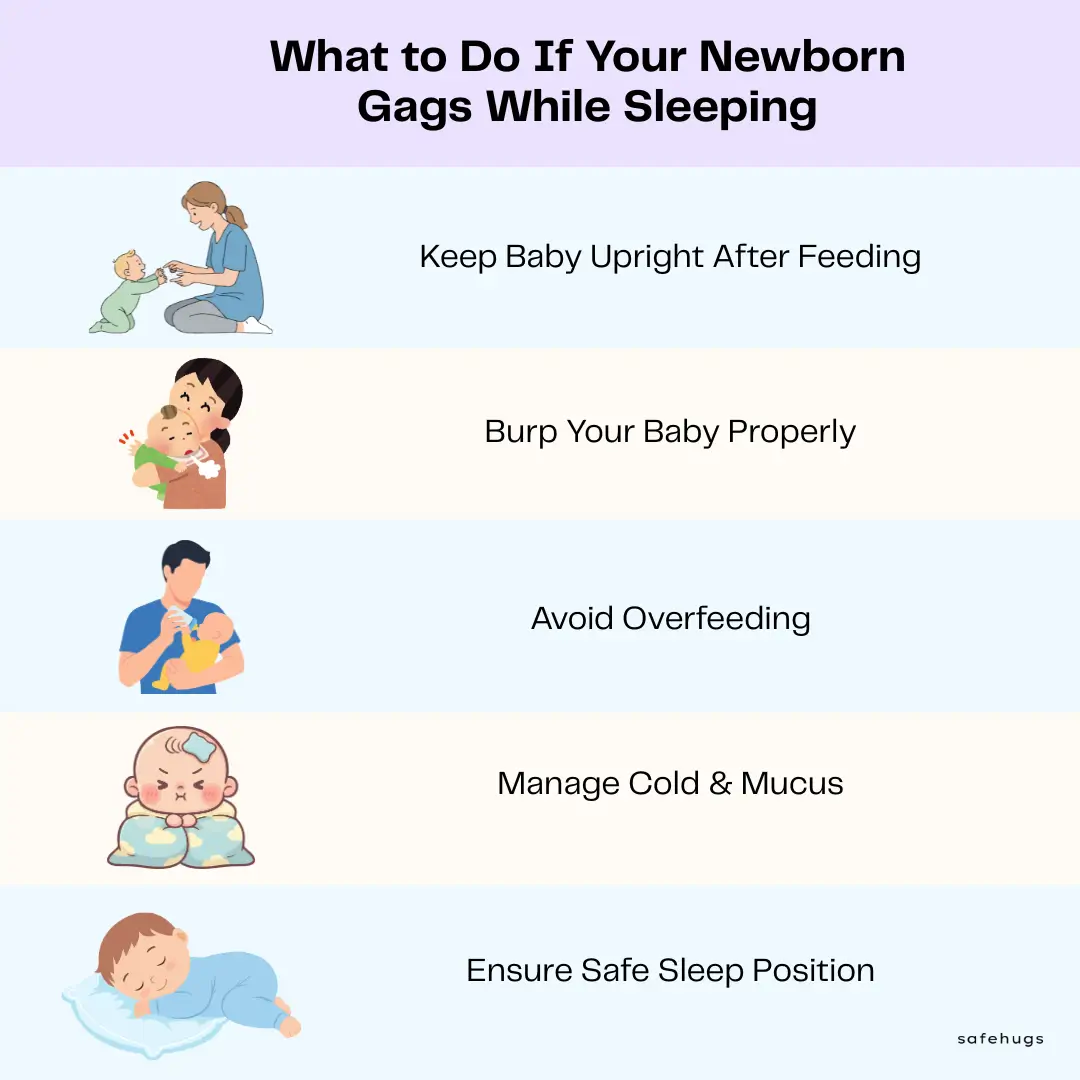
Keep baby upright after every feed. Hold your baby upright (against your chest or on your lap with head supported) for 20-30 minutes after each feed. This allows gravity to help keep milk in the stomach while digestion begins.
Burp thoroughly and mid-feed. Don't wait until the end of a feed to burp. Burp through middle as well, especially if your baby tends to feed quickly. Trapped air pushes stomach contents upward and increases the likelihood of reflux and gagging.
Use a slow-flow bottle nipple. If bottle feeding, make sure you are using a nipple rated for newborns (Stage 1 / Slow Flow). A nipple with too large a hole overwhelms the baby's ability to swallow at pace, leading to gulping, gas, and increased reflux.
Try paced bottle feeding. Hold the bottle horizontally rather than tilted steeply. This slows the milk flow and lets your baby control the pace, reducing the risk of overfeeding and air swallowing.
Address nasal congestion promptly. If your baby has a cold, use a bulb syringe or nasal aspirator to clear the nose before sleep. A cool-mist humidifier in the room can help keep mucus from thickening and dripping.
Stick to safe sleep on a flat surface. Always place your baby on their back on a firm, flat surface for sleep. Do not use wedges, positioners, or inclined sleepers, the AAP advises against these, as they have not been shown to reduce reflux and can pose breathing risks. Despite the worry many parents have, back sleeping does not increase the risk of choking, and the gag reflex protects the airway.
Watch for patterns. Keep a simple log of when gagging happens, before or after feeds, how long after, how frequently. This information is invaluable if you end up speaking to your pediatrician.
Newborn Gagging vs Choking
It is important for parents to understand the difference between gagging and choking, as they are often confused. Gagging is a normal reflex and is usually accompanied by coughing, sputtering, or noise. The baby is able to manage it on their own, and it typically resolves within seconds. Choking, on the other hand, is more serious and often silent. A choking baby may struggle to breathe, show signs of distress, or have a change in skin colour. While gagging is the body's natural way of protecting the airway, choking requires immediate attention and intervention. Knowing this difference can help parents respond calmly and appropriately.
Can Gagging Lead to Choking?
Gagging itself does not usually lead to choking. In fact, it is a protective mechanism designed to prevent choking by pushing food or liquid away from the airway. However, certain situations can increase the risk, such as offering food that is not suitable for the baby's age, feeding while the baby is lying down, or leaving the baby unattended during meals. As long as feeding is done safely and appropriately, gagging is not something that typically progresses into choking.
Starting Solids & Gagging
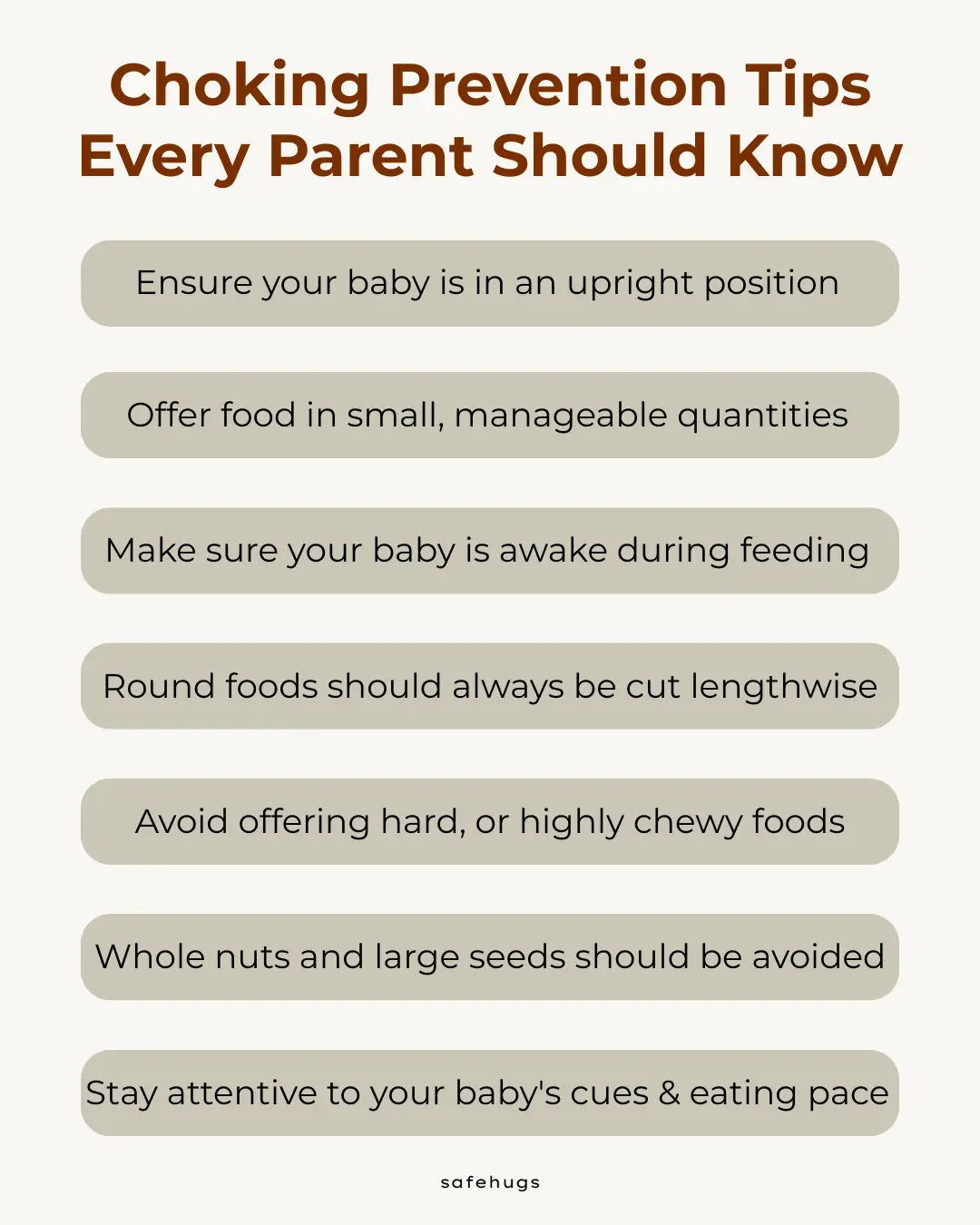
Gagging almost always increases when babies begin solid foods, typically around 6 months. This is completely expected and is a normal part of learning to eat. At 6 months, a baby's gag reflex begins to move further back in the mouth, which is part of the developmental readiness for solids. As babies encounter new textures and volumes for the first time, they will gag to manage what they can't yet handle. This is the reflex working correctly.
Tips for the transition:
Start with soft, single-ingredient foods like mashed vegetables, fruit purees, or well-cooked and mashed lentils
Sit baby fully upright with supported if needed, but never reclined
Introduce one new food at a time, spaced 3-5 days apart
Never leave your baby unattended during meals
Don't react with alarm when gagging happens, a calm parental response helps the baby stay relaxed and continue exploring food positively
Avoid high-risk choking foods like whole grapes, raw hard vegetables, nuts, popcorn, thick blobs of nut butter, round firm foods
Whether you choose purees, baby-led weaning, or a combination, gagging is a feature of the process and not a sign something is wrong.
Gagging at the start of solids is pretty common. Maybe try giving a different fruit or food. Also, make sure your baby is sitting upright, even with support, that’s completely fine at 6 months. - from our Mom Insider community
As your baby grows, choosing the right foods becomes important, explore the best brain foods for toddlers and growing kids to support healthy development.
When to Call the Doctor
Contact your pediatrician if your newborn:
Gags very frequently (multiple times every hour)
Shows difficulty breathing during or after gagging
Has any change in skin colour, especially pale or bluish lips
Gags along with forceful or frequent vomiting after most feeds
Is losing weight or not gaining weight adequately
Refuses feeds or cries and arches their back during feeding
Has noisy breathing (a high-pitched crowing sound) with or without gagging
Has gagging that is getting worse rather than better over time
Seek emergency care immediately if your baby stops breathing, turns blue, becomes limp, or is unresponsive.
Related:
Check out our blog on "How Many Hours Do Newborns Sleep".
Check out our blog on "When to Stop Waking Baby to Feed Overnight".
Check out our blog on "Side Effects of Bottle Feeding".
Check out our blog on "Healthy Snacks for Kids".
Check out our blog on "Best Immunity Boosting Foods for Kids".
Check out our blog on "Top Brain Foods for Toddlers & Growing Kids".