Side Effects of Bottle Feeding: Risks & Long-Term Effects
Bottle feeding is one of the most common feeding choices in modern parenting, yet it comes with questions that deserve honest, evidence-based answers. Whether you're exclusively formula feeding, combining breast milk with a bottle, or supplementing due to low supply, understanding the side effects of bottle feeding helps you make safer, more informed decisions for your baby.
Table of Content
Common Side Effects of Bottle Feeding in Babies
Effects of Bottle Feeding Too Long
Side Effects of Bottle Feeding While Lying Down or Sleeping
Side Effects of Bottle Feeding for Mothers
Bottle Feeding vs Breastfeeding
How to Reduce the Side Effects of Bottle Feeding
Alternative Feeding Methods
What is Bottle Feeding
Bottle feeding means feeding an infant using a bottle nipple rather than directly at the breast. The bottle may contain:
Infant formula - a substitute for breast milk
Expressed breast milk - pumped and stored breast milk given via bottle
A combination of both
It's a valid, widely practiced feeding method used by millions of families globally. The AAP acknowledges that while exclusive breastfeeding for the first 6 months is the gold standard, bottle feeding is appropriate and sometimes medically necessary.
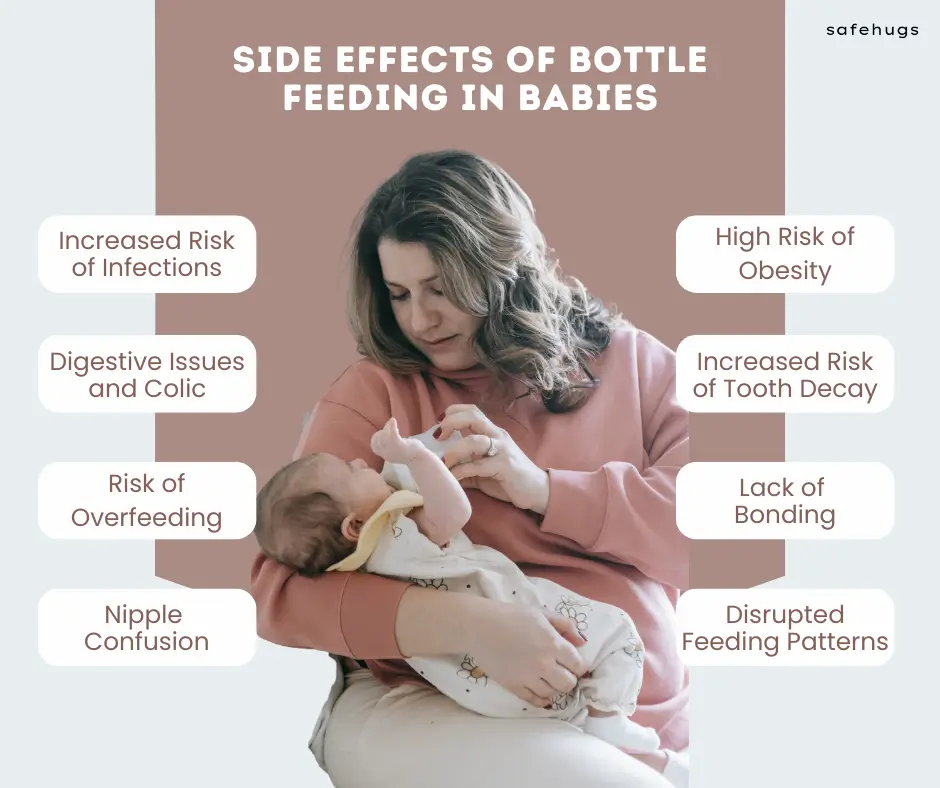
Common Side Effects of Bottle Feeding in Babies
Bottle feeding can affect babies differently depending on technique, bottle type, and how frequently it replaces direct breastfeeding. Here's what the evidence shows:
1. Increased Risk of Infections
Breast milk contains bioactive compounds that help protect infants from infection. Formula does not contain these. A 2016 review published in Acta Paediatrica found that formula-fed infants had higher rates of gastrointestinal infections, respiratory tract infections, and ear infections compared to breastfed infants. Improper sterilization of bottles compounds this risk.
Key takeaway: Sterilize bottles and nipples thoroughly before each use, especially in the first 3 months. The WHO recommends sterilizing equipment by boiling for at least 1 minute.
2. Digestive Issues and Colic
Bottle-fed babies, particularly those on formula are more likely to experience:
Gas and bloating from swallowing air during feeds
Colic-like crying (more than 3 hours of crying per day, more than 3 days a week)
Constipation, especially when switching formula types
This is partly because formula proteins are harder to digest than breast milk proteins. Using a slow-flow nipple and practicing paced bottle feeding significantly reduces these symptoms.
Colic and digestive issues are common… slow feeding and upright position helps. - from our Mom Insider community
Colic - A condition in babies where they cry excessively and often without a clear reason, usually for more than 3 hours a day, several days a week.
3. Overfeeding and Disrupted Hunger Cues
This is one of the most common risks. With breastfeeding, babies control milk flow through suction and pauses. With bottle feeding, milk flows regardless, making it harder for babies to recognize when they're full. A study published in Pediatrics (2011) found that bottle-fed infants consumed significantly more milk per feed than breastfed infants, even when the bottle contained expressed breast milk. Babies may continue sucking by reflex long after they are full, leading to overfeeding.
Signs of overfeeding: frequent spit-up, discomfort after feeds, rapid weight gain beyond growth curve expectations.
Everyone said my supply was low because baby was feeding every 30 minutes. We added formula, but one day he vomited everything. That’s when we realised we were overfeeding. - from our Mom Insider community
4. Increased Spit-Up and Reflux
Faster milk flow and larger feed volumes both contribute to gastroesophageal reflux (GER) in infants. Most infant reflux is happy spitters, but persistent or forceful vomiting calls for medical attention.
“My baby spits up after every feed… sometimes 15-20 ml.” - from our Mom Insider community
5. Nipple Confusion or Bottle Preference
Some infants, mainly who are introduced to bottles in the first 3-4 weeks, may develop a preference for the bottle due to the easier, faster milk flow. This can make it harder to re-establish or maintain direct breastfeeding. The AAP advises waiting until breastfeeding is well established (typically 3-4 weeks) before introducing a bottle if your goal is to continue breastfeeding.
6. Higher Risk of Obesity Later in Life
Multiple large studies have linked formula feeding and bottle feeding with higher risk of childhood obesity. A 2014 study found that breastfed infants had a 15-30% lower risk of overweight or obesity in childhood compared to formula-fed infants. One key reason is appetite regulation, bottle feeding bypasses the infant's natural fullness cue more easily than direct breastfeeding.
7. Increased Risk of Tooth Decay
Prolonged contact of milk, even breast milk with infant teeth can make cavity-causing bacteria to thrive. This is especially common when:
Babies fall asleep with a bottle
Bottles are used as a comfort object beyond 12 months
Oral hygiene is not practiced after feeds
The American Dental Association (ADA) recommends cleaning gums with a damp cloth after feeding, and starting tooth brushing as soon as the first tooth appears.
8. Weak Immunity
Breast milk is a living fluid that adapts to the baby's immune needs, containing antibodies that respond to pathogens the mother is exposed to. Formula, however, cannot replicate this dynamic immune function. This doesn't mean formula-fed babies can't be healthy, it means parents should be mindful about reducing other infection risks (hand hygiene, crowd exposure in early months, up-to-date vaccinations).
9. Lack of Bonding and Emotional Connection
Breastfeeding triggers the release of oxytocin in both mother and baby, helping strengthen the mother-infant bond. Bottle feeding doesn't produce this hormonal effect automatically. However, bonding is absolutely possible with bottle feeding through intentional practices like holding the baby close, maintaining eye contact, speaking softly, and not propping the bottle. Bonding is about responsiveness, not feeding method.
Effects of Bottle Feeding Too Long
The AAP and WHO recommend transitioning away from bottles by 12-18 months. Continued bottle use beyond this window carries specific risks:
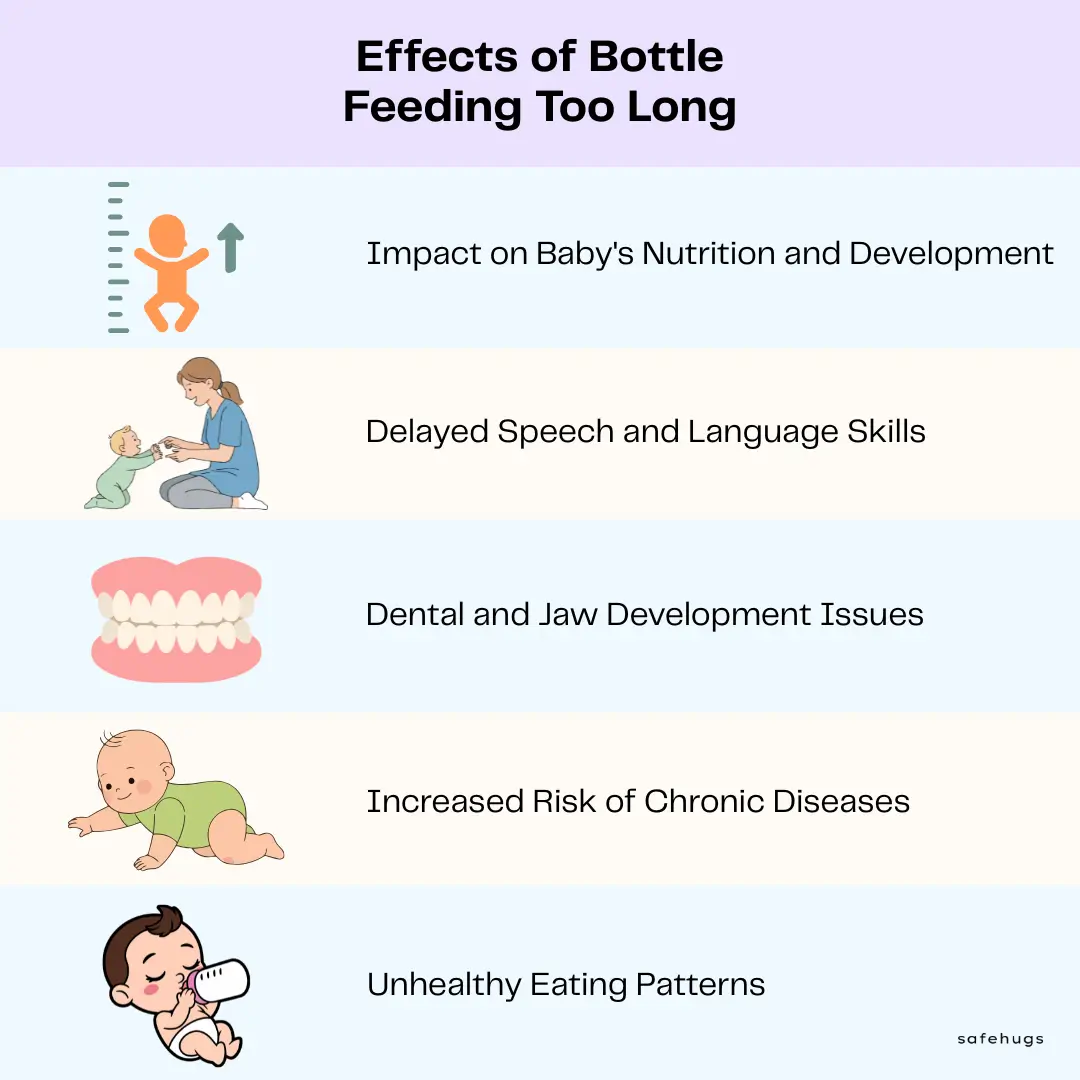
Impact on Nutrition and Diet Diversity
Toddlers who continue bottle feeding may end up consuming excess milk, which can reduce their appetite for solid foods. The AAP notes that toddlers need a maximum of 16-24 oz of whole cow's milk per day after 12 months, more than this displaces iron-rich solids and increases the risk of iron-deficiency anemia.
As your baby grows, including the right foods becomes important, explore Best Immunity Boosting Foods for Kids.
Delayed Speech and Language Development
The muscle coordination needed for clear speech, benefits from varied movements like chewing, drinking from open cups, and using straws. Prolonged bottle use keeps oral muscles in a fixed sucking pattern, which some speech-language pathologists associate with mild speech delays, though more research is needed to confirm causation.
Dental and Jaw Development Issues
Extended sucking on bottle nipples can influence jaw development and tooth alignment. A 2016 study found links between prolonged non-nutritive sucking habits (bottles and pacifiers) and increased rates of misaligned bite in early childhood.
Unhealthy Emotional Attachment to the Bottle
When bottles are used for comfort rather than nutrition, especially at bedtime, toddlers can develop a dependency that makes sleep difficult to achieve without them. This often leads to nighttime feeding habits that can continue well into the second year.
Side Effects of Bottle Feeding While Lying Down or Sleeping
Feeding a baby in a flat or semi-reclined position significantly increases several risks:
Choking and Aspiration
When lying flat, infants have reduced ability to coordinate sucking, swallowing, and breathing. Milk can enter the airway, causing choking or silent aspiration (milk entering the lungs). Immaturity in sucking-swallowing coordination in a supine position is a primary mechanism behind aspiration risk in bottle-fed infants.
Ear Infections
Milk can travel from the throat into the Eustachian tubes when a baby feeds horizontally. This creates a warm, moist environment where bacteria multiply, leading to middle ear infections. Research suggests bottle-fed infants are already at higher baseline risk of ear infections; lying-down feeding compounds this.
Tooth Decay ("Bottle Caries")
Allowing a baby to sleep with a bottle can lead to milk pooling in the mouth for long periods. This creates an ideal environment for bacteria to grow, which can cause early tooth decay, often referred to as "bottle caries."
Wheezing and Respiratory Symptoms
A study found that persistent bedtime bottle feeding was linked with higher rates of chronic wheezing, cough, and respiratory symptoms in infants. While not a direct cause, improper feeding positions may contribute to irritation or aspiration risks in sensitive babies.
Wheezing - A high-pitched whistling sound while breathing, usually heard when a child breathes out. It often happens when the airways are narrowed or blocked.
Feed-to-Sleep Association
Regularly using a bottle to help a baby fall asleep creates a conditioned response, the baby learns that sleep requires feeding. Over time, the baby may begin to depend on the bottle to fall asleep, making it harder to self-soothe and leading to frequent night awakenings.
Safe feeding position: Keep baby at a 45-degree angle or greater during all bottle feeds.
Side Effects of Bottle Feeding for Mothers
Most discussions center on the baby, but bottle feeding has real physiological and emotional effects on mothers too:
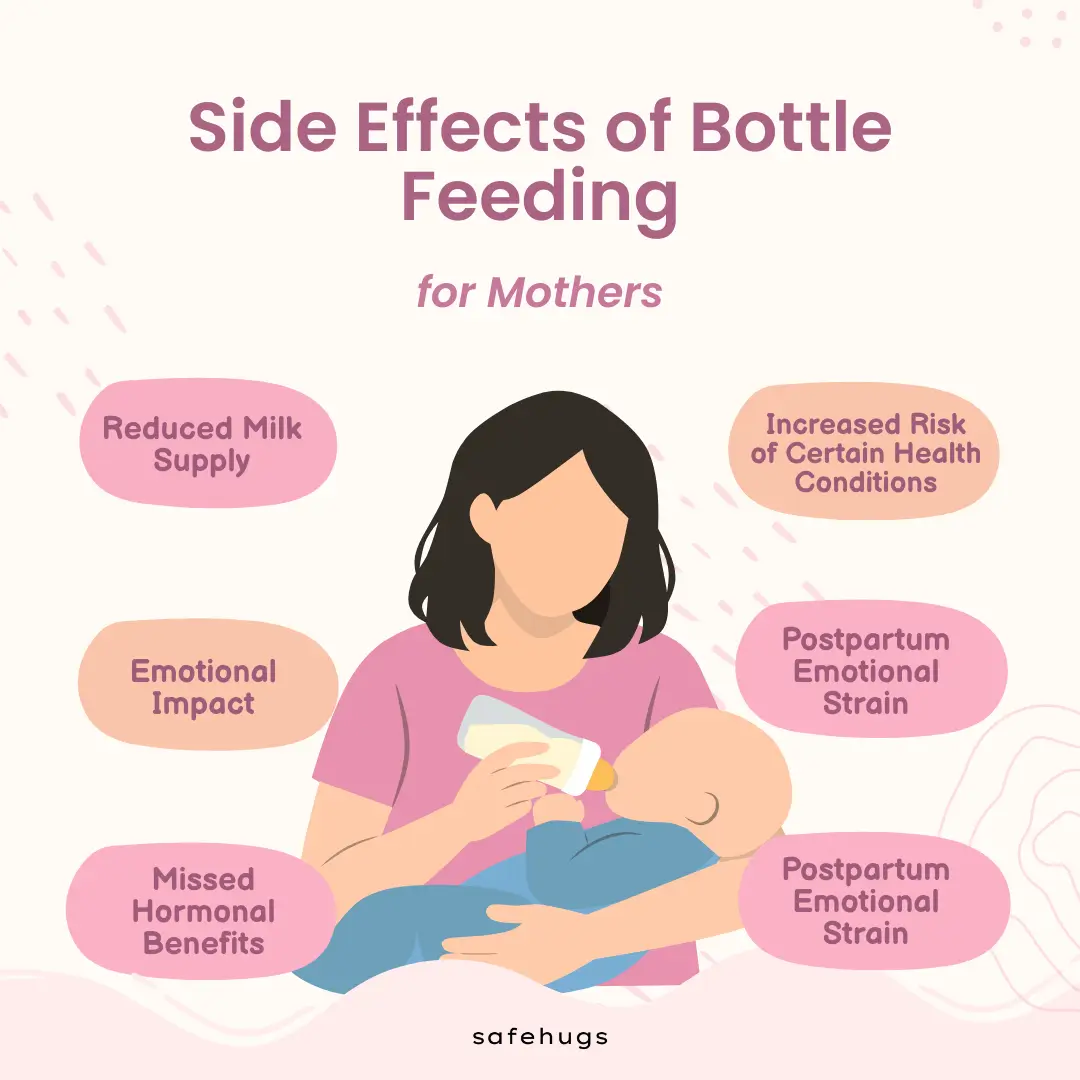
Reduced Milk Supply
Breast milk production works on a demand-and-supply basis. When bottle feeding replaces direct breastfeeding frequently, there is less stimulation to the breasts, which can gradually reduce milk supply over time.
If you're worried about low supply, here's a simple guide on How to Increase Breast Milk Supply Naturally.
Missed Hormonal Benefits
Breastfeeding triggers prolactin (milk production) and oxytocin (letdown and bonding). These hormones also:
Speed up postpartum uterine contraction
Support emotional regulation and stress reduction
Promote maternal sleep
When bottle feeding replaces nursing, mothers miss some of these hormonal benefits.
Increased Risk of Certain Health Conditions
Research consistently shows that women who breastfeed longer have reduced lifetime risks of:
Breast cancer (reduced by ~4.3% per 12 months of breastfeeding)
Ovarian cancer
Type 2 diabetes
Osteoporosis
This is not to create guilt, many mothers cannot breastfeed. But it tells us why breastfeeding when possible has benefits for both mother and child.
Emotional and Psychological Impact
Mothers who cannot breastfeed as planned often report feelings of guilt, failure, or grief, even when bottle feeding is medically necessary. These feelings are valid and common. If you're experiencing persistent distress around feeding decisions, please speak with your OB, midwife, or a lactation consultant (IBCLC).
Bottle Feeding vs Breastfeeding
Both bottle feeding and breastfeeding have their own advantages and challenges. The right choice often depends on individual circumstances, and many families use a combination of both.
Nutrition
Breast milk is naturally designed to meet a baby’s changing nutritional needs and adapts over time. Formula, on the other hand, is carefully designed to provide essential nutrients in a consistent way. While both can support growth, breast milk offers a more dynamic composition.
Immunity
Breastfeeding provides antibodies and immune-boosting components that help protect babies from infections. Bottle feeding, especially with formula, does not offer the same immune support, although babies can still grow up healthy with proper care.
Convenience
Bottle feeding allows others to help with feeding and can be more flexible in certain situations, especially for working parents. Breastfeeding, however, does not require preparation, sterilisation, or carrying feeding supplies, which some parents find more convenient.
Cost
Breastfeeding is generally more cost-effective as it does not require formula, bottles, or sterilising equipment. Bottle feeding can involve ongoing expenses, especially when formula is used regularly.
Bonding
Breastfeeding naturally encourages close physical contact and bonding. With bottle feeding, bonding is still very much possible, especially when parents focus on skin-to-skin contact, eye contact, and being present during feeds.
Flexibility
Bottle feeding offers more flexibility by allowing multiple caregivers to feed the baby. Breastfeeding may require the mother’s presence more often, although expressing milk can provide some flexibility.
How to Reduce the Side Effects of Bottle Feeding
While there are several side effects of bottle feeding, the good news is that many of them can be managed with the right approach.

Practice Paced Bottle Feeding
Paced bottle feeding is the single most impactful technique for reducing overfeeding, reflux, and gas. Here's how:
Hold baby semi-upright (45-degree angle)
Use a slow-flow nipple appropriate for baby's age
Allow baby to draw the nipple into the mouth, don't push the bottle in
Pause every 20-30 seconds to let baby signal fullness
Stop feeding when baby shows fullness cues (turning head away, slowing sucking, relaxed fists)
Responsive Feeding
Instead of focusing on finishing a set quantity, watch your baby’s cues. If your baby seems full, turns away, or slows down, it’s important to stop feeding. This helps prevent overfeeding and supports healthy eating patterns.
Ensure Proper Hygiene and Sterilisation
Sterilize all bottles, nipples, and caps before first use
Wash with hot soapy water after every feed
Sterilize by boiling or using a steam sterilizer until baby is 3 months old
Store prepared formula in the refrigerator for no more than 24 hours (WHO guidelines)
Correct Formula Preparation
Prepare formula exactly as instructed. The right balance is important for your baby’s digestion and nutrition. Avoid making feeds too concentrated or too diluted, as both can cause health issues.
Choosing the Right Bottle and Nipple
Slow-flow nipple (Level 1): for newborns to 3 months
Medium-flow (Level 2): 3-6 months
Look for: anti-colic venting systems to reduce air intake, and breast-shaped nipples if switching between breast and bottle
Avoid Bottle Feeding During Sleep
Feeding your baby while they are lying down or asleep can increase the risk of choking and tooth decay. Try to keep your baby slightly upright and awake during feeds, even at night.
Burping and Positioning
Hold your baby in an upright or slightly inclined position while feeding. Burp your baby during and after feeds to release trapped air. This can help reduce gas, colic, and spit-up.
Maintain Oral Hygiene
Wipe gums with a damp cloth after feeds (from birth)
Begin brushing with a soft infant toothbrush as soon as the first tooth appears
Never put baby to bed with a bottle

Alternative Feeding Methods (If Bottle Isn't Working)
If your baby refuses the bottle or you want to avoid bottle-specific side effects, these are evidence based alternatives:
Cup or Paladai Feeding
The WHO promotes cup feeding as an alternative to bottles, mainly in the early weeks. Cups avoid nipple confusion and require babies to lap or sip, encouraging oral motor development. A small medicine cup or traditional paladai works well for newborns.
Spoon Feeding
A small spoon can be used to deliver expressed breast milk or formula. This is slower but gives maximum control over pace and reduces overfeeding risk.
Supplemental Nursing System (SNS)
An SNS delivers supplemental milk through a thin tube taped next to the nipple during breastfeeding. It allows babies to nurse at the breast while receiving additional milk, useful for low supply situations without introducing bottle preference.
If you’re starting solids soon, you might wonder - Is Oats Safe for Babies? Here's everything you need to know.
When Bottle Feeding is Helpful & Necessary
It's important to be clear: bottle feeding is not just "acceptable" in certain situations, it is often the right choice. These include:
Returning to work - expressed milk or formula via bottle is often the only practical option
Low milk supply - when direct breastfeeding cannot meet baby's caloric needs
Latch difficulties - flat or inverted nipples, tongue tie, or premature birth may make direct nursing impossible initially
Maternal medications - some medications are not advised during breastfeeding
Shared caregiving - allowing partners, grandparents, and other caregivers to participate in feeding supports the whole family
Maternal health conditions - some conditions make breastfeeding medically inadvisable
Feed your baby in the way that keeps both of you healthy and supported. There is no feeding method that makes you a better or worse parent.
You can also support your supply with simple home remedies - read What to Drink to Increase Breast Milk Naturally at Home.
When to talk to a doctor
While many side effects of bottle feeding are manageable, there are certain signs that should not be ignored. It's important to seek medical advice if your baby shows:
Frequent or forceful vomiting
Poor weight gain or sudden weight loss
Very few wet diapers (possible dehydration)
Persistent colic or excessive crying after feeds
Refusal to feed for multiple feeds in a row
Signs of infection such as fever, diarrhea, or unusual lethargy
Difficulty breathing, choking episodes, or severe reflux
Key Takeaways
Bottle feeding is a normal, widely used, and often medically necessary feeding method. And most of the risks associated with bottle feeding can be significantly reduced through:
Paced bottle feeding technique
Proper sterilization and formula preparation
Age-appropriate nipple flow
Upright feeding position
Stopping when baby shows fullness cues
Transitioning away from bottles by 12-18 months
Whatever feeding method you choose, what matters most is that your baby is growing, nourished, and loved, and that you feel supported in the decisions you're making.
Related:
Check out our blog on "How Many Hours Do Newborns Sleep".
Check out our blog on "Why Is My Newborn Gagging While Sleeping".
Check out our blog on "What to Drink to Increase Breast Milk Naturally at Home".
Check out our blog on "How to Increase Breast Milk Supply Naturally".
Check out our blog on "When to Stop Waking Baby to Feed Overnight".