Top Brain Foods for Toddlers & Growing Kids (0-10 Years)
Table of Content
Why Brain Foods are Important for Children
Key Nutrients for Brain Development
Top Brain Foods for Toddlers (1-3 Years)
Best Brain Foods for Kids (4-10 Years)
Brain Foods for Babies (6-12 Months)
Vegetarian Brain Foods for Babies
Foods to Avoid for Brain Development
Many parents notice that their baby cries more in the evening or seems unsettled even after feeding. This phase, often called the witching hour, can be confusing. In the early years, the brain develops rapidly, making the right brain foods for toddlers essential. From birth to 10 years, nutrition directly supports memory, focus, mood, and overall brain function through key nutrients like healthy fats, protein, and iron.

Why Brain Foods are Important for Children
A child's brain develops rapidly in the early years, especially from 0-5 years when millions of neural connections are formed, and continues to strengthen between 5-10 years to support learning, memory, and behaviour. Nutrition plays a crucial role in this process, as the brain needs key nutrients like healthy fats, protein, iron, and vitamins to function properly. A balanced diet helps improve memory, concentration, and emotional regulation, allowing children to learn and respond better in daily activities. In contrast, a diet high in processed or sugary foods may impact focus, energy levels, and overall development. Consistent, nutritious meals can make a significant difference in a child's brain health over time.
Key Nutrients for Brain Development
According to pediatric nutrition guidelines, certain nutrients play a vital role in supporting a child's brain growth and cognitive function.
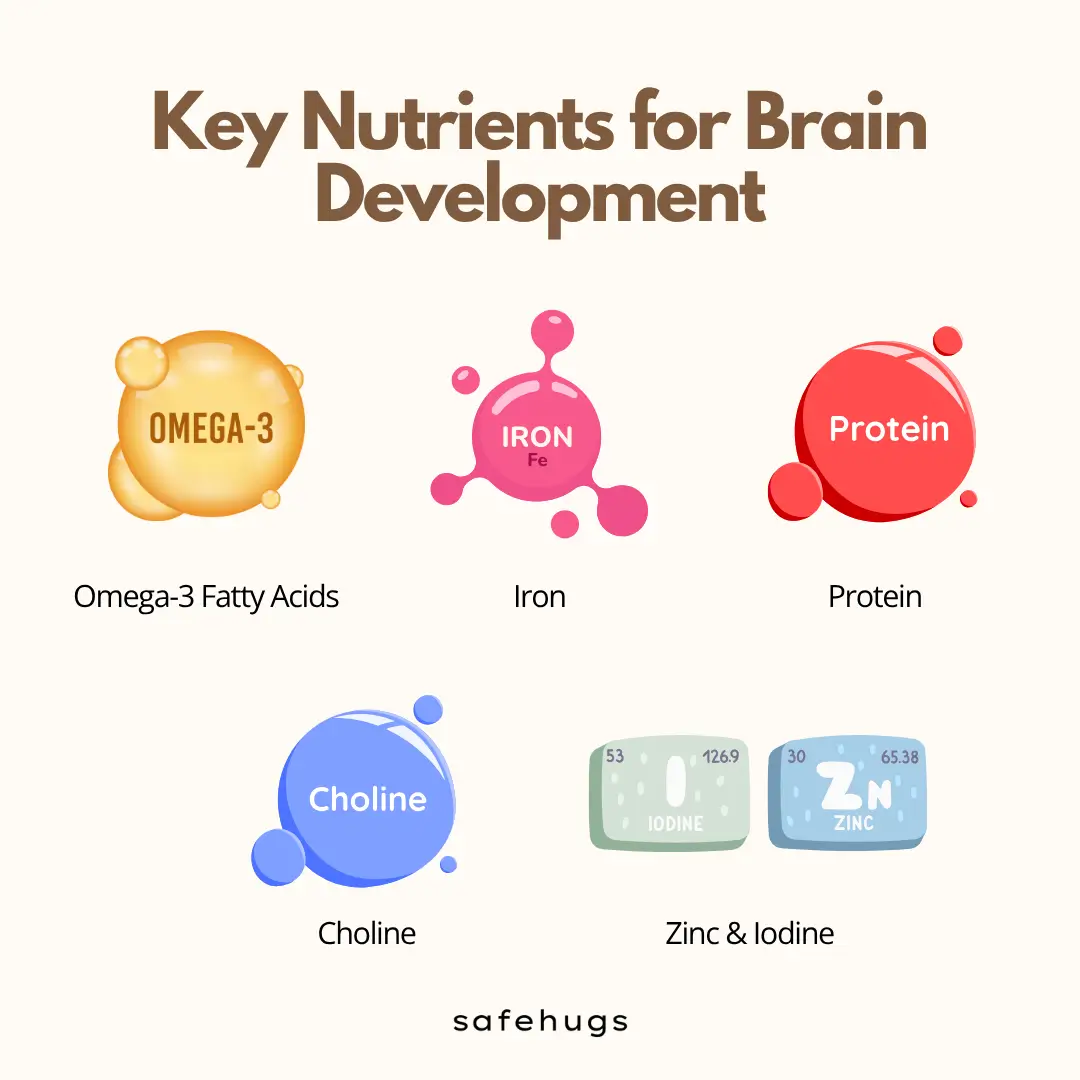
Omega-3 Fatty Acids
Omega-3 fatty acids support the structure and function of brain cells and are important for learning and memory. Regular intake helps in overall cognitive development, especially in growing children. Common sources include fish, walnuts, and flaxseeds.
Iron
Iron is essential for carrying oxygen to the brain, which directly affects attention span and energy levels. Low iron levels can lead to fatigue and poor concentration. It can be included through foods like spinach, lentils, and jaggery.
Protein
Protein helps in building neurotransmitters, which are chemicals that allow brain cells to communicate with each other. This supports thinking, learning, and overall brain function. Good sources include eggs, dairy products, and pulses.
Choline
Choline plays a key role in memory development and learning, especially during early childhood. It supports brain cell communication and overall cognitive growth. Eggs are one of the best sources of choline.
Zinc & Iodine
Zinc and iodine are important for brain signaling, growth, and development. They help in maintaining proper brain function and support cognitive abilities. These nutrients are commonly found in nuts, seeds, and dairy products.
Want to strengthen your child’s immunity? Read Best Immunity Boosting Foods for Kids to know what to include in their daily diet.
Cognitive Function - The mental processes that enable humans to acquire knowledge, process information, store memories, and guide behaviour.
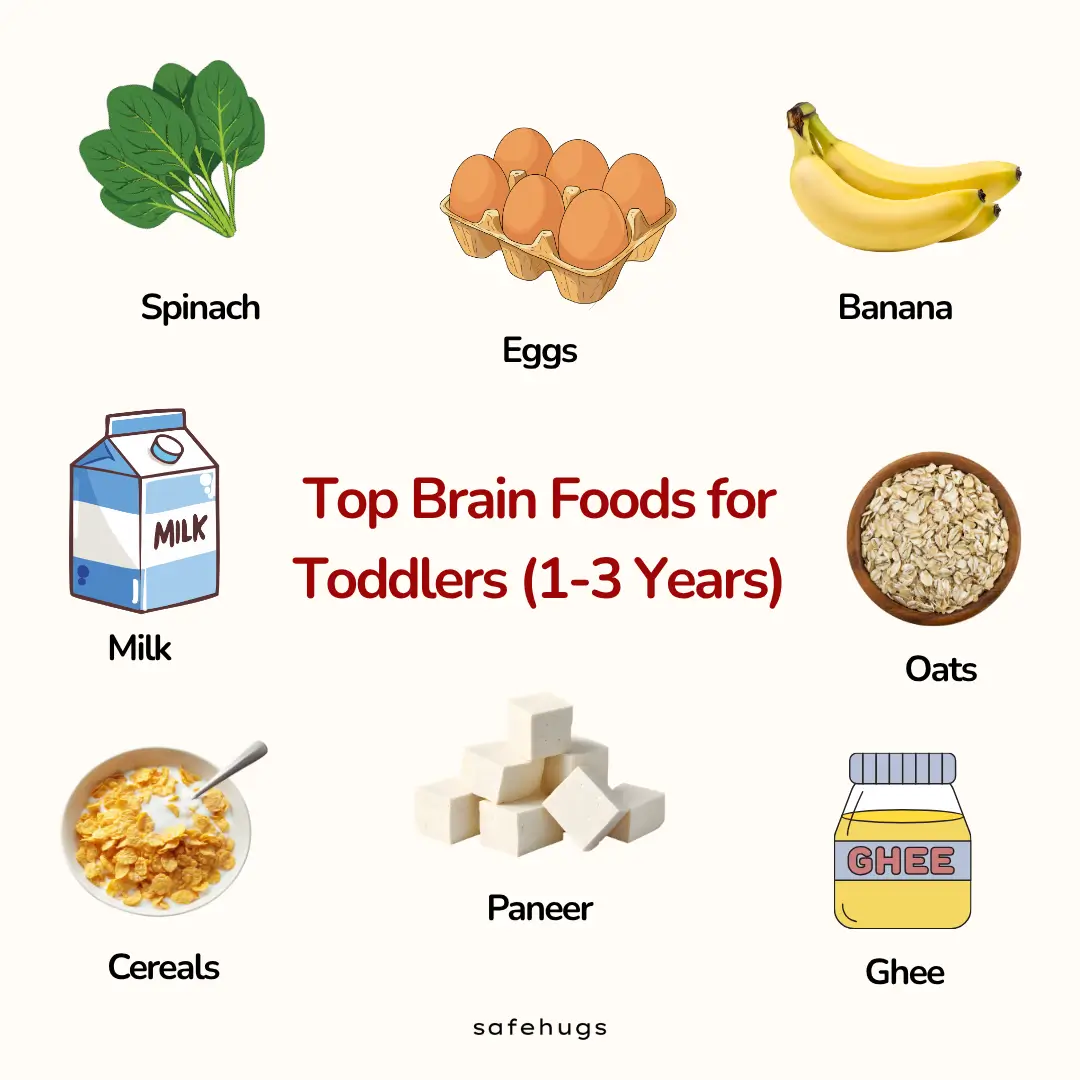
Top Brain Foods for Toddlers (1-3 Years)
Fresh Vegetables
Fresh vegetables provide essential vitamins, minerals, and antioxidants that support brain development and overall health. Including a variety of colourful vegetables like carrots, spinach, and beetroot helps improve cognitive function and builds healthy eating habits early.
Eggs
Eggs are one of the best foods for brain development in toddlers. They are rich in protein and choline, which support memory, learning, and brain cell function. Always serve eggs fully cooked, such as boiled, scrambled, or as an omelette.
Many parents prefer introducing eggs early because they are easy to prepare and nutrient-rich. When fully cooked, such as boiled, scrambled, or as an omelette. - from our Mom Insider community
Banana
Bananas are easy to digest and provide quick energy for active toddlers. They also contain nutrients that support mood and brain function, making them a simple and effective everyday fruit.
Full-Fat Dairy (Milk, Curd, Paneer)
Full-fat dairy products provide healthy fats that are important for brain growth in early years. They also supply protein and calcium, supporting both brain and body development.
Oats
Oats are a good source of complex carbohydrates that provide steady energy to the brain. They help maintain focus and keep toddlers full for longer periods.
Complex Carbohydrates - Nutrient-dense foods composed of long, complex chains of sugar molecules that digest slowly, providing sustained energy and stable blood sugar levels.
Cereals
Fortified cereals can provide important nutrients like iron and B vitamins, which support brain function and energy levels. Choose minimally processed options with low added sugar.
Healthy Oils
Healthy oils like ghee, coconut oil, and other natural fats support brain development by providing essential fatty acids. Including small amounts in daily meals helps support overall growth.
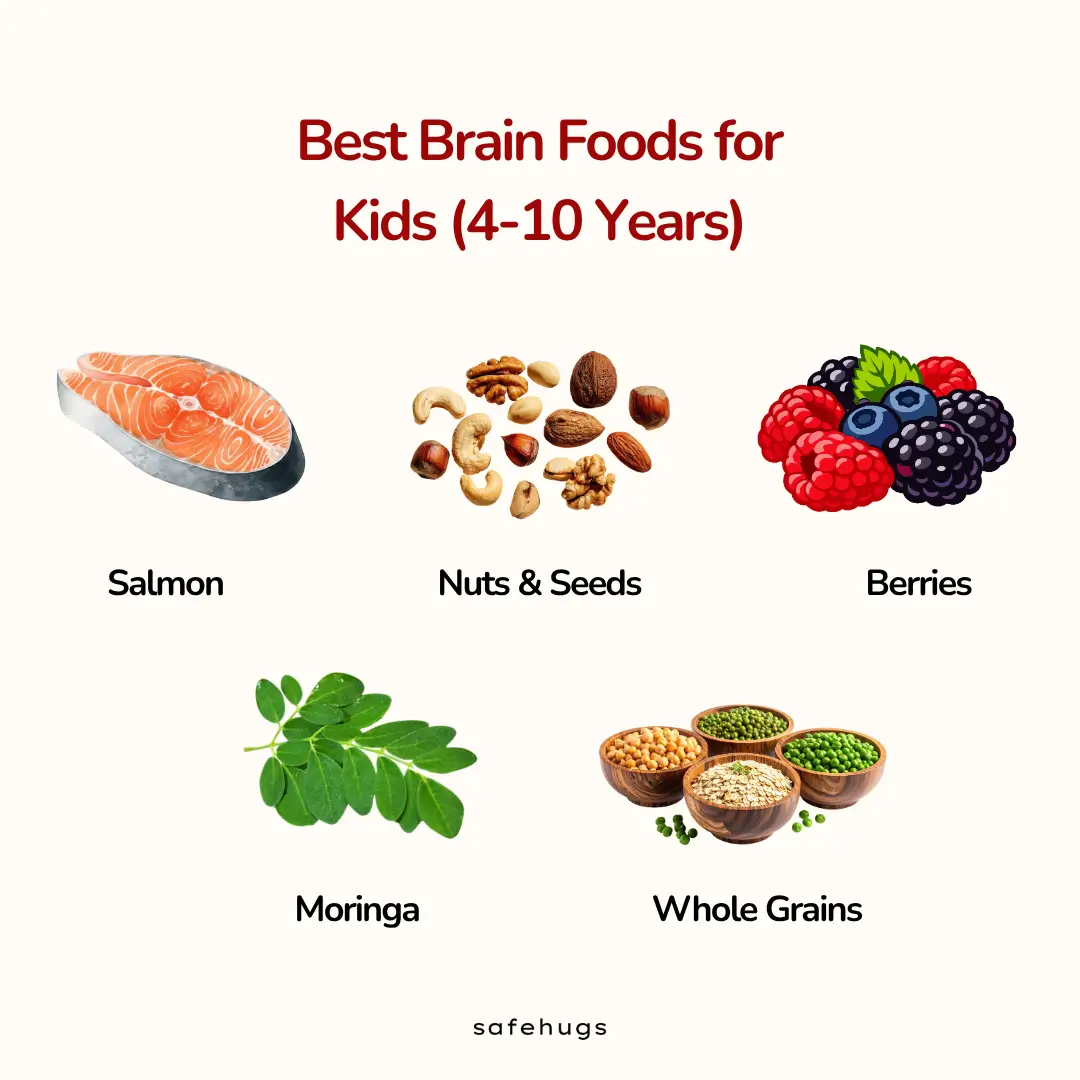
Best Brain Foods for Kids (4-10 Years)
Fatty Fish
Fatty fish like salmon and sardines are rich in omega-3 fatty acids, which support brain function, learning, and memory. Including fish regularly can help improve focus and overall cognitive development in growing children.
Nuts & Seeds
Nuts and seeds provide healthy fats, protein, and essential minerals like zinc that support brain health. They help with memory, concentration, and sustained energy throughout the day.
Leafy Greens
Leafy greens such as spinach and moringa are rich in iron, folate, and antioxidants. These nutrients support brain function, improve attention, and contribute to overall cognitive development.
Berries
Berries are packed with antioxidants that help protect brain cells and support memory. They are also a healthy snack option that can be easily added to a child's daily diet.
Whole Grains
Whole grains provide steady energy to the brain, helping children stay focused and active. Foods like oats, brown rice, and whole wheat support sustained concentration and learning ability.
Looking for easy, nutritious snack ideas? Read Healthy Snacks for Kids to make daily snacking simple and healthy.
Brain Foods for Babies (6-12 Months)
At this stage, babies are just starting solids, so foods should be soft, easy to digest, and nutrient-dense to support early brain development.
Mashed Fruits
Mashed fruits like banana, apple (steamed), and pear provide natural sugars for energy along with vitamins that support brain function. They are gentle on the stomach and easy for babies to accept.
Soft Dal
Well-cooked and mashed dal is a great source of protein and iron, both important for brain development and growth. It can be introduced as one of the first foods and paired with rice for better nutrition.
Oats
Oats are a good first grain for babies as they are easy to digest and provide steady energy. They also contain important nutrients that support brain development and keep babies full for longer.
Starting solids and unsure about oats? Read Is "Oats Safe for Babies?" to understand when and how to introduce it safely.
Vegetarian Brain Foods for Kids
A well-planned vegetarian diet can fully support a child's brain development when it includes a variety of nutrient-rich foods commonly used in Indian households.
Paneer & Curd
Paneer and curd provide protein and healthy fats that support brain growth and function. They are also good sources of calcium and can be easily included in daily meals.
Nuts & Seeds
Nuts and seeds are rich in healthy fats, zinc, and other essential nutrients that help improve memory and concentration. They can be given in powdered or paste form for younger children.
Lentils (Dal)
Lentils are an excellent source of plant-based protein and iron, both important for brain development and energy levels. Including different types of dal ensures better nutrient variety.
Millets
Millets like ragi and bajra are rich in iron, fiber, and essential minerals that support brain function and overall growth. They are a healthy alternative to refined grains.
Green Vegetables
Green vegetables such as spinach and other leafy greens provide iron, folate, and antioxidants that support cognitive development and improve attention in children.
Indian Brain Food Meal Ideas
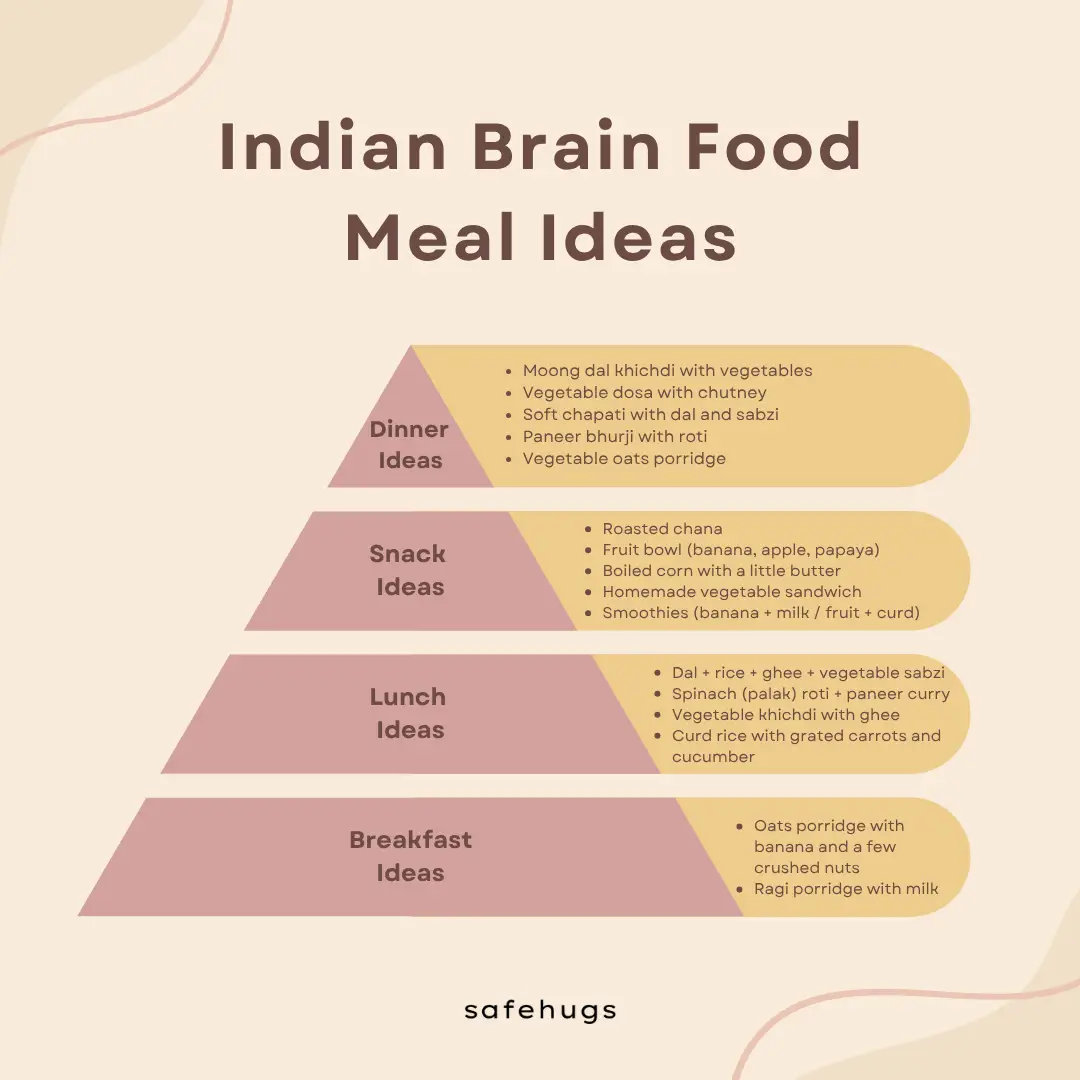
Simple, home-cooked Indian meals can easily support your child’s brain development when planned with the right ingredients.
Breakfast Ideas
Start the day with meals that provide steady energy and nutrients for focus and learning. Options like oats porridge with banana or vegetable upma are easy to prepare, filling, and support sustained brain function.
Lunch Ideas
Lunch should be balanced with protein, healthy fats, and carbohydrates. Dal with rice and a small amount of ghee provides essential nutrients for brain growth, while spinach roti with paneer adds iron and protein for better concentration and energy.
Snack Ideas
Healthy snacks help maintain energy levels between meals. Roasted chana is a good source of protein, and a simple fruit bowl provides natural sugars and vitamins that support brain function.
Dinner Ideas
Dinner should be light yet nourishing. Khichdi is easy to digest and balanced, making it ideal for children. Vegetable dosa is another good option that combines nutrients with taste, supporting overall development.
Foods to Avoid for Brain Development
Certain foods can negatively affect a child's focus, energy levels, and overall brain function, especially when consumed regularly.
Excess Sugar
High sugar intake can lead to sudden spikes and crashes in energy levels, making children feel restless, irritable, or tired. This can affect concentration and mood.
Processed Snacks
Packaged snacks often contain unhealthy fats, additives, and preservatives that offer little nutritional value. Regular consumption may impact attention span and overall development.
Sugary Drinks
Drinks like sodas and flavored juices are high in sugar and low in nutrients. They can affect focus, increase hyperactivity, and reduce appetite for healthy foods.
Junk Food
Frequent consumption of junk food can lead to poor nutrition, which may affect memory, learning ability, and behavior over time. Limiting these foods helps support better brain health and overall growth.
Signs Your Child May Need Better Nutrition
Some everyday signs can indicate that a child may not be getting enough essential nutrients for proper growth and brain development.
If your child often seems tired or lacks energy for daily activities, it may be linked to inadequate nutrition or poor dietary balance.
Difficulty focusing, easily getting distracted, or struggling to stay attentive can sometimes be related to a lack of key nutrients that support brain function.
Getting sick often may indicate a weakened immune system, which can be affected by insufficient intake of vitamins and minerals.
If a child is not growing as expected for their age, it may be a sign that their diet is not meeting their nutritional needs.
If you notice these signs consistently, improving diet quality and consulting a pediatrician can help support your child’s overall development.
What Parents Notice During Early Brain Development
During the early months and years, many parents notice changes in their child's behavior that can feel confusing at first. Babies may cry more in the evening, become fussy during feeds, or seem difficult to settle despite being fed and cared for. This is often linked to rapid brain development, where the brain is processing new information and stimuli. Some babies may latch and unlatch repeatedly, get easily overstimulated, or sleep irregularly. As they grow, toddlers may show short attention spans, mood swings, or sudden changes in behaviour. These are common during periods of rapid brain growth.
In the first 2-3 years, a child's brain forms millions of neural connections every second. As the brain develops, it can sometimes lead to increased sensitivity, fussiness, or changes in routine. In most cases, these behaviours are temporary and part of normal development. Consistent care, proper nutrition, sleep, and gentle routines can help support children through these phases.
Parents often notice phases where babies are extra fussy, feed unpredictably, or struggle to settle. Some describe frequent latching, short sleep cycles, or sudden crying without a clear reason. These changes are commonly seen during periods of rapid brain development and usually settle with time. - from our Mom Insider community
Parent Tips to Support Brain Development
Sleep plays a key role in brain development, as this is when the brain processes information and strengthens connections. Ensuring your child gets enough rest supports memory, learning, and overall behaviour.
Paying attention to your child’s hunger and fullness cues helps build a healthy relationship with food. Responsive feeding also ensures they receive the right nutrition without stress or force.
Consistent daily routines, including regular meal times and sleep schedules, help children feel secure. This stability supports emotional regulation and better brain function.
Simple activities like tummy time, playing with rattles, singing songs, and talking to your child help stimulate brain development. These interactions support language skills, motor development, and social understanding.
Common Mistakes Parents Make
Forcing a child to eat can create stress around meals and reduce their natural hunger cues. This may affect their relationship with food over time.
Offering the same foods repeatedly can limit nutrient intake. A varied diet ensures children get a wide range of nutrients needed for brain development.
Packaged and processed foods often lack essential nutrients and may contain excess sugar or additives. Regular use can impact focus, energy, and overall health.
Healthy fats are essential for brain growth, especially in early years. Avoiding fats completely may affect cognitive development and energy levels.
Supporting your child's brain development doesn't require complicated diets or expensive foods. Simple, balanced, home-cooked meals that include the right nutrients can make a meaningful difference over time. Including a variety of brain foods for toddlers and growing kids helps support memory, focus, and overall development.
Related:
Check out our blog on "Is oats safe for babies".
Check out our blog on "Best immunity boosting foods for kids".
Check out our blog on "Healthy snacks for kids".