
How Many Hours Do Newborns Sleep? Newborn Sleep Chart & Tips
Table of Contents
How Many Hours Do Newborns Sleep?
Newborn Sleep Chart by Age
Why Newborns Sleep So Much
What Is Day-Night Confusion?
Signs Your Baby Is Overtired
How to Help Your Newborn Sleep Better
Common Newborn Sleep Problems
Newborn sleep can feel confusing, especially when your baby sleeps through the day but stays awake at night. In the first few months, irregular sleep patterns, short naps, frequent waking, and cluster feeding are completely normal. Unlike adults, newborns do not have a developed day-night sleep cycle. They wake often for feeding, comfort, diaper changes, and growth. Some babies may sleep for long stretches during the day, while others become more active during the night.
Here, you'll learn:
How many hours newborns sleep by age
What normal newborn sleep patterns look like
Why babies mix up day and night
Simple ways to support better sleep habits
Safe sleep tips for newborns
When to speak with a pediatrician about baby sleep issues

How Many Hours Do Newborns Sleep?
Newborns usually sleep around 14-17 hours in a 24-hour period. Some babies may sleep a little more, while others may sleep less. In the early weeks, sleep patterns are often irregular and can change from day to day. Most newborns do not sleep for long stretches continuously. Their stomachs are very small, so they need frequent feeding throughout the day and night. Their internal body clock is also still developing, which is why many babies mix up day and night in the beginning. Newborns may also wake for comfort, warmth, diaper changes, or during growth spurts. Short naps, frequent waking, and unpredictable sleep are completely normal during the newborn stage.
Newborn Sleep Chart by Age
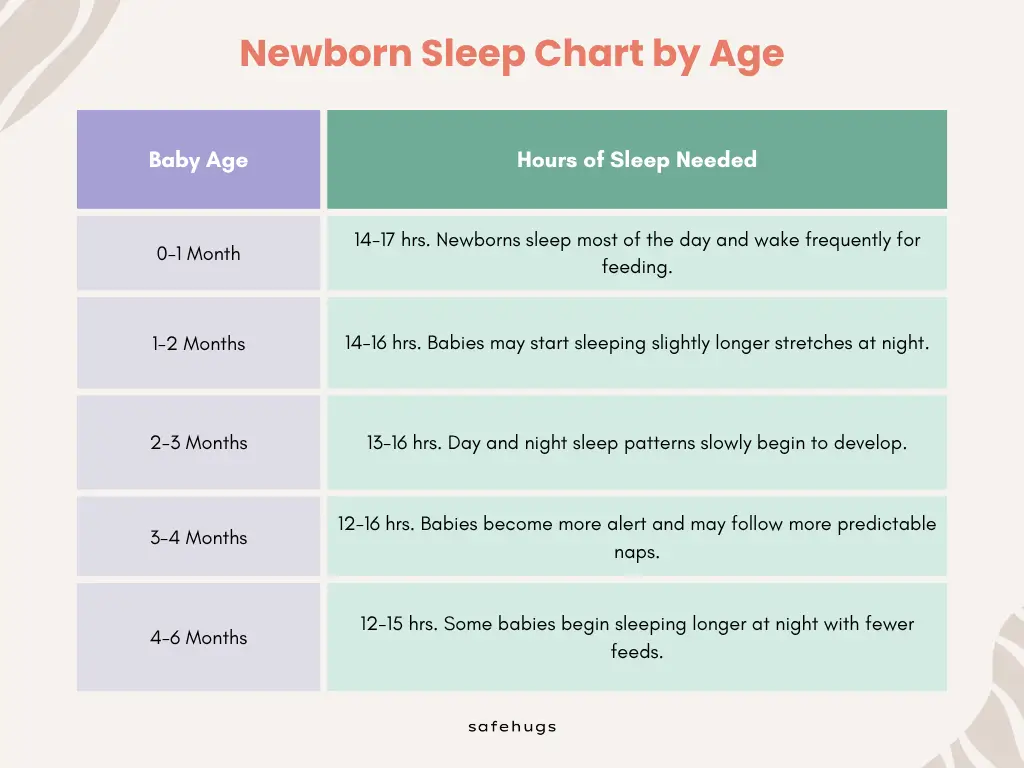
0-1 Month Old
Newborns between 0-1 month usually sleep around 14-17 hours a day. At this stage, babies wake frequently for feeding, often every 2-3 hours, because their stomachs are very small. Their wake windows are usually short, around 30-60 minutes. Sleep is spread throughout the day and night equally, as newborns do not yet understand the difference between daytime and nighttime.
1-2 Months Old
Between 1-2 months, babies generally sleep around 14-16 hours in 24 hours. Wake windows may slowly increase to around 45-90 minutes. Some babies may begin sleeping slightly longer stretches at night, although frequent waking is still normal. Many parents also notice increased evening fussiness or cluster feeding during this stage.
2-3 Months Old
By 2-3 months, babies usually sleep around 13-16 hours a day. Their wake windows may extend to around 60-90 minutes. During this phase, babies slowly start developing a day-night sleep pattern, and some may begin sleeping for longer stretches at night. However, sleep schedules can still vary greatly from one baby to another.
Why Newborns Sleep So Much
Newborns sleep a lot because their bodies and brains are developing rapidly during the first few months. Sleep plays an important role in brain development, physical growth, immune system support, and sensory processing. This is also the time when babies are adjusting to the outside world, so their bodies need plenty of rest. It is common for newborns to seem extra sleepy during growth spurts. Some babies may sleep longer than usual for a few days and then return to their normal sleep pattern.
Sensory Processing - The way a baby's brain receives, understands, and responds to information from the senses like touch, sound, light, movement, taste, and smell.
Why Babies Stay Awake at Night
Many newborns stay awake more during the night in the early weeks. This is known as day-night confusion. Since babies are not born with a fully developed internal body clock, they often cannot tell the difference between daytime and nighttime initially. You may notice your baby sleeping for longer stretches during the day but becoming more alert, active, or fussy at night. Some babies also cluster feed overnight or want to comfort nurse more frequently during evening and nighttime hours. This phase is very common in newborns and usually improves gradually as babies grow and develop a more regular sleep pattern.
Internal Body Clock - The body's natural system that helps regulate sleep and wake times by recognizing day and night patterns. It is also called the sleep-wake cycle or circadian rhythm.
What Is Day-Night Confusion?
Day-night confusion is very common in newborns and is one of the biggest sleep challenges for new parents. In the first few weeks, many babies sleep more during the day and stay awake or active at night. This can begin during pregnancy itself. During the daytime, the mother's movement gently rocks the baby to sleep. At night, when the mother rests, babies may become more active. After birth, some newborns continue following this same pattern for a while. Since newborns are not born with a fully developed internal body clock, it takes time for them to understand the difference between day and night.
My baby used to sleep at 2-3 AM initially. Slowly, we started keeping the house bright during the day and dim at night. It took time, but eventually his sleep shifted earlier. - from our Mom Insider community
How to Help Fix Day-Night Confusion
During the day, try to keep the home bright and active. Open the curtains, allow normal household sounds, and talk to your baby during feeds and diaper changes. Avoid letting your baby sleep for extremely long stretches during daytime.
At night, create a calm and quiet environment. Use dim lighting during feeds and diaper changes, avoid overstimulation, and keep interactions gentle and minimal. Safe swaddling, if recommended by your pediatrician, may also help some babies feel secure. Some parents also find white noise helpful for soothing newborns. With consistency and time, babies slowly begin to understand the difference between daytime and nighttime.
Newborn Wake Windows Explained
Wake windows are the amount of time a baby can comfortably stay awake before becoming overtired. In the newborn stage, babies can usually stay awake only for short periods before they need sleep again.
Approximate Newborn Wake Windows
For most newborns between 0-6 weeks, wake windows are around 30-60 minutes. Between 6-12 weeks, babies may stay awake slightly longer, usually around 45-90 minutes. If a baby stays awake for too long, they may become cranky, extra fussy, difficult to settle, and sometimes even more wakeful at night. Overtired babies often struggle to relax and fall asleep easily.
Signs Your Baby Is Overtired
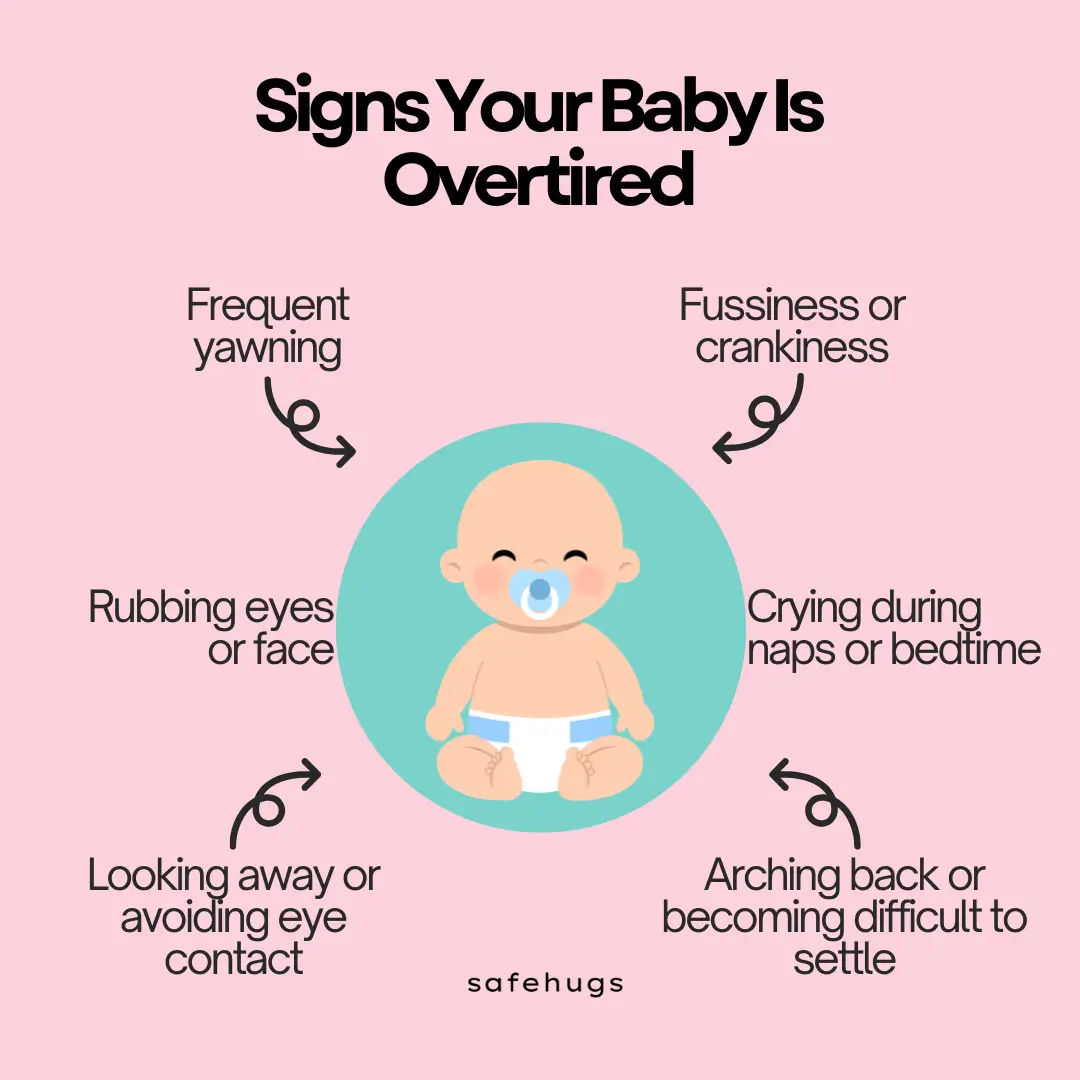
An overtired baby may show several sleep cues before becoming fully upset. Common signs include repeated yawning, fussiness, looking away, arching the back, crying during naps, or becoming harder to soothe. Some babies may also develop slightly red eyebrows or start rubbing their eyes as they grow older.
Even though overtired babies are exhausted, they often have more difficulty falling asleep and may wake more frequently. Watching your baby's wake windows and early sleep cues can help make naps and bedtime easier.
How to Help Your Newborn Sleep Better
Create a simple routine
A simple and predictable bedtime routine can help your baby slowly understand that it is time to sleep. Newborns do not need a strict schedule, but repeating the same calming steps every night may make sleep easier over time. A bedtime routine can include feeding, a light massage, a diaper change, dim lights, safe swaddling if appropriate, white noise, and then sleep. Keeping bedtime calm and consistent is more important than making it perfect.
Routine is the key for us. I make sure my baby doesn't nap too late in the evening, and we follow the same calming bedtime routine daily. - from our Mom Insider community
Use daylight exposure
Natural daylight during the morning and daytime can help babies gradually develop their internal body clock. Keeping curtains open during the day and allowing normal daytime activity may help babies slowly differentiate between day and night.
Feed well before sleep
A well-fed baby is usually more comfortable and may settle better for sleep. Since newborns wake frequently for feeds, ensuring full feeds during wake windows can sometimes help improve sleep stretches.
Burp properly
Gas discomfort can interrupt sleep and make babies fussy. Burping your baby properly after feeds and keeping them upright for a short time may help reduce discomfort and improve sleep.
Keeping my baby upright for 15-20 minutes after feeds really helped with gas and sleep. - from our Mom Insider community
Try skin-to-skin contact
Skin-to-skin contact can be very soothing for newborns. It helps regulate the baby's temperature, heart rate, stress levels, and sleep. Many babies feel calmer and settle more easily when held close to a parent.
Skin-to-skin contact helped my newborn sleep more peacefully during the first 3 months. - from our Mom Insider community
Avoid overtiredness
Newborns can become overtired very quickly. Instead of waiting for intense crying, try watching for early sleep cues such as yawning, fussiness, or looking away. Putting your baby to sleep before they become overtired can make settling easier.
Should You Wake a Sleeping Newborn?
Sometimes, yes. In the early weeks, some newborns may need to be woken up for feeding, especially if they are sleeping for long stretches. Your pediatrician may advise waking your baby if they have not yet regained their birth weight, are sleeping beyond recommended feeding intervals, or if there are concerns about weight gain and feeding. Many doctors recommend feeding newborns every 2-4 hours during the initial weeks. As babies grow and start gaining weight well, feeding schedules may gradually become more flexible. Always follow your pediatrician's guidance regarding feeding frequency and sleep duration for your baby.
Wondering when babies can sleep longer without night feeds? Read our guide on when to stop waking your baby to feed overnight.
Is It Normal for Newborns to Make Noise While Sleeping?
Yes, newborns are often very noisy sleepers. Many babies grunt, wiggle, stretch, make squeaky sounds, move their legs, or even briefly cry while sleeping. These movements and sounds are usually normal during the newborn stage. This happens because newborns have immature nervous systems and spend a lot of time in active sleep cycles. Gas movement, reflexes, and adjusting to the outside world can also make babies noisy during sleep. In most cases, these sounds are harmless and improve as babies grow older. However, if your baby shows persistent breathing difficulty, pauses in breathing, bluish skin or lips, or seems distressed while sleeping, seek immediate medical attention.
My newborn constantly made grunting sounds and moved her legs in sleep. Our pediatrician said noisy sleep is very common in newborns. - from our Mom Insider community
Common Newborn Sleep Problems
Baby Only Sleeps While Feeding
Many newborns fall asleep while feeding because sucking feels soothing and comforting to them. Feeding also helps babies feel safe, relaxed, and close to their parents. This is very common during the early months.
Baby Sleeps Only When Held
Some newborns sleep better only when being held. After spending months in the womb, babies naturally crave warmth, movement, touch, and closeness. Contact naps are common in the newborn stage and usually improve gradually over time.
Short Daytime Naps
Many newborns naturally take short naps lasting around 30-45 minutes. Short naps are common because newborn sleep cycles are still developing. Some babies may need help settling back to sleep after waking.
I stressed a lot about 30-minute naps until I learned that short naps are actually common in young babies. - from our Mom Insider community
Frequent Night Wakings
Frequent night waking is biologically normal in early infancy. Newborns wake often for feeding, comfort, diaper changes, or simply because their sleep cycles are shorter than adults.
Colic and Gas Discomfort
Gas discomfort, reflux, or colic can temporarily affect a baby's sleep quality. Babies may become fussy, wake frequently, pull their legs up, or struggle to settle comfortably during sleep.
Reflux - A condition where milk or stomach contents flow back up into a baby's food pipe, sometimes causing spit-up, discomfort, or frequent vomiting after feeds.
Safe Sleep Tips for Babies
Safe sleep practices are important to help reduce sleep-related risks in newborns and infants. Always place your baby on their back for sleep, both during naps and at night. Use a firm mattress with a fitted sheet and avoid pillows, loose blankets, stuffed toys, or soft bedding in the sleep area.
It is also important to avoid overheating the baby during sleep. Dress your baby comfortably and keep the sleep environment smoke-free. Experts generally recommend room-sharing without bed-sharing, meaning the baby sleeps in the same room but on a separate safe sleep surface. If you choose to swaddle your baby, make sure it is done safely and appropriately for your baby's age and development.
When to Worry About Baby Sleep
While irregular sleep is common in newborns, some signs may require medical attention. Contact your pediatrician if your baby is extremely difficult to wake, repeatedly refuses feeds, has breathing difficulties, shows poor weight gain, cries excessively for long periods, sleeps very little consistently, or seems unusually lethargic. Parents often notice when something feels different about their baby. If your instincts tell you something is unusual, it is always best to seek medical guidance.
Takeaways
Newborn sleep can feel exhausting, confusing, and unpredictable, especially during the first few months. Frequent waking, short naps, irregular sleep schedules, and day-night confusion are all normal parts of newborn development. Instead of focusing on strict sleep training, try to focus on feeding your baby well, responding to their cues, creating calming routines, and following safe sleep practices. Taking care of yourself is equally important during this stage. As babies grow, their sleep patterns usually become more regular and predictable with time.
Related:
Check out our blog on "When to Stop Waking Baby to Feed Overnight".
Check out our blog on "Why Is My Newborn Gagging While Sleeping".
Check out our blog on "Side Effects of Bottle Feeding".
Check out our blog on "What to Drink to Increase Breast Milk Naturally at Home".
Check out our blog on "How to Increase Breast Milk Supply Naturally".