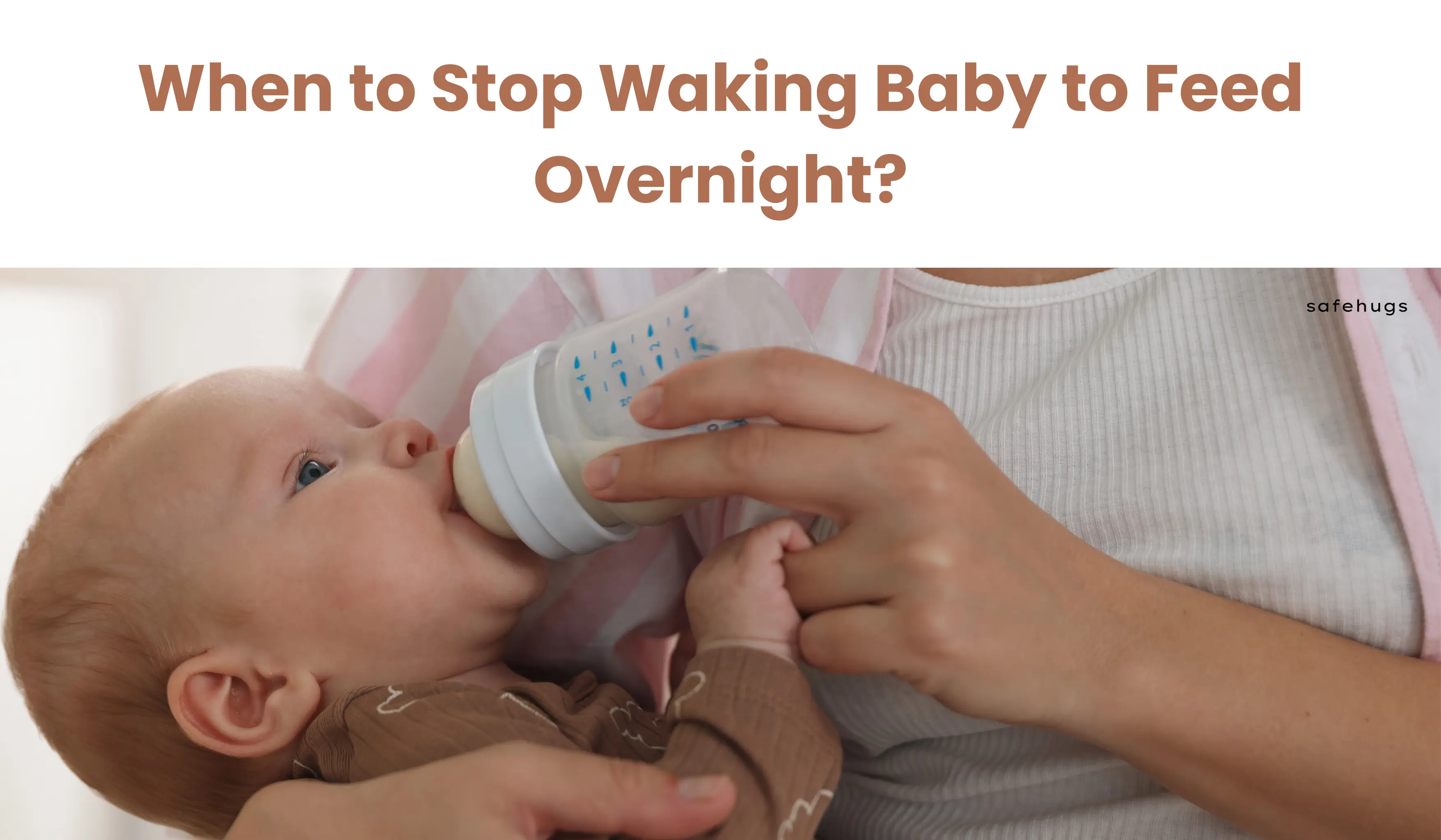
When to Stop Waking Baby to Feed Overnight (By Age)
Table of Content
Why You Need to Wake a Newborn to Feed
When Can You Stop Waking Your Baby to Feed at Night?
Age-Wise Guide: When to Stop Waking Baby to Feed Overnight
Signs Your Baby Is Ready to Stop Night Feeds
When You Should NOT Stop Night Feeding
How to Stop Waking Baby to Feed Every 3 Hours
How to Transition Away from Night Feedings
In the early months, night feeding plays a crucial role in a baby's growth and development. Newborns have small stomachs and need frequent feeds to stay nourished, maintain energy levels, and support healthy weight gain. Skipping feeds for long stretches, especially in the first few weeks, can affect both nutrition and hydration. This is why many parents wonder when to stop waking baby to feed overnight. Should you wake your baby for feeds, or let them sleep if they seem comfortable? It's a common concern, especially when your baby begins to sleep for longer stretches. The answer varies for every baby. It depends on factors such as age, whether birth weight has been regained, consistency of weight gain, and overall daytime feeding patterns.

Why You Need to Wake a Newborn to Feed
In the newborn stage, feeding on time is essential, even if it means waking your baby at night. Unlike older babies, newborns cannot go long stretches without feeding, as their bodies need a steady supply of nutrition. One of the main reasons is their small stomach size. Newborns can only hold a limited amount of milk at a time, so they need frequent feeds every 2-3 hours, including overnight. Skipping feeds for long gaps can leave them underfed.
There is also a risk of low blood sugar (hypoglycemia) and dehydration, especially in the first few weeks. Regular feeding helps maintain stable energy levels and supports overall health. Most importantly, frequent feeding plays a key role in healthy weight gain, growth, and brain development. The early months are a critical period, and consistent nutrition supports both physical and cognitive development.
Cognitive Development - The process by which a child learns to think, understand, remember, and solve problems. It includes skills like learning new things, recognizing people and objects, language development, and decision-making.
If your newborn shows unusual sleep behaviors like gagging or restlessness, understanding the causes can help you respond better during night feeds.
When Can You Stop Waking Your Baby to Feed at Night?
There is no fixed age at which night feeds can be stopped. The decision depends on your baby's growth, feeding patterns, and overall development. The following factors can help guide this transition:
After Birth Weight Is Regained
In the first few weeks, babies are expected to regain their birth weight, usually within 10-14 days. Until this milestone is reached, regular feeding, including waking the baby, is important. Once birth weight is regained, some babies may be allowed to sleep for longer stretches at night.
When Baby Is Gaining Weight Consistently
Consistent weight gain is a key indicator that your baby is receiving adequate nutrition. If growth is steady and feeding during the day is sufficient, it may not be necessary to wake your baby for feeds at night. Regular check-ups can help confirm this.
Based on Baby's Age
As babies grow, their ability to go longer without feeding improves. While newborns need frequent feeding, older babies may naturally begin to sleep for longer stretches. Age can serve as a general guideline, but individual readiness varies, so it should always be considered alongside growth and feeding patterns.
Age-Wise Guide: When to Stop Waking Baby to Feed Overnight
0-1 Month
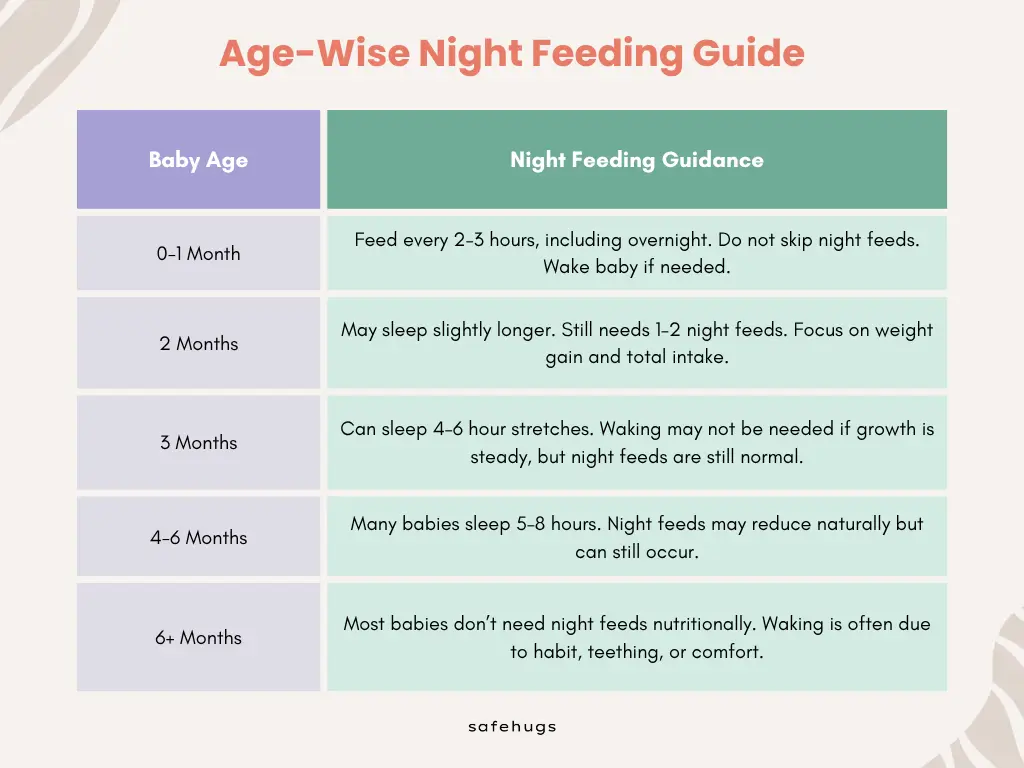
At this stage, babies need to be fed every 2-3 hours, including overnight. Their stomach is small, and they cannot go long without milk. Night feeds are essential and should not be skipped. If you're wondering, should I wake my 1 month old baby to feed at night? yes, in most cases, you should wake them if they don't wake on their own.
2 Months
By two months, some babies may begin to sleep for slightly longer stretches. However, most still need 1-2 night feeds to meet their nutritional needs. Feeding patterns can vary, so weight gain and overall feeding during the day remain the most important indicators.
3 Months
At three months, many babies start sleeping for longer stretches, and night waking may reduce. Some may sleep for 4-6 hours at a time, while others continue to wake more frequently. If the baby is growing well and feeding enough during the day, waking them may not be necessary. However, it is still normal for babies to wake and feed during the night.
A 4-6 hour gap can be okay at 3-4 months if the baby is growing well and having enough wet diapers. But if the baby is moving in sleep or restless, it can still be a hunger cue. It's always best to confirm based on your baby's growth with your pediatrician. - from our Mom Insider community
4-6 Months
Between four and six months, many babies are capable of sleeping for 5-8 hours at night. Some may naturally reduce or drop night feeds, especially if their daytime intake is sufficient. That said, occasional night waking and feeding can still be part of normal development.
6+ Months
After six months, most babies do not need night feeds for nutritional reasons. If they wake, it is often due to habits, teething, or the need for comfort. This is usually the stage when parents can begin to gradually reduce night feeds, based on the baby's readiness and routine.
Signs Your Baby Is Ready to Stop Night Feeds
Not all babies need night feeds for the same duration. Instead of focusing only on age, it's important to look for signs that your baby may be ready to reduce or stop night feedings.
The baby begins to sleep for extended periods at night without needing a feed.
They are taking full, satisfying feeds during daytime hours.
Weight gain growth is steady and on track, as confirmed during check-ups.
Waking but not always hungry your baby may wake but settles back to sleep without feeding.
Night-time disturbances gradually reduce on their own.
When You Should NOT Stop Night Feeding
Night feeds should not be discontinued if your baby still relies on them for adequate nutrition and growth. In certain situations, continuing night feeding is important for the baby's health and development.
If your baby is not gaining weight consistently, night feeds remain essential to support growth.
In the early weeks, babies must feed regularly until they return to their birth weight.
These babies often require more frequent feeding, including at night, for proper development.
If your baby wakes and shows clear signs of hunger, feeds should not be withheld.
Temporary increases in hunger are common and may lead to more frequent night feeding.
If feeding during the day is insufficient, night feeds help meet overall nutritional needs.
Feed on demand. Don't stop night feeds just based on advice from others. If your baby is hungry, they will need that feed. When they are ready, they naturally reduce it on their own. - from our Mom Insider community
Breastfed vs Formula-Fed Babies: Does It Change Night Feeding?
Feeding type can influence how often a baby wakes at night, but it does not change the overall need for responsive feeding in the early months.
Breastfed Babies
Breast milk is digested relatively quickly, which often results in more frequent waking for feeds, particularly in the early months. Night feeding also supports ongoing milk production, as prolactin levels are higher during this period. Consequently, breastfed infants may continue to require night feeds for a longer duration, and any transition away from them is typically gradual.
Formula-Fed Babies
Formula is digested more slowly, which may allow some infants to sleep for longer uninterrupted stretches. Despite this, the need for night feeding should not be assessed based on feeding method alone. Adequate total daily intake and consistent growth are more reliable indicators of readiness to reduce night feeds.
If you're combining or considering bottle feeding, it's important to understand its potential effects on feeding patterns and sleep.
Should You Feed Baby Every Time They Wake at Night?
Not always. Night waking does not necessarily mean your baby is hungry. Especially after the newborn stage, babies may wake due to sleep cycles, the need for comfort, or habit. It is important to distinguish between hunger cues and non-hunger waking. If your baby shows signs like rooting, sucking, or active restlessness, feeding is appropriate. If not, you can try soothing methods such as gentle patting or rocking, depending on the baby's age. If you're wondering, should I feed baby every time he wakes at night, the answer is to respond based on cues rather than feeding automatically. This helps ensure your baby is fed when needed, without reinforcing unnecessary night waking.
How to Stop Waking Baby to Feed Every 3 Hours (Step-by-Step)
Once your baby is ready, you can gradually move away from strict 3-hour night feeds. The key is to make small, consistent changes while ensuring your baby continues to get enough nutrition.
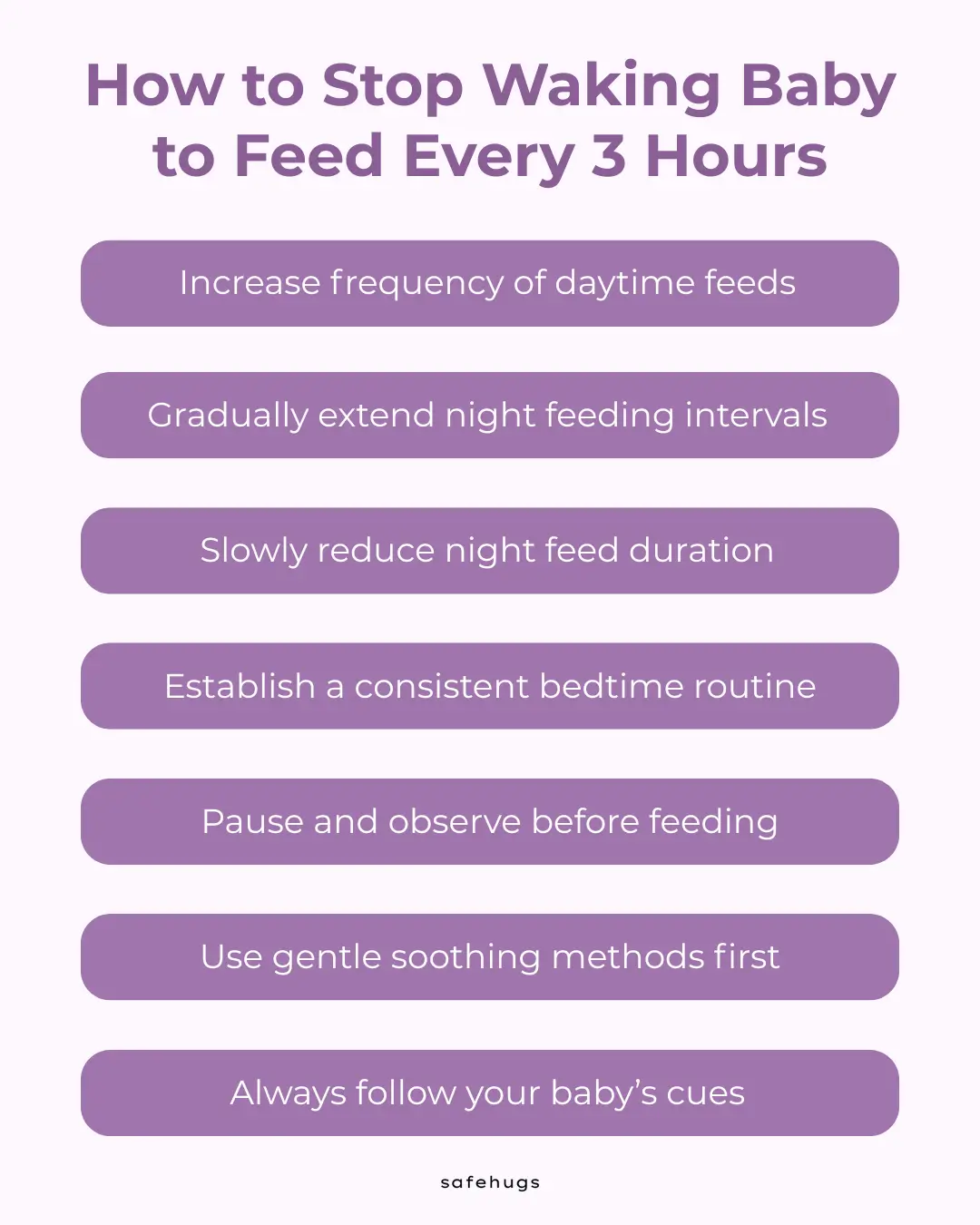
1. Increase Daytime Feeding
Make sure your baby is feeding well during the day. Offer full, effective feeds at regular intervals so their total intake is adequate. Babies who are well-fed during the day are less likely to depend on night feeds.
2. Gradually Extend Night Gaps
Instead of waking your baby exactly every 3 hours, begin extending the gap slowly. Increase the interval by 15-30 minutes and observe your baby’s response. Extend further only if your baby remains comfortable.
3. Reduce Night Feed Duration
If your baby wakes to feed, gradually shorten the duration (for breastfeeding) or reduce the quantity (for formula feeding). This helps decrease reliance on night calories without sudden changes.
4. Establish a Consistent Bedtime Routine
A simple, predictable routine before sleep, such as feeding, burping, changing, and calming, helps signal bedtime. This supports longer and more settled sleep at night.
5. Pause Before Feeding
When your baby wakes, wait briefly to assess whether it is due to hunger. Some babies can settle back to sleep on their own. If there are no clear hunger cues, immediate feeding may not be necessary.
6. Use Soothing Methods
If your baby wakes without clear signs of hunger, try soothing techniques such as gentle patting, rocking, or holding. If the baby continues to show hunger cues, proceed with feeding.
Most routines, schedules, and sleep patterns don't fully settle before 3-4 months. Babies at this stage often cluster feed, especially at night, and that is completely normal. - from our Mom Insider community
How to Transition Away from Night Feedings
Reducing night feeds should be a gradual process, guided by your baby's readiness rather than a fixed timeline.
Avoid stopping night feeds abruptly. Slowly reduce frequency or duration to allow your baby to adjust without affecting overall intake.
Pay attention to hunger signals and sleep patterns. If your baby continues to wake with clear hunger cues, continue feeding and reassess later.
A predictable bedtime routine supports better sleep patterns and helps the baby adapt to longer stretches at night.
Changes in feeding can lead to short-term sleep disturbances. This is normal and usually settles with consistency.
Common Mistakes Parents Make
When transitioning away from night feeds, certain approaches can make the process more difficult or ineffective.
Discontinuing feeds before the baby is ready can affect growth and increase night waking.
Sleep and feeding patterns vary widely; what works for one baby may not apply to another.
Strict schedules may not align with your baby's developmental stage, especially in the early months.
Perceived low supply is common; frequent feeding, including at night, often supports supply rather than harms it.
Overlooking hunger or comfort needs can lead to increased distress and disrupted sleep.
Seeing others pump large quantities can be misleading. Output varies widely, and pump quantity does not always reflect how much milk your baby is getting. - from our Mom Insider community
Related:
Check out our blog on "Why Is My Newborn Gagging While Sleeping".
Check out our blog on "How Many Hours Do Newborns Sleep".