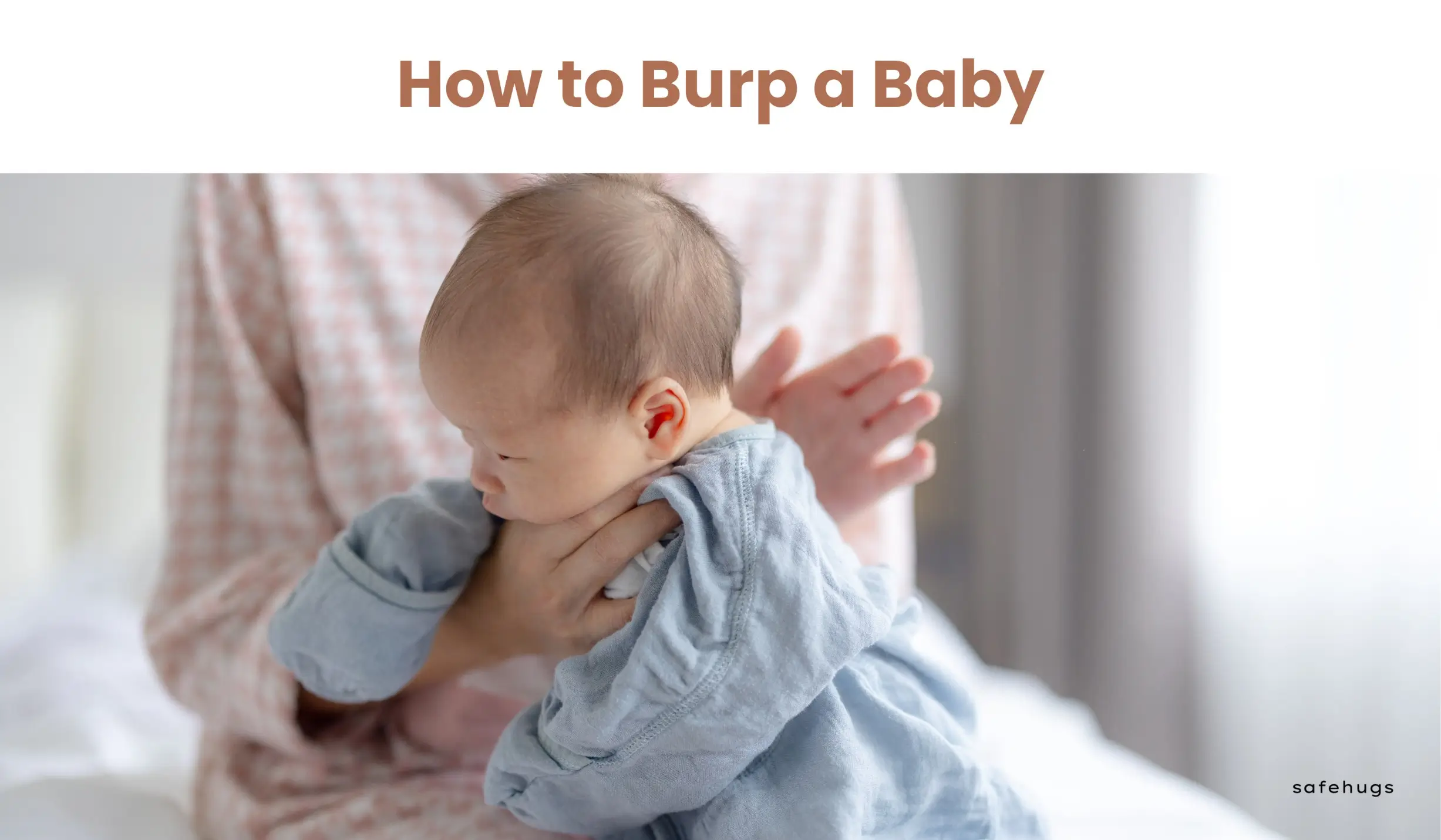
How to Burp a Baby: Positions & Tips That Actually Work
Your newborn is fed, warm, and by all logic, should be asleep now. Instead, they are squirming. They are letting out a high pitched cry. It is gas. Every parent learns this lesson early that feeding is only half the job, burping is the other half. Skipping or rushing isn’t a small thing. The trapped air in your baby’s tummy can cause gas pain, which leads to spit-up, disrupted sleep, and is one of the leading causes for colic. Here we will help you learn every burping position, exactly how to burp a baby, how long to do it, what to do when nothing works out, and when you can fully stop burping.
Table of Content
Why do babies need to be burped?
How to burp a baby - 5 positions that actually work
How to burp a sleeping baby
How long should you try to burp a baby?
How to burp a baby at night
When can you stop burping your baby?
Why do babies need to be burped?
Babies are not efficient eaters. Whether they're at the breast or a bottle, they swallow air along with milk, sometimes surprisingly more of it. Because a newborn's digestive system is still immature, that trapped air doesn't move on its own the way it would in an older child or adult. It sits in the stomach, causing pressure, discomfort, and fussiness.
Bottle-fed babies tend to swallow more air than breastfed ones, especially if the teat flow is too fast. Using a slow-flow or anti-colic bottle teat makes a real difference, something many Indian moms in our Mom Insider community swear by.
That said, breastfed babies aren't off the hook though. A poor latch is a major culprit. One mom shared this advice from her paediatrician: holding the breast with the index and middle fingers while feeding can cause a poor latch, leading to trapped gas. So the latch is worth checking if your baby seems consistently gassy.
Colic - It is when an otherwise healthy baby cries excessively for long periods, often due to digestive discomfort or an immature nervous system, usually during the first few months.
Common signs your baby needs to burp:
Squirming or arching the back mid-feed or after
Pulling off the breast or bottle and crying
A hard or bloated feeling tummy
Fussiness that starts 10-15 minutes after a feed
Hiccups immediately after eating
How to burp a baby - 5 positions that actually work
There is no single right way to burp a baby. What works for one baby may not work for another. Try these five positions and find the one (or combination) that works for your baby.
1. Over-the-shoulder burp
This is the position most parents start with. It's effective, hands-free, and keeps your baby upright while you support them.

How to do it:
Hold your baby with their chin resting on your shoulder.
Support their bottom with one hand.
With your other hand, gently pat or rub their back in an upward motion.
Keep patting rhythmically for a few minutes, you're influencing air bubbles upward.
Tip: Place a muslin cloth on your shoulder before you start. Spit-up might happen at some point.
Spit-up - A small amount of milk that comes back up from a baby’s stomach after feeding, usually due to an immature digestive system or swallowed air.
2. Sitting burp with tick-tock movement
This position was recommended by a paediatrician in our Mom Insider community for babies who struggle to burp in the over-the-shoulder hold, it works well for gassy, difficult to burp babies.

How to do it:
Sit your baby on your lap, facing away from you.
Support their chin and chest with one hand, your index finger and thumb cradle the jaw (not the throat).
Lean them forward slightly.
With your free hand, pat their back.
Gently rock them side to side in a tick-tock motion as you pat.
3. Tiger-on-tree (tummy-down on arm)
This position can be used as a gas-relief hold and a burping position. It's mainly good for very young newborns and colicky babies.

How to do it:
Lay your baby face-down along your forearm, their head near your elbow, legs straddling your hand.
Their tummy is on your arm, which provides gentle pressure.
Use your other hand to pat their back.
You can rock gently back and forth
4. Face-down across your lap
Similar to the tiger-on-tree but works well when you're sitting. This position uses gravity to help move the gas bubble upward.

How to do it:
Lay your baby face-down across your lap, their head slightly higher than their tummy (you can tilt your knees slightly).
Support their head so it's turned to one side.
Pat or rub their back gently.
5. Upright hold - even without burp
This is less of a “burping technique" and more of a non-negotiable rule shared by nearly every paediatrician and mothers from our community: hold your baby upright for at least 15-20 minutes after every feed, regardless of whether they've burped. Multiple doctors in our community also gave this exact advice, and the science backs it up. Even if no burp comes, keeping the baby vertical allows milk to settle at the bottom of the stomach and air to rise naturally, reducing reflux and spit-up significantly.
The doctor advised us to hold her upright for 20-25 minutes after every feed even if she has finished burping. My daughter had intense colic and many spit-ups, this helped enormously - one mom shared in our Mom Insider community.
Note: If you're doing a longer feed, pause halfway through to burp your baby. This is especially helpful for bottle-feeding and for babies prone to colic.
Reflux - A condition where milk or stomach contents flow back up into a baby’s food pipe, causing frequent spit-up, discomfort, or irritability after feeds.
Discover common breastfeeding positioning mistakes that can lead to poor latch, nipple pain, gas, and feeding difficulties.
How to burp a sleeping baby
Dream feeds, where you feed your baby while they’re sleepy or half-asleep, are often used to help them sleep longer at night. But many parents wonder: should you wake the baby to burp them? Usually, no. You don’t need to wake them, just hold them upright for a few minutes after feeding.
What to do:
After a dream feed, lift your baby to your shoulder or hold them upright against your chest.
Keep them in this position for 15-20 minutes, even if they stay asleep the whole time.
The upright angle helps air bubble up without triggering a full waking.
"When my baby was 2 months and started doing dream feeds, I wouldn't want to wake her. So I'd just hold her upright for 15-20 mins and then put her down. It worked fine," shared one mom in our community.
If your baby wakes when you put them down, don't worry, this is very common in babies around 1-2 months old. At this age, many babies prefer contact naps and wake easily when moved. As your baby’s digestive system matures, usually around 3-4 months, burping and settling mostly become much easier.
How long should you try to burp a baby?
This is one of the most common worries for new parents, especially when you’ve been trying everything and your baby still won’t burp.
General Guidance
Try burping your baby for about 5-10 minutes using gentle pats and different positions.
If no burp comes, hold your baby upright or semi-upright for 15-20 minutes after feeding.
If your baby seems calm and comfortable, there’s usually no need to worry.
Some babies, mainly breastfed ones who feed slowly or take long, lazy feeds, don't swallow much air and won't produce a big burp every time. One mom from our Mom Insider community noticed, "If the feeding position itself is upright, my baby burps on her own in between feeding, like small burps, and then doesn't burp much at the end. My paed said that's fine."
If no burp comes after 10 minutes of trying, move on. Do bicycle leg exercises, a gentle tummy massage, or some tummy time. These can help move trapped gas through the digestive system naturally.

What to do if your baby won't burp
A baby who simply won't burp is one of the most frustrating newborn experiences, especially at 3 a.m. Here's a systematic approach to try.
Switch positions
The over-the-shoulder hold doesn't work for every baby. Try the sitting burp, the tiger-on-tree, or the face-down across the lap positions. Sometimes these simple change in angle can really help.
Check the latch or bottle teat
A poor latch during breastfeeding means more air intake. A fast-flow teat on a bottle has the same effect. A slow-flow teat and paced bottle feeding can reduce the amount of air your baby swallows in the first place.
Gentle tummy massage
Using warm oil (coconut or mustard oil are common choices in Indian households), massage the tummy gently in a clockwise direction. This helps move gas through the digestive tract. Some moms do this 3-4 times a day.
Bicycle legs
Lay your baby on their back and gently move their legs in a cycling motion. This is one of the most effective ways to release gas that's moved past the stomach.
Hing (asafoetida) - the Indian home remedy
Mixing a pinch of hing with water or breastmilk and applying it around the navel is a common Indian remedy for infant gas, and many moms in our community vouch for it. Mother Sparsh Tummy Roll-On (hing-based) is a popular option.
Colicaid drops
If gas is severe, persistent, and your baby is constatntly crying, colicaid drops are commonly recommended by paediatricians. However, these drops are usually not meant to be the first solution. Most doctors recommend trying other methods first.
How to burp a baby at night
Night feeds are usually when burping feels most impossible. You're half-asleep, your baby is fully asleep after feeding, and the idea of holding them upright for 20 minutes feels like a lot.
Here are few practical tips for night burping:
Keep lights dim and sound low. The goal is to burp without waking your baby. If possible, work in near-darkness.
Use the upright hold on your chest. Sit back in bed or on a chair, hold your baby against your chest, and let them sleep there for 15-20 minutes. Many parents usually fall asleep here, just be careful.
Sitting burp works well at night. It requires less arm strength than the over the shoulder hold.
If your baby falls asleep immediately after feeding, don’t panic. Hold them upright for 15 minutes before laying them down. Even without a burp, this will reduces spit-up and discomfort.
When to stop burping at night
Most parents gradually decrease night burping between 4-6 months, because babies can more easily move gas on their own. Follow your baby's cues, if they're sleeping soundly and not showing signs of gas pain, you're likely fine.
When can you stop burping your baby?
This is the question every sleep-deprived parent looks forward to asking. Most babies stop needing active burping somewhere between 4 and 6 months of age. By then:
Their digestive system is more mature
They can sit upright with support, which helps move gas naturally
They are feeding more efficiently and swallow less air
Signs your baby may no longer need burping:
Stay calm and comfortable after feeding
Have little or no spit-up
Don’t seem uncomfortable without being held upright
Are more active and able to move or reposition themselves
Every baby is different. Some babies stop needing burping around 4 months, while others carry on until 6 months or beyond. Follow your baby's lead.
Learn the common signs of overfeeding in newborns here.
Burping a breastfed baby vs a bottle-fed baby: Is there a difference?
Yes. Breastfed babies usually swallow less air, especially when they have a deep, proper latch. Because of this, their burps may be smaller, quieter, or sometimes not happen at all. That doesn’t mean they never need burping, it just means that you may not always hear a big burp.
Bottle-fed babies swallow more air, particularly if the teat flow is too fast for their age or if they feed quickly. Anti-colic bottles and slow-flow teats are worth investing in. Always burp bottle-fed babies mid-feed and at the end. And combo-fed babies should be burped after every bottle feed, and after breast feeds when possible.
Understand the possible side effects of bottle feeding here, from increased gas and overfeeding to dental and feeding-related concerns.
When to see a doctor
While gas, spit-up, and occasional fussiness are common in babies, some signs may need medical attention. Speak to your paediatrician if your baby:
Frequently arches their back during or after feeds
Vomits forcefully from both the mouth and nose, rather than having small normal spit-ups
Seems to be in significant or ongoing pain after feeding
Is not gaining weight well
Cries excessively and is difficult to comfort most of the time
These symptoms can sometimes point to issues like severe reflux, feeding difficulties, or other digestive concerns that may need proper evaluation.
Key Takeaways
Always hold your baby upright for 15-20 minutes after a feed, even without a burp
Try multiple positions like the sitting burp with tick-tock movement, which is very effective for difficult burpers
Hing, tummy massage, and bicycle legs help move stubborn gas
Most babies can stop being burped at 4-6 months
Related:
Check out "What Is Cluster Feeding".
Check out "Signs of Cluster Feeding".
Check out "Wrong Breastfeeding Positions".
Check out "Side Effects of Bottle Feeding".
Check out "Why Is Your Newborn Gagging While Sleeping".