Signs of Overfeeding Newborn: Causes and What to Do
Table of Content
Can Breastfed Babies be Overfed?
Signs of Overfeeding Newborn
Is It Overfeeding vs Normal Spit-Up?
Why Do Newborns Spit Up So Much
Common Causes of Overfeeding in Newborns
How to Prevent Overfeeding in Newborns
Many parents worry when their baby spits up or vomits milk after feeding. It can be confusing to understand whether it's overfeeding, reflux, or just normal newborn spit-up. In most cases, frequent spit-up is completely normal in young babies. Their digestive system is still developing, and small amounts of milk coming back up are common. That said, it's still important to know the difference between what's normal and what could be a sign of something else. Here, we'll help you understand the signs of overfeeding newborns, along with the causes, simple ways to manage it, and when you should be concerned.

Can Breastfed Babies be Overfed?
Overfeeding in breastfed babies is usually rare because babies naturally regulate how much milk they need and tend to stop when they're full. However, it can still happen in certain situations. For example, if you have a strong let-down reflex, milk may flow very quickly, causing the baby to take in more than needed before they realize they're full, which can lead to spitting up. Similarly, during comfort sucking, babies may continue to suck for soothing rather than hunger, and still receive small amounts of milk that can add up. While many people believe that breastfed babies cannot be overfed at all, that's not completely true. It's less common than with bottle feeding, but still possible. The key is to pay attention to your baby's hunger and fullness cues rather than just the duration of feeding.
Signs of Overfeeding Newborn
It's normal for babies to spit up occasionally, but certain patterns can point toward overfeeding. Here are the most common signs to watch for:
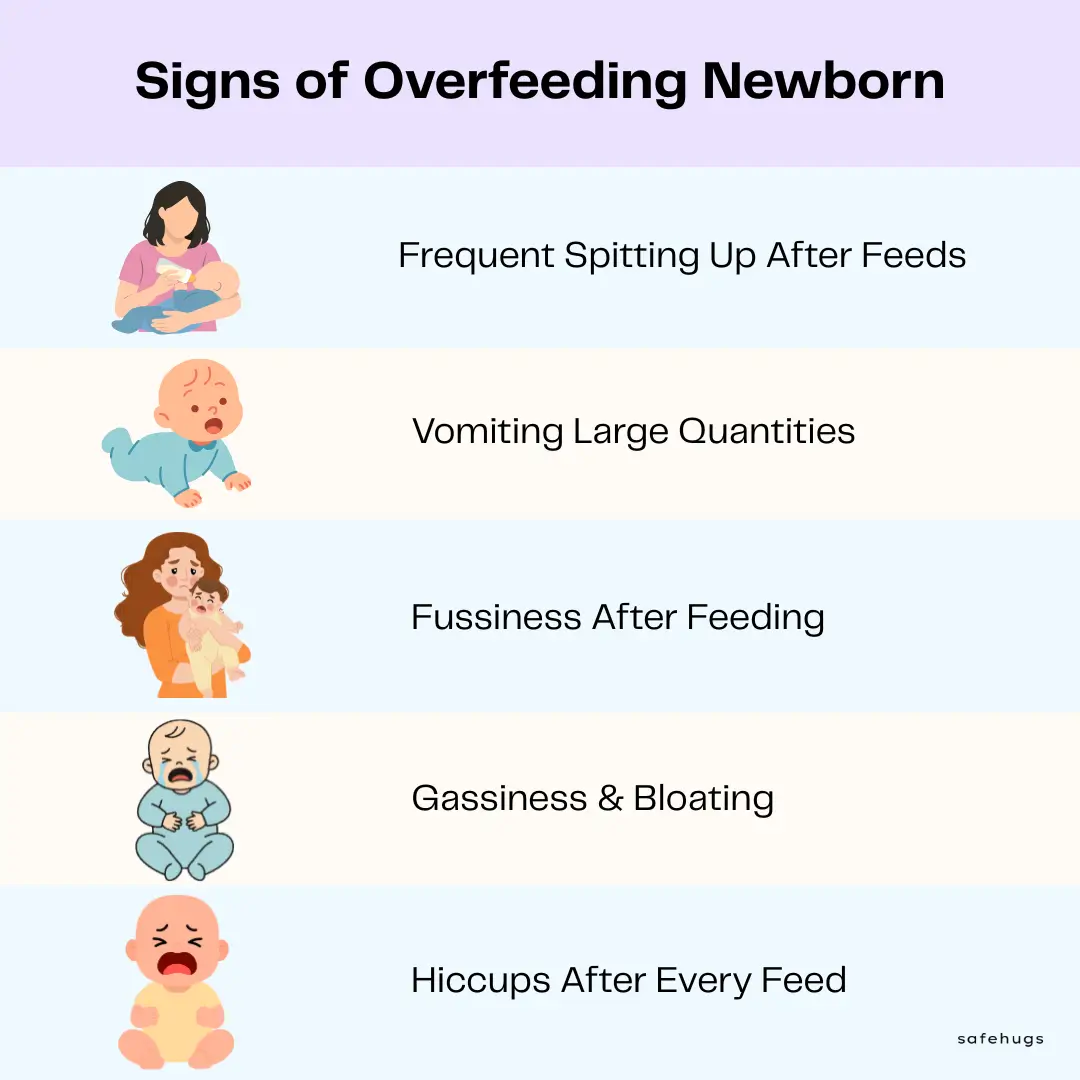
1. Frequent Spitting Up After Feeds
If your baby spits up milk right after feeding, it could be a sign they've had more than their tummy can handle. You may notice the milk looks non-curdled (fresh) or sometimes curdled (partially digested), both can happen and are usually normal in small amounts.
2. Vomiting Large Quantities
There's a difference between normal spit-up and vomiting. Spit-up is usually gentle and small, while vomiting is more forceful and in larger amounts, which can indicate the stomach is too full.
3. Fussiness After Feeding
If your baby seems uncomfortable, cries, or squirms even after feeding, it could be due to a too-full tummy causing discomfort.
Squirms - Small, restless movements of the body, often showing discomfort or uneasiness.
4. Gassiness & Bloating
Overfeeding can lead to excess air intake and digestion issues, making your baby's tummy feel tight or bloated, along with frequent burping or passing gas.
5. Hiccups After Every Feed
Occasional hiccups are normal, but frequent hiccups after feeds may be linked to excess milk intake or a stretched stomach.
6. Short Feeding Gaps but Still Spitting Up
If feeds are very close together and your baby still spits up often, it may mean they are being fed before they are actually hungry, leading to overfeeding.
7. Pulling Away or Crying During Feeding
Babies often show clear cues when they've had enough. Turning away, pushing the breast/bottle, or crying during feeds can signal they are full but still being encouraged to continue.
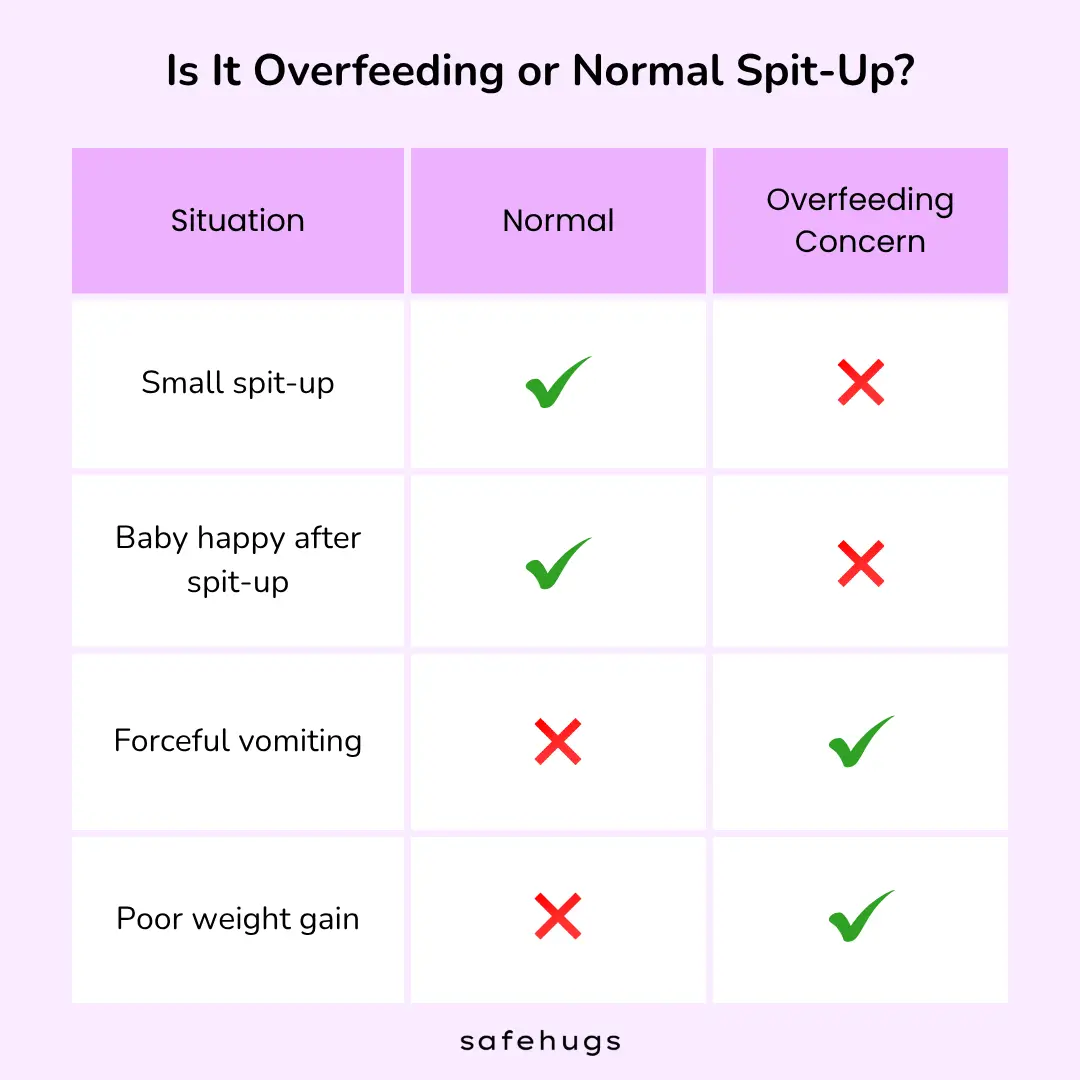
Is It Overfeeding vs Normal Spit-Up?
It can be hard to tell the difference, but a few simple signs can help you understand what's normal and when to be concerned:
Why Do Newborns Spit Up So Much
Spitting up is very common in newborns and is usually nothing to worry about. It happens mainly because their bodies are still adjusting to feeding and digestion. Here are the most common reasons:
Immature Digestive System
A newborn's digestive system is still developing. The muscle that keeps milk in the stomach is not fully strong yet, so milk can easily come back up.
Small Stomach Size
Newborns have tiny stomachs that can only hold a small amount of milk at a time. Even a little extra can cause milk to spill out.
Swallowing Air
While feeding, babies often swallow air, especially if they are crying or feeding quickly. This trapped air can push milk back up, leading to spit-up.
Fast Milk Flow
If the milk flow is too fast, either from a strong breast milk let-down or a fast-flow bottle nipple, babies may take in more milk than they can handle, causing them to spit up.
If your baby also gags during sleep, read our guide on "Why Is My Newborn Gagging While Sleeping" to understand the causes and when to worry.
Common Causes of Overfeeding in Newborns
Overfeeding doesn't usually happen on purpose, it often comes from small misunderstandings around feeding. Here are some common reasons:
1. Comfort Feeding (Not Hunger)
Babies don't just feed for hunger, they also suck for comfort, soothing, and sleep. During this, they may still take in milk even when they're not actually hungry, which can lead to overfeeding.
Sometimes babies feed for comfort… they still get milk even if they are not actively drinking. - from our Mom Insider community
2. Bottle Feeding & Fast Flow Nipples
It's easier for babies to drink from a bottle than the breast, especially with fast-flow nipples. Milk comes out quickly, so babies may consume more than they need before they realize they're full.
Bottle feeding can sometimes lead to overfeeding, learn more about the Side Effects of Bottle Feeding and how to avoid them.
3. Misreading Hunger Cues
Not every cry means hunger. Babies cry for many reasons, sleep, discomfort, need for closeness. Feeding every time the baby cries can sometimes lead to giving more milk than needed.
4. Pressure to Finish the Bottle
Many caregivers feel the need to make the baby "finish the bottle." But babies don't always need the same amount every time. Encouraging them to keep drinking even after they show fullness cues can lead to overfeeding.
How to Prevent Overfeeding in Newborns
Preventing overfeeding is mostly about understanding your baby’s cues and making small adjustments during and after feeds.
Follow Hunger & Fullness Cues
Learn to spot the difference between hunger and fullness. Early hunger signs include rooting, sucking on hands, or lip movements, while signs of fullness include turning away, slowing down, or falling asleep. Try to stop when your baby shows they’ve had enough.
Try Mid-Feed Burping
Burping isn't just for the end of a feed. Pausing to burp your baby after 5-10 minutes (or halfway through a bottle) can release trapped air and prevent the stomach from getting too full.
My doctor suggested doing a mid-feed burp around 10 minutes when my baby had frequent spit-ups. - from our Mom Insider community
Keep Baby Upright After Feeding (20 Minutes)
Holding your baby upright for about 20 minutes after feeding helps the milk settle and reduces the chances of spit-up.
Use Slow-Flow Nipples (For Bottle-Fed Babies)
Slow-flow nipples help control how fast milk comes out, giving your baby more time to recognize when they're full and reducing the risk of overfeeding.
Avoid Feeding Just to Stop Crying
Crying doesn't always mean hunger. Before offering a feed, check if your baby might need sleep, a diaper change, or comfort. This helps avoid unnecessary feeding.
Best Feeding Practices (0-3 Months)
In the first few months, feeding can feel unpredictable, but a few simple guidelines can help you find a rhythm that works for your baby.
Feeding Frequency Guide
Most newborns feed every 2 to 3 hours, but this can vary. Some babies may want feeds more often, especially during growth phases. Instead of strictly following the clock, it's best to feed on demand by watching your baby's hunger cues.
Wake Windows
At this age, babies can usually stay awake for about 45 to 90 minutes at a time. Feeding often fits naturally at the start or end of these wake windows. An overtired baby may cry more, which can sometimes be mistaken for hunger.
Cluster Feeding Explained
Cluster feeding is when babies feed very frequently over a few hours, often in the evening. This is completely normal and usually happens during growth spurts or when your baby is trying to increase milk supply. It doesn't mean your milk isn't enough or that your baby is being overfed, it's a natural pattern in early development.
When Spitting Up Is NOT Normal
While spit-up is common in newborns, certain signs may indicate something more serious and should not be ignored. Watch out for these red flags:
Projectile Vomiting
If the milk is coming out forcefully in a sudden, strong stream (not just dribbling), it could be a sign of an underlying issue and needs medical attention.
Dribbling - Liquid flowing out slowly in small amounts, rather than forcefully.
Blood or Green Vomit
If you notice blood stains or green-colored vomit, it is not normal and should be checked by a doctor immediately.
Poor Weight Gain
If your baby is spitting up frequently and not gaining weight properly, it may mean they are not retaining enough nutrition.
Refusing Feeds
A baby who consistently refuses to feed or shows distress during feeding may be dealing with discomfort or a medical issue.
Excessive Crying
If your baby cries persistently, seems in pain, or is difficult to soothe along with frequent spit-up, it could point to something beyond normal digestion.
When to See a Pediatrician
While occasional spit-up is normal, there are times when it's best to get medical advice. Reach out to your pediatrician if you notice the following:
If your baby is vomiting frequently after most feeds and it doesn't seem to improve over time, it's important to have it checked.
If your baby shows signs like constant discomfort, arching the back, frequent crying during or after feeds, or poor sleep, it could be reflux and may need evaluation.
If you're using formula and notice repeated spit-up, fussiness, gas, or changes after feeds, even after switching brands, it's worth discussing with your doctor to rule out intolerance or sensitivity.
Overfeeding vs Reflux
It's easy to confuse overfeeding with reflux because both can cause spit-up, but they're not the same. Overfeeding usually happens when a baby takes in more milk than their stomach can handle. This often leads to spitting up soon after feeding, but the baby is otherwise comfortable, calm, and gaining weight well. The spit-up is typically not forceful, and reducing feed quantity or spacing out feeds often helps.
Reflux, on the other hand, is related to how the baby's digestive system functions. Babies with reflux may spit up frequently, but they also show signs of discomfort, such as crying during or after feeds, arching their back, or being unsettled when lying down. It's not just about how much they eat, but how their body handles the milk.
In my case, baby was overfeeding when needing comfort, which led to reflux. - from our Mom Insider community
Takeaways
Spitting up in newborns is very common and usually nothing to worry about. In many cases, it's simply because their digestive system is still developing. While overfeeding can sometimes be a reason, especially with bottle feeding, it's not always the cause. Breastfed babies generally regulate their intake better, but even they can occasionally take in more than needed. The most important thing is to watch your baby's cues, like turning away, slowing down, or seeming uncomfortable, instead of focusing only on timing or quantity.
Related:
Check out our blog on "Side Effects of Bottle Feeding".
Check out our blog on "What to Drink to Increase Breast Milk Naturally at Home".
Check out our blog on "How to Increase Breast Milk Supply Naturally".
Check out our blog on "When to Stop Waking Baby to Feed Overnight".
Check out our blog on "Why Is My Newborn Gagging While Sleeping".