Wrong Breastfeeding Positions: Mistakes & How to Fix Them
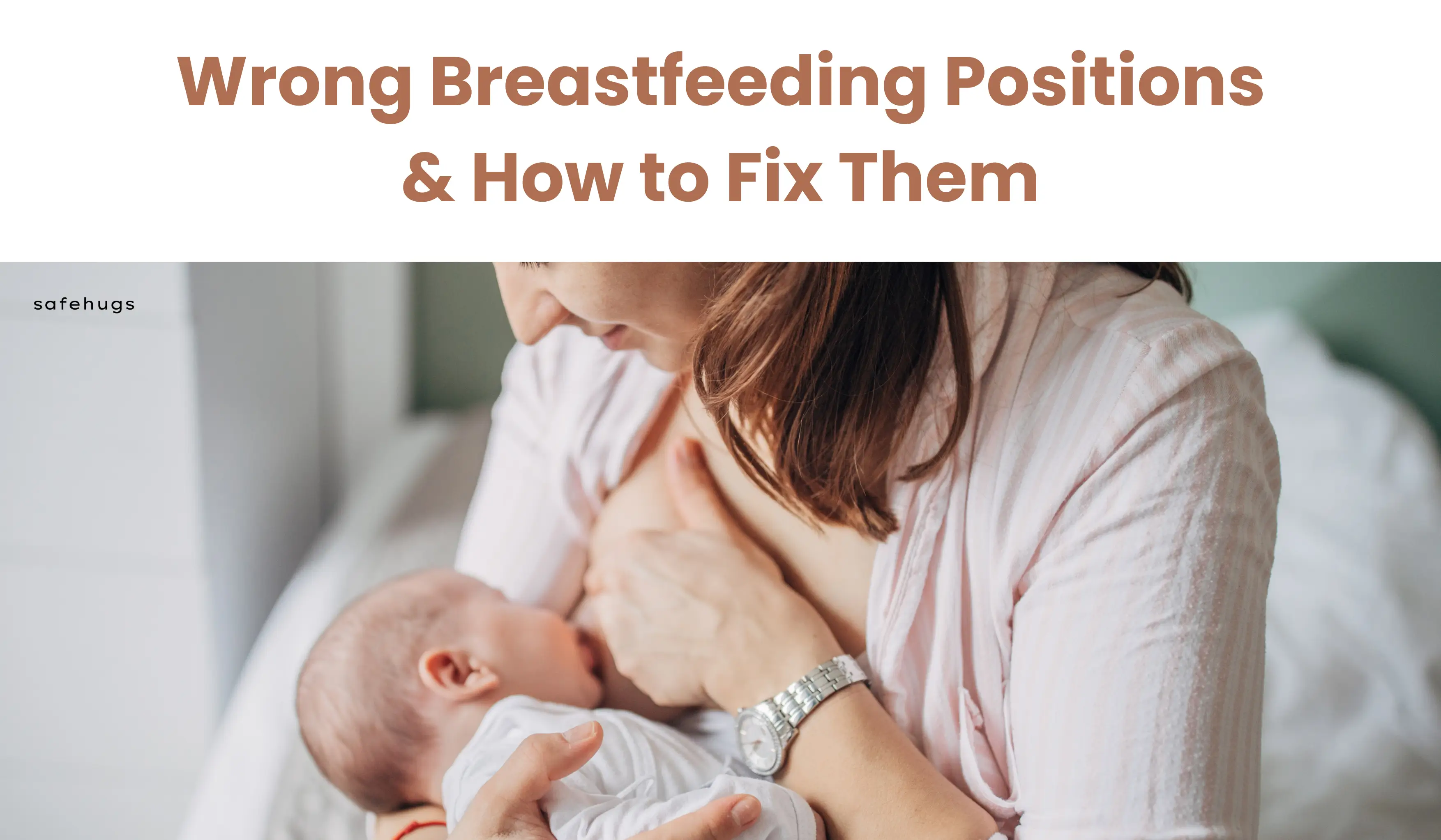
Breastfeeding is often mentioned as natural, but that does not mean it always feels easy in the beginning. Many mothers struggle with pain, nipple soreness, baby slipping off the breast, constant feeding, gas, or frustration during nursing. In many cases, the issue is not low milk supply but incorrect breastfeeding positioning. Wrong breastfeeding positions can affect how well your baby latches, how much milk they consume, and how comfortable feeding feels for both of you. Even a small positioning mistake can lead to discomfort, poor feeding, excessive air swallowing, and long-term breastfeeding challenges.
Table of Content
Common Wrong Breastfeeding Positions
Wrong Breastfeeding Positions in Specific Situations
How to Spot If You are in Wrong Breastfeeding Positions
Step-by-Step: How to Fix Wrong Breastfeeding Positions
Products That Support Correct Breastfeeding Position
Best Breastfeeding Tips for New Moms
Why Breastfeeding Position is So Important
Breastfeeding looks simple from the outside. In practice, it is a physical skill that includes your baby's jaw, tongue, and throat working in coordination, and all of that coordination depends on how your baby is positioned at the breast. When the position is right, your baby draws a mouthful of breast tissue, not just the nipple. The tongue cups underneath, creates suction, and drives milk out. You feel pressure but not pain. Your baby gets full. Your supply receives the signal it needs to keep producing. When the position is wrong, even slightly, the nipple gets compressed instead of drawn in. The baby works harder, tires faster, and transfers less milk. The mother feels pain. The breast doesn't empty properly, which over time reduce supply and raises the risk of blocked ducts and mastitis. The World Health Organization says that correct positioning and attachment are the foundation of successful breastfeeding.
Mastitis - It is a painful inflammation of the breast tissue that often includes an infection.
Common Wrong Breastfeeding Positions
Baby Latching Only onto the Nipple, Not the Areola
This is the most common mistake, and the most painful. When a hungry, crying baby is put to the breast, she just grabs the nipple quickly, especially in the early weeks when she's still learning. This results in shallow latch where only the nipple (or the nipple and a tiny bit of the areola) is in the mouth. The baby chews or compresses the nipple with each suck rather than drawing milk from the breast tissue behind it.
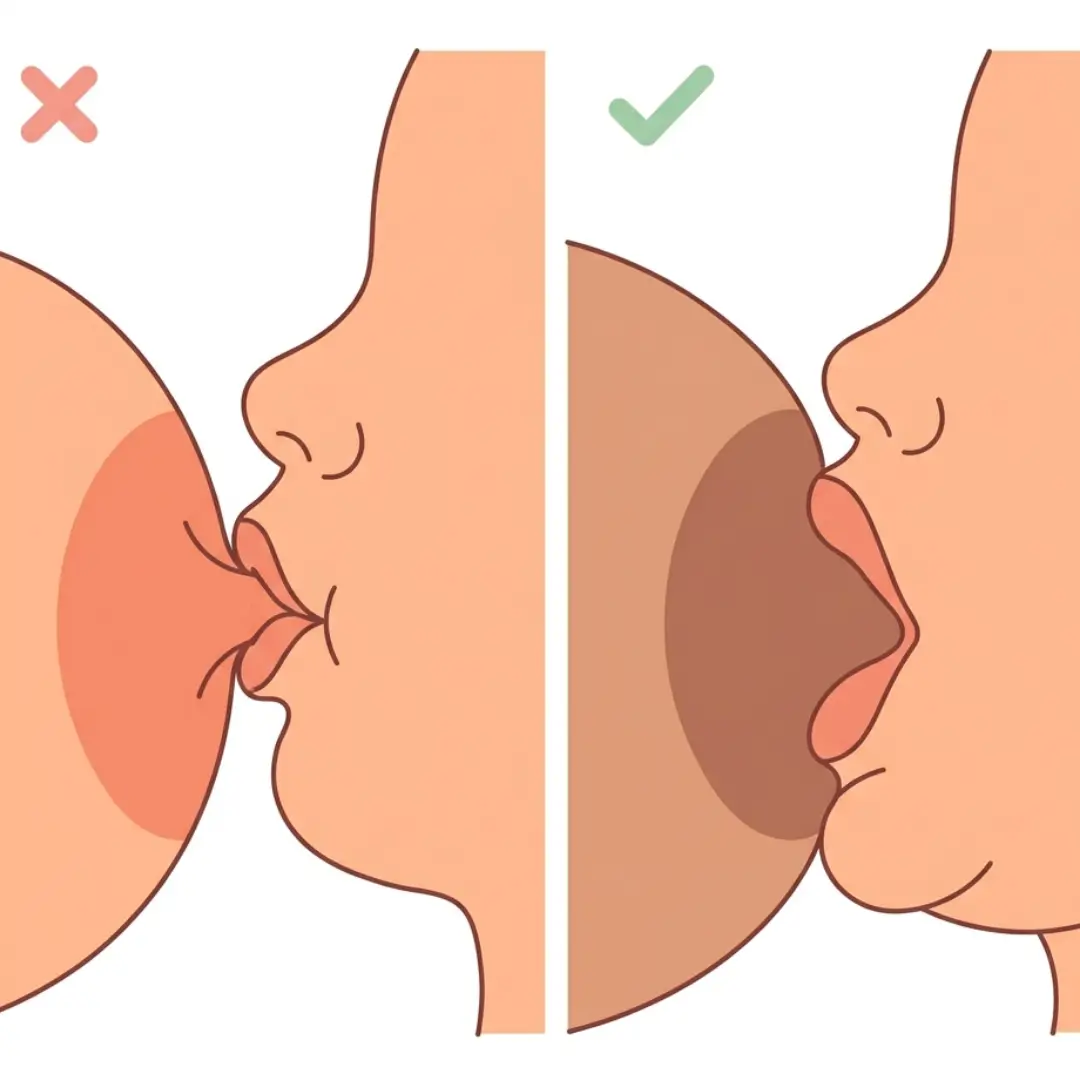
What it feels like: Sharp, immediate pain from the moment the baby latches. The nipple may come out flattened, creased, or lipstick-shaped after feeds. Cracking, blistering, and bleeding can develop within days.
What it causes: Minimal milk transfer (baby works hard but gets little), long feeds that still leave baby unsatisfied, and severe nipple damage.
How to fix it: When your baby opens her mouth, wait for a wide gape similar to a yawn. Point your nipple toward the roof of her mouth rather than directly into the center, then quickly bring her close to the breast so she takes in a deep mouthful, including a good portion of the areola below the nipple. Her chin should rest against the breast while her nose remains free for comfortable breathing.
Mother Leaning Forward / Hunching Over the Baby
Many new mothers, especially in the first days post-delivery, instinctively lean forward and bring the breast down toward the baby. This feels like it's helping. It is not. Hunching forward puts enormous strain on your back, neck, and shoulders. For mothers who have had a caesarean section, who are also managing incision pain, and disrupted sleep, this posture makes every feed physically exhausting and painful.
What it feels like: Back, shoulder, and neck pain that worsens through the day. A sense that you are doing all the work.
What it causes: Poor control of the latch, milk pooling in the breast, increased mastitis risk, and a feeding posture that can lead to early weaning.
How to fix it: Bring your baby to your breast, never your breast to your baby. Sit back, use a firm chair or pillows behind your back, and use a nursing pillow under the baby to raise her to breast height. Your shoulders should be relaxed, not raised. You should be able to look down at your baby without bending your neck.
Weaning - It is the gradual process of transitioning an infant from an exclusive breast milk or formula diet to solid foods, and eventually detaching them from milk dependency.
Baby's Head Turned to the Side (Not Facing the Breast)
If your baby's head is turned so that she has to twist her neck to reach the nipple, swallowing becomes hard and uncomfortable.
What it feels like: The latch keeps slipping. Baby pulls, tugs, and re-latches repeatedly. Feeds feel unstable.
What it causes: Jaw misalignment, inefficient sucking, and a frustrated, gassy baby who swallows more air than milk.
How to fix it: Follow the "tummy to mummy" principle. Your baby's nose, chest, and knees should all face your body. Her ear, shoulder, and hip should form a straight line. Her head should tilt back slightly with the chin leading, rather than being tucked down towards the chest.
Baby's Chin Not Touching the Breast
The chin is the main contact point in a correct latch. When the chin presses into the breast, the angle of the mouth opens naturally and the tongue is placed to cup and draw milk effectively. If the chin pulls away, often because the baby's head is pushed straight instead of slightly tilted back, the mouth angle becomes narrower, the airway feels tighter, and the tongue cannot move as efficiently during feeding.
What it feels like: Feeds that go on and on with little milk transfer. Baby may make clicking or smacking sounds.
What it causes: Inefficient feeds, excessive air swallowing, colic symptoms, and gassiness.
How to fix it: Before latching, tilt your baby's head back slightly so the chin reaches the breast first. The chin should rest firmly enough to make slight contact with the breast, while the nose may lightly touch the breast without being pushed into it.
Supporting the Back of Baby's Head
This is an instinctive thing most mothers do. But pressing on the back of the skull triggers a reflex in newborns to push their head backward. The baby fights the latch, pops off repeatedly, and both of you end up frustrated.
What it feels like: Baby keeps pulling away or shaking her head before latching.
How to fix it: Support the base of the skull and the back of the neck and shoulders instead. Your palm cups behind the ears. This allows the head to tilt back naturally and the chin to lead.
Baby's Arms Tucked In
A baby whose arms are tucked awkwardly under her body, and left free or push against the breast, will lead the baby to be distracted and tense during feeds. Tension in the body moves to the jaw, affecting the latch quality.
How to fix it: In the cradle or cross-cradle hold, tuck baby's lower arm around your waist or under your arm. In the football hold, the baby's body is already tucked along your side. Either way, baby should feel snug and contained.
Incorrect Side-Lying Position
Side-lying feeding is a lifesaver for mothers, mainly after a caesarean, and it is safe when set up correctly. However, when done incorrectly (mother and baby not at the same level, baby's body at an angle, head tilted chin-to-chest), it carries the same shallow-latch problems as any other wrong position.
A common concern raised in our Mom Insider community is whether side-lying feeding causes ear infections. The answer is no, this is a myth. Breastmilk does not pool in the ear canal the way formula can in a bottle-fed baby laid flat. Side-lying breastfeeding is considered safe by lactation professionals when done with attention to positioning.
How to do it correctly: Both you and your baby lie on your sides, facing each other, at the same height. A pillow between your knees reduces hip strain. Baby's head is level with your breast, with chin slightly tilted toward the breast and nose clear.

Wrong Breastfeeding Positions in Specific Situations
Wrong Breastfeeding Positions Newborns (0-2 Months)
Newborn babies have small mouths, limited muscle strength, and very little neck control. During the first few weeks, positions that give mothers better control over the baby's head and latch are usually the easiest and safest. The most helpful positions for newborns are often: Cross-cradle hold (where the opposite hand supports the baby’s neck and shoulders, allowing better latch) and Laid-back breastfeeding position (where the mother lie back slightly while the baby lies tummy-down against the chest, using natural feeding reflexes and gravity to help with latch).
In the early weeks, positions that provide less head support may feel more difficult. For example, the traditional cradle hold can sometimes make it harder to guide a deep latch until the baby develops stronger neck control and breastfeeding becomes more established.
Breastfeeding Position After C-Section
After a caesarean, the last thing you want is any pressure on your abdominal incision. Two positions are particularly suited to c-section recovery:
Football / clutch hold: Baby is tucked under your arm like a football ball, body behind you, legs pointing bedind the back. No weight on the abdomen.
Side-lying position: You and your baby lie face-to-face on the bed. Completely takes body weight off the incision and allows rest during feeds.
Using pillows for support may improve comfort and positioning. If possible, asking a nurse, midwife, or lactation consultant to help with positioning before leaving the hospital can make early breastfeeding easier at home.
Breastfeeding Positions That Increase Gas
Certain positioning mistakes cause babies to swallow excess air during feeds, which shows up as gassiness, colic-like crying, and excessive spitting up after feeds. The main culprits are: chin not touching the breast (wrong angle = more air), latch slipping repeatedly (baby gulps air each time she re-latches), and a strong let-down reflex where baby struggles. The laid-back position reduces the force of reflux by working against gravity and is widely recommended when a mother has an oversupply or fast flow.
Colic - It is a behavioral syndrome in healthy infants characterized by inconsolable, intense crying lasting more than 3 hours a day, occurring over 3 or more days a week.
Laid-Back Breastfeeding Position
The laid-back (biological nurturing) position is underused and underrated. You recline comfortably, not flat, but at roughly a 45-degree angle, and place baby tummy-down on your chest. Baby's weight is supported by your body, and gravity keeps her pressed gently against the breast. This position activates newborn feeding reflexes naturally, is excellent for oversupply and fast let-down, and is one of the most comfortable positions for post-caesarean feeding. Many mothers find it easier to achieve a deep latch in this position than in any other.
How to Spot If You are in Wrong Breastfeeding Positions
Run through this checklist after any feed that felt difficult:
Nipple pain during the feed, or a burning/stinging sensation afterward
Nipple comes out flattened, angled, creased, or in a "lipstick" shape
Clicking or smacking sounds throughout the feed
Baby slipping off the breast and re-latching multiple times
Feeds lasting 40+ minutes with baby still seeming hungry
Baby is gassy, colicky, or spits up excessively after feeds
Engorgement or a hard, sore area in the breast that doesn't clear after feeding
Your back, neck, or shoulders ache after feeds
Baby is not gaining weight as expected
Step-by-Step: How to Fix Wrong Breastfeeding Positions
You can correct the position at any point during a feed. Here is how:
Step 1 - Break the suction first. Never pull your baby off the breast without breaking the suction, this causes immediate nipple damage. Slide the tip of your little finger into the corner of baby's mouth to release the suction, then slowly move her away.
Step 2 - Reposition the body. Baby's belly should face your belly. Her ear, shoulder, and hip should be in a straight line. There should be no neck twist.
Step 3 - Support correctly. Hold the base of the skull and back of the neck, not the back of the head. Let the head tilt slightly back so the chin leads.
Step 4 - Create a wide gape. Hold your baby so your nipple touches her upper lip. Wait. She will open wide, it should be like a yawn.
Step 5 - Bring the baby to breast quickly. As soon as the mouth opens wide, bring her onto the breast in one smooth motion, chin first, then lower lip, then upper. Your nipple should point toward the roof of her mouth.
A nursing pillow raised to breast height reduces the effort of holding the position and helps you maintain it continuously through full feed.
Products That Support Correct Breastfeeding Position
Nursing pillow: Raise your baby to breast height and stop the hunching forward that causes back pain and poor positioning. Choose a firm pillow, not a soft one that collapses under your baby's weight.
Nipple cream: If you have already developed cracked or sore nipples from incorrect positioning, a lanolin-based nipple cream (such as Lansinoh) can help healing. It is safe for babies and does not need to be wiped off before feeding. Applying your own expressed breast milk to the nipple after feeds also promotes healing, breast milk has natural antimicrobial and healing properties.
Nipple shield: Occasionally used as a short-term bridge when nipples are too sore to feed directly, but nipple shields do not address the underlying positioning issue and can interfere with milk transfer if used long-term. Use only under the guidance of a lactation expert.
Note: Products mentioned here are based on recommendations of breastfeeding mothers from our Mom Insider community. Always check with your healthcare provider before using any new product, particularly if you have concerns about supply.
Best Breastfeeding Tips for New Moms
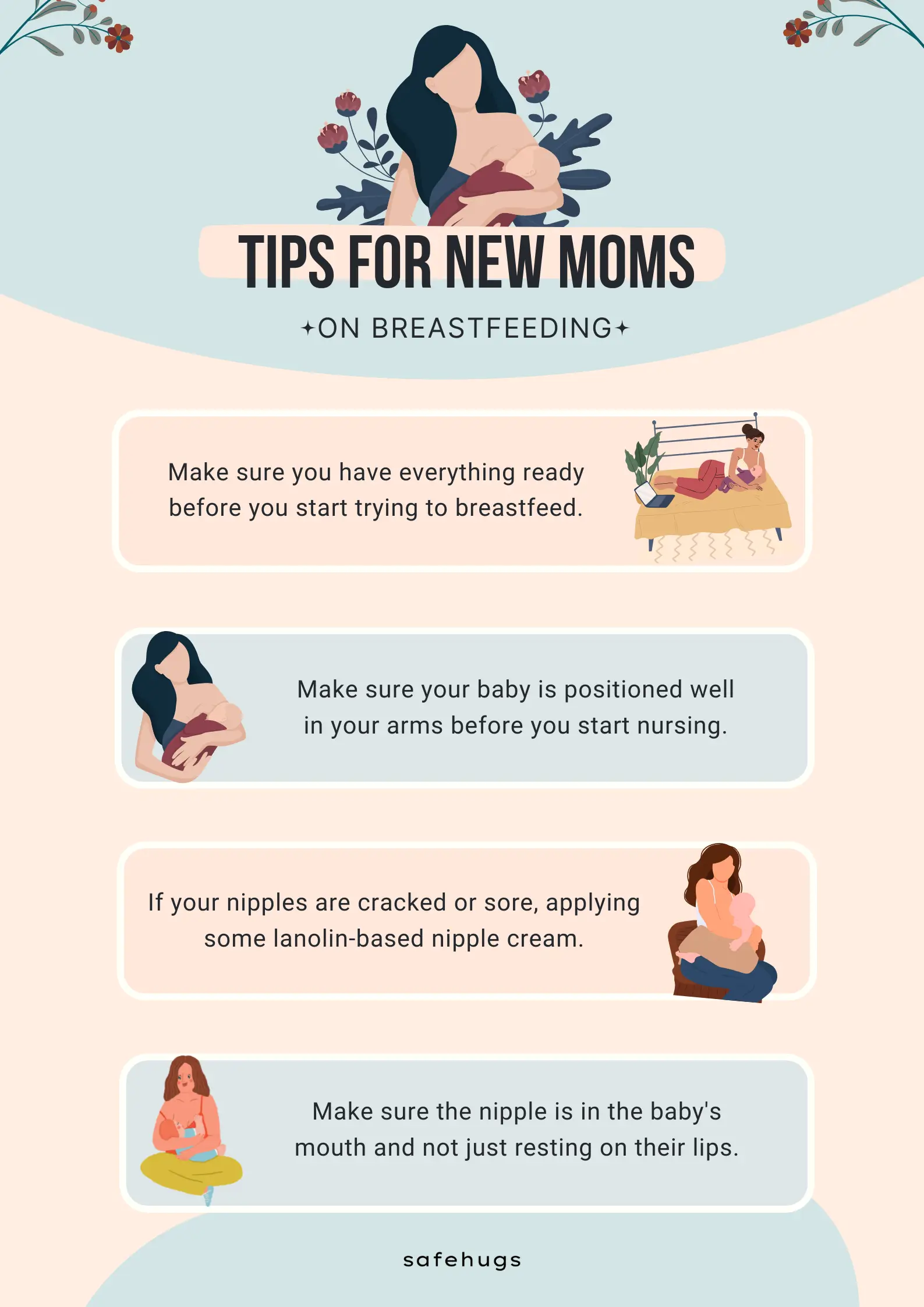
Small adjustments in positioning, timing, and support can make feeding easier for both mother and baby. Here are some tips that may help improve latch, reduce discomfort, and make nursing more comfortable.
Use Pillows for Support
Breastfeeding pillows or even regular cushions can help support your arms, shoulders, and back during feeds. Proper support helps bring your baby to breast level so you are not leaning forward constantly, which can reduce neck and shoulder strain and improve latch positioning.
Feed Early Hunger Cues
It is often easier to latch a calm baby than a very hungry, crying baby. Try offering feeds when your baby first starts showing hunger cues rather than waiting until they become frantic. Early hunger cues may include:
Rooting
Hand sucking
Lip smacking
Turning the head while searching for the breast
Avoid Forcing the Baby's Head
Pressing the back of your baby's head can make latching more difficult. Support around the neck and shoulders usually works better and allows your baby to move naturally during feeding. Allowing the head to tilt slightly back can help your baby open wider and achieve a deeper latch.
Try Different Feeding Positions
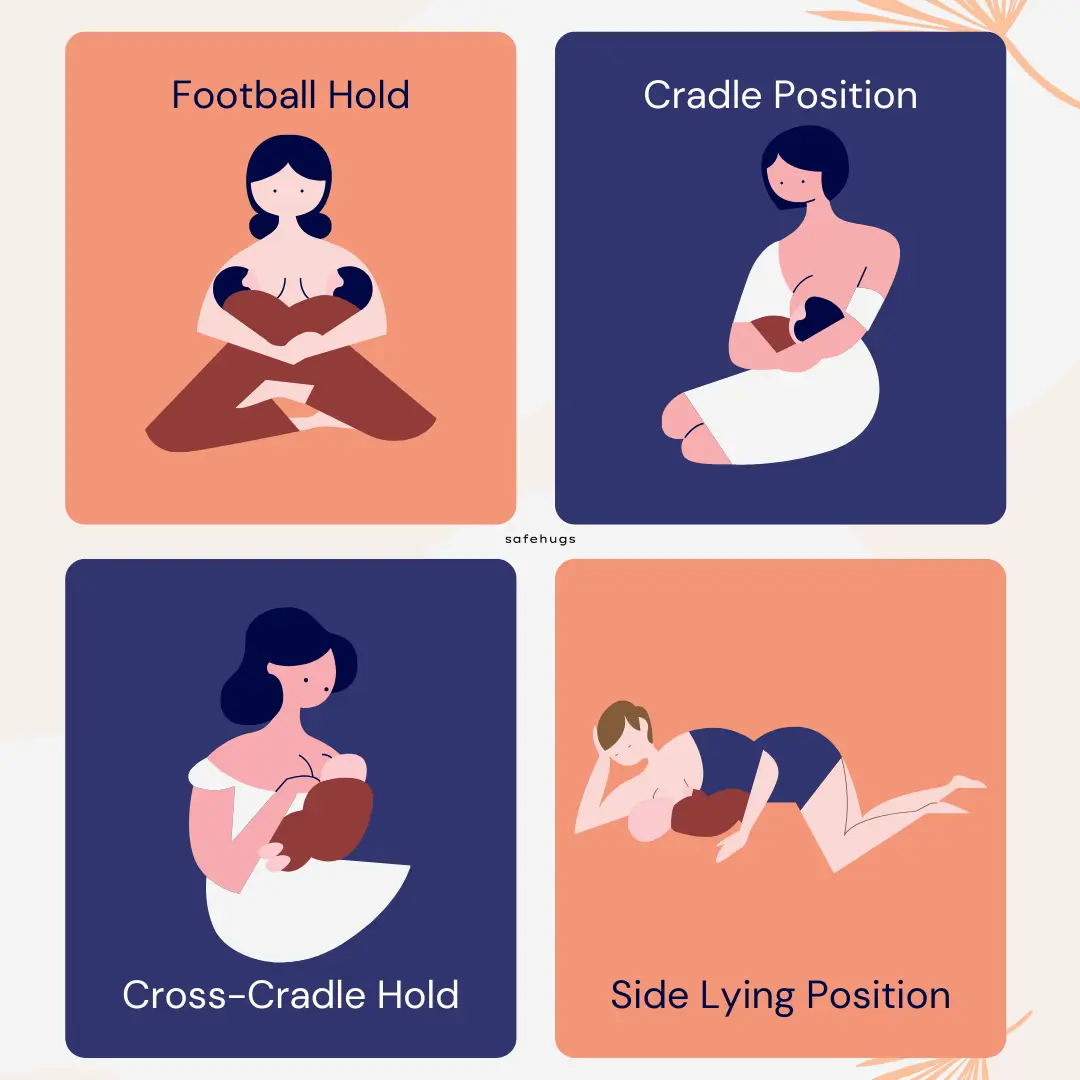
Not every breastfeeding position works the same for every mother and baby. Some babies latch better in certain positions depending on their age, comfort, or feeding difficulties. You may find it helpful to experiment with positions such as:
Cross-cradle hold
Football hold
Side-lying position
Laid-back breastfeeding
Burp Baby Properly After Feeds
Some babies swallow extra air during feeding, especially if the latch is shallow or milk flow is fast. Burping after feeds may help reduce discomfort, bloating, and fussiness. If your baby seems gassy, try keeping them upright for a few minutes after feeding as well.
I was breastfeeding 30-40 mins and baby was still hungry. I met my lactation consultant and she improved the latching position. Now I can feed him to content. - from our Mom Insider community
When to See a Lactation Consultant
Most positioning issues improve with practice, patience, and the steps above. But some situations need professional eyes if:
Nipple pain is severe or worsening despite correcting position
You have tried multiple positions and nothing has improved
Your baby cannot seem to maintain a latch regardless of how you adjust
Baby is not gaining adequate weight
You are experiencing recurring blocked ducts or mastitis
Your baby has started pulling away from the breast, refusing to open wide, or showing signs of what may be oral aversion
Most mothers notice significant improvement after one or two sessions.
Related:
Check out "How to Stop Breastfeeding at Night".
Check out "Signs of Overfeeding Newborn".
Check out "Why Is My Newborn Gagging While Sleeping".
Check out "Side Effects of Bottle Feeding".