
How to Stop Breastfeeding at Night (Night Weaning Guide)
Table of Content
What is Night Weaning
When Should You Stop Breastfeeding at Night?
Signs Your Baby is Ready to Stop Night Feeding
How to Stop Breastfeeding at Night
Age-Wise Night Weaning Guide
Easy Night Weaning Methods
Common Mistakes to Avoid
Night breastfeeding is common in the early months, but over time it can become exhausting, especially when your baby depends on feeding to fall back asleep. Many parents also face challenges like bottle refusal, concerns about milk supply, and frequent night wakings that make it difficult to get uninterrupted sleep. These situations are normal, but they can make nights feel overwhelming. If you're wondering how to stop breastfeeding at night, the key is to approach it gradually and in a way that supports your baby's needs. With the right steps, it's possible to reduce night feeds, without stress or abrupt changes.

What is Night Weaning
Night weaning is the process of gradually reducing or stopping breastfeeding during nighttime hours while continuing regular feeds during the day. For a night weaning baby, the goal is to help them sleep for longer stretches without depending on feeding to fall back asleep. It's important to understand the difference between hunger and comfort feeding, when a baby is truly hungry, they actively suck and swallow for a longer duration, whereas comfort feeding involves brief or light sucking mainly for soothing. Many night wakings are not due to hunger but are linked to a sleep association, where the baby gets used to feeding as a way to return to sleep. Night weaning focuses on breaking this pattern while ensuring the baby continues to get enough nutrition during the day.
I used to let my baby stay latched after feeding. Over time, it became a comfort habit, and now even at 2 years, she still wants to latch for sleep. I wish I had unlatched earlier. - from our Mom Insider community
When Should You Stop Breastfeeding at Night?
There is no fixed age to stop breastfeeding at night, as every baby's needs and development are different. However, as a general guideline, babies between 0-6 months usually require night feeds for proper growth and nutrition, while between 6-12 months, some babies may naturally begin to reduce the frequency of night feeds. By 1 year and above, most babies do not need night feeds from a nutritional standpoint, especially if they are eating well during the day.
That said, the decision to stop breastfeeding at night should always be based on your baby's individual needs. Factors like steady weight gain, overall feeding patterns, and your pediatrician's advice are important to consider. In some cases, parents may be advised to gradually space out night feeds earlier if the baby is growing well, but this approach varies. It is always best to follow guidance tailored to your baby rather than relying on a fixed timeline.
Signs Your Baby is Ready to Stop Night Feeding
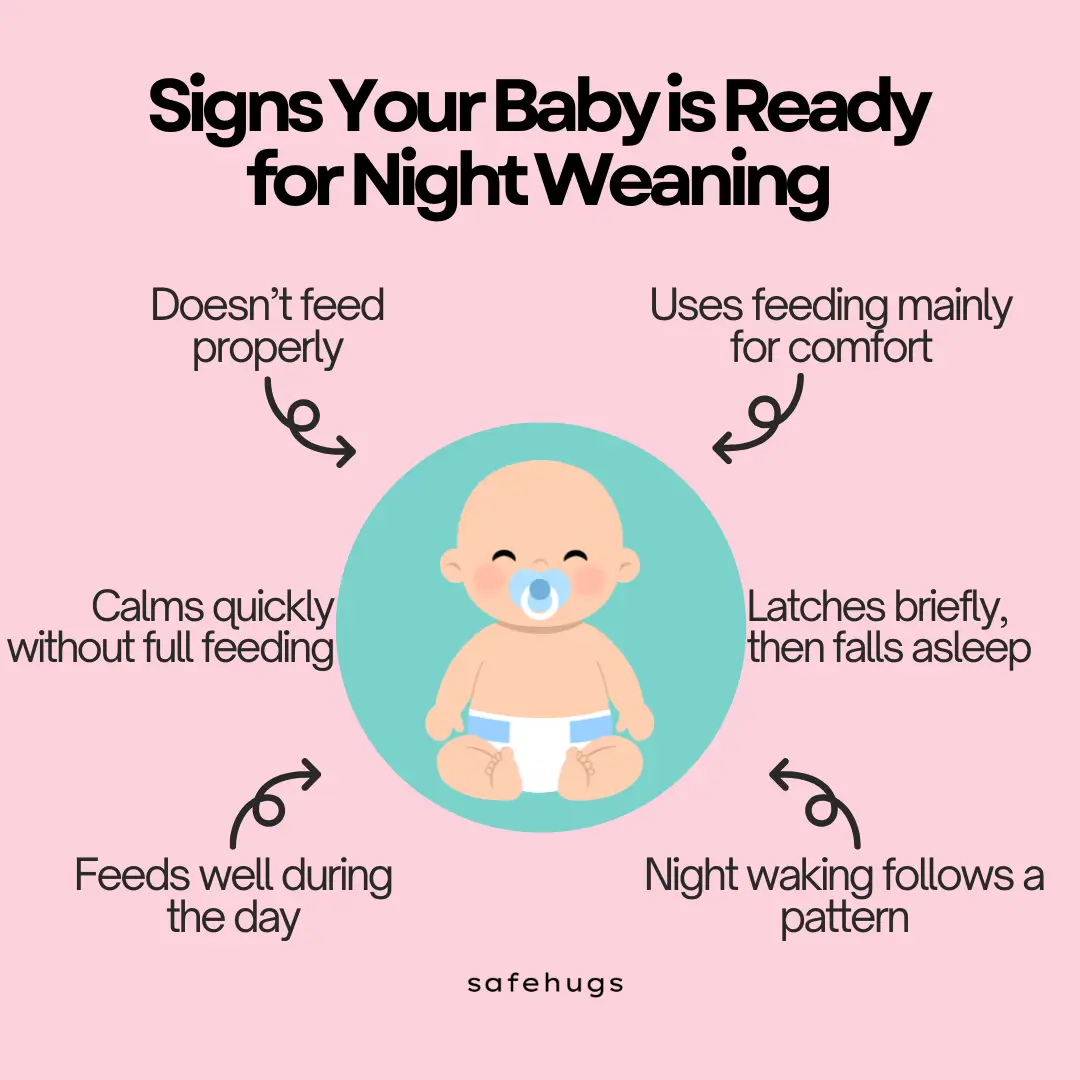
Your baby may be ready for night weaning when their night wakings are no longer driven by hunger but by habit or comfort. Common signs include waking up but not feeding properly, latching for only a few seconds before falling back asleep, and feeding well during the day with no concerns about intake. In many cases, night waking starts to feel more like a pattern than a nutritional need.
A common observation among parents is that the baby wakes, latches briefly, and quickly goes back to sleep. This usually indicates comfort feeding rather than true hunger. Recognizing this difference is an important step in deciding when and how to begin night weaning.
Before You Start Night Weaning
Before starting night weaning, it's essential to ensure your baby is ready and that their feeding needs are fully met. This step is often overlooked but plays a key role in making night weaning smoother and more effective.
Make Sure Your Baby is Getting Enough Milk
If your baby seems hungry, isn't sleeping because their stomach isn't full, or is feeding very frequently, the focus should be on improving feeding rather than reducing night feeds. Night weaning should only be considered once your baby is consistently getting enough milk during the day.
What If Your Baby Refuses the Bottle?
Bottle refusal is quite common, especially between 1-3 months. In such cases, you can try alternatives like katori and spoon feeding, which work well for many Indian parents. You can also experiment with wide nipple bottles that mimic breastfeeding or offer feeds when your baby is calm or slightly sleepy. Some babies naturally prefer breastfeeding, and this usually improves with time and consistency.
My baby completely refused the bottle for a few days. Switching to katori and spoon feeding helped during that phase until things improved. - from our Mom Insider community
What If You Feel Your Milk Supply is Low?
Concerns about low milk supply are common, particularly in the early months. To support your supply, you can pump every 2-3 hours, ensure you are using the correct flange size if pumping, and stay well-hydrated with a balanced diet. In most cases, milk supply increases gradually with regular stimulation, so consistency is important.
I started pumping every 2-3 hours. Initially output was very low, but over time it increased. Proper flange size also made a big difference. It takes patience, but supply can improve gradually. - from our Mom Insider community
How to Stop Breastfeeding at Night
Night weaning works best when done gradually and consistently. The goal is to reduce dependence on feeding while still supporting your baby's comfort and sleep.
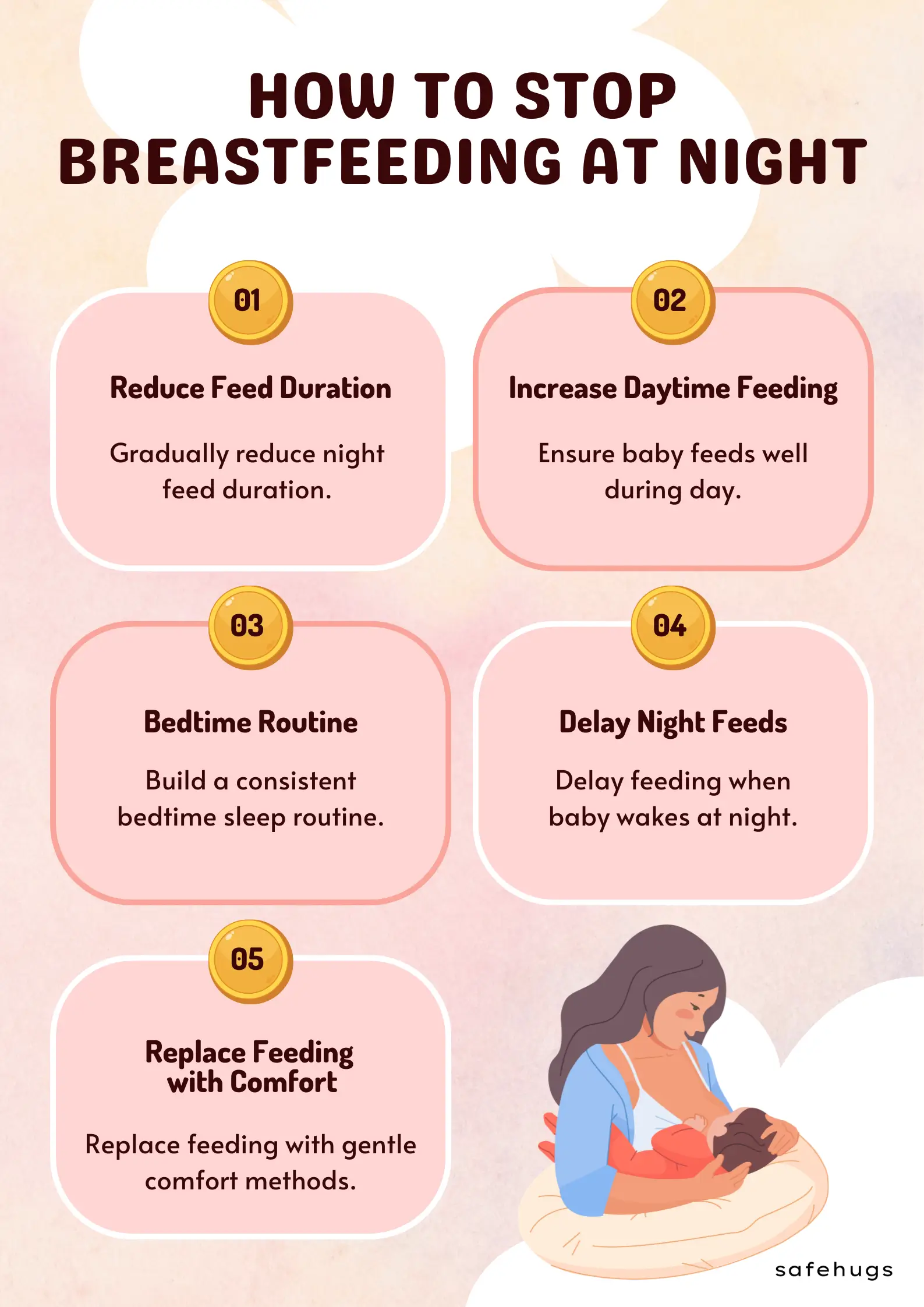
Step 1: Reduce Feed Duration
Start by slowly shortening each night feed by a few minutes. This helps your baby adjust without sudden changes and gradually reduces their reliance on feeding during the night.
Step 2: Increase Daytime Feeding
Make sure your baby is well-fed during the day so they are less likely to depend on night feeds for nutrition. Offering full, frequent feeds in the daytime can naturally reduce night waking due to hunger.
Step 3: Create a Bedtime Routine
A consistent bedtime routine signals to your baby that it's time to sleep and reduces the need for feeding as a sleep cue. Keep it simple and predictable, such as a bath, massage, dim lights, and a lullaby.
Step 4: Delay Night Feeds
When your baby wakes at night, avoid feeding immediately. Pause for a moment and try soothing methods like patting or rocking. In some cases, babies may settle back to sleep without needing a feed.
Step 5: Replace Feeding with Comfort
Gradually replace feeding with other forms of comfort such as holding, rocking, patting, or humming. This helps your baby learn to fall back asleep without relying on breastfeeding.
We started feeding, then handing the baby to her dad to walk her to sleep. The first few days were difficult, but within 7-10 days she adjusted and slept without feeding. - from our Mom Insider community
Age-Wise Night Weaning Guide
0-3 Months
This is not the stage to begin night weaning. If your baby isn't sleeping well or seems hungry, night feeds are still necessary for growth and development. At this age, the focus should be on ensuring adequate feeding and responding to hunger cues rather than trying to reduce feeds.
6-12 Months
Between 6 to 12 months, some babies may begin to reduce night feeds naturally. This is a suitable stage to start night weaning if your baby is feeding well during the day. Gradual methods work best, allowing your baby to adjust without sudden changes.
1 Year Old
By one year, most babies do not require night feeds for nutritional needs. You can begin to slowly reduce night feeds and introduce alternative soothing methods such as patting or rocking. Many parents observe improved sleep patterns once night feeds are reduced.
2 Year Old
At this stage, breastfeeding during the night is often more about comfort than hunger, and habits tend to be more deeply established. Some toddlers may latch without actively drinking, using it mainly as a way to soothe themselves. In such cases, consistency becomes essential when setting boundaries and transitioning away from night feeds.

Easy Night Weaning Methods
1. Gradual Method (Best for Most Babies)
The gradual method is the most commonly recommended approach for night weaning. It involves slowly reducing the duration or frequency of night feeds over time while replacing them with other forms of comfort such as rocking or patting. This allows the baby to adjust without sudden changes, making it easier for both the baby and the parent.
2. Jay Gordon Method (Great for Co-Sleeping)
The Jay Gordon method is particularly suitable for families who co-sleep. It focuses on maintaining close physical presence while setting boundaries around feeding during the night. The baby is comforted through touch and reassurance, but feeding is gradually limited, helping them learn to sleep without relying on breastfeeding.
3. Cold Turkey Method
In the cold turkey approach, night feeds are stopped completely rather than reduced gradually. Some parents choose this method and notice that while the first 2-3 nights can be challenging, sleep often improves afterward. However, this method may not suit every baby or family, especially if the baby is not ready for sudden changes.
We stopped night feeds completely. The first 2-3 nights were tough, but after that, sleep improved significantly. - from our Mom Insider community
How to Handle Night Waking Without Breastfeeding
When your baby wakes at night, try soothing them without immediately offering a feed. Simple methods like patting, rocking, holding, or walking with your baby can help them settle back to sleep. The goal is to help your baby learn to fall asleep without relying on feeding every time they wake.
One effective approach is to have another caregiver, such as the father, handle night wakings when possible. Since the baby does not associate them with feeding, it can help break the habit of waking up specifically to breastfeed. Many parents find that this approach speeds up the process of reducing night feed dependency.
Special Situations
Co-Sleeping & Night Weaning
If you are co-sleeping, night weaning can still be done gradually without disrupting your baby's sense of security. Keep your baby close and offer comfort through touch and reassurance, but begin to reduce feeding during night wakings. Over time, create small boundaries around feeding so your baby learns to settle without relying on breastfeeding.
Baby Wants to Nurse All Night
It can often feel like your baby wants to feed continuously through the night. However, in many cases, this is not due to hunger but rather comfort, habit, or a strong sleep association. Recognising this pattern helps in replacing feeding with other soothing methods.
Baby Refuses Bottle or Formula
Bottle or formula refusal is a common phase and can be frustrating, especially when trying to manage feeds. The key is to stay patient, try different feeding methods, and avoid forcing the baby, as this can increase resistance. Most babies adapt over time with consistency and encouragement.
Common Mistakes to Avoid
Stopping night feeds abruptly before your baby is ready, as sudden changes can lead to increased distress and disrupted sleep
Ignoring genuine hunger cues and assuming all night wakings are due to habit
Allowing prolonged comfort latching, which can reinforce dependency on feeding for sleep
Being inconsistent with your approach, which can confuse your baby and delay the weaning process
Natural & Home Remedies to Stop Breastfeeding at Night
If you're looking for how to stop breastfeeding at night using home remedies, the focus should always be on safe, and baby-friendly approaches rather than quick fixes.
Distraction techniques: When your baby wakes at night, try soothing them with patting, rocking, or softly talking instead of immediately feeding. Gradually, this helps break the association between waking and breastfeeding.
Bedtime snacks (for older babies/toddlers): Offering a small, filling snack before bedtime can help ensure your baby isn't waking up due to hunger. This is especially useful for babies over 8-10 months who are already on solids.
Calming bedtime routines: A consistent routine such as a warm bath, massage, dim lighting, and quiet time can help your baby relax and fall asleep more easily without relying on feeding. Over time, this reduces night waking.
It's important to avoid unsafe practices like applying bitter substances or ointments to stop breastfeeding. These methods can create distress for the baby and are not recommended.
Takeaways
Night weaning is a gradual process and works best when your baby is developmentally ready
Not all night wakings are due to hunger, many are linked to comfort or habit
Ensuring adequate daytime feeding is essential before reducing night feeds
Consistent methods are more effective than sudden changes
Every baby is different, so timelines and approaches may vary
Related:
Check out our blog on "Signs of Overfeeding Newborn".
Check out our blog on "How Many Hours Do Newborns Sleep".
Check out our blog on "When to Stop Waking Baby to Feed Overnight".
Check out our blog on "Why Is My Newborn Gagging While Sleeping".