
Breastfeeding: How to Increase Breast Milk Supply Naturally
Table of Content
Signs Your Milk Supply Is Decreasing
Reasons Why Milk Supply Drops
How to Increase Breast Milk Supply Naturally
Natural Foods that Help Increase Breast Milk Supply
Common Breastfeeding Questions
It's a question many new moms worry about: "My baby is feeding for 40 minutes and still crying… is my milk not enough?" Moments like this can bring confusion, guilt, and anxiety. It's easy to assume something is wrong with your milk supply, but in reality, concerns about low breast milk are very common, especially in the early months and during growth phases. Also not every sign points to low supply. Babies feed for comfort, go through growth spurts, and sometimes cluster feed, all of which can make it feel like your milk isn't enough, even when it is. Here you'll find how to increase breast milk supply naturally, along with practical tips and experiences from moms who've been through the same phase.

Signs Your Milk Supply Is Decreasing
It's easy to assume your milk supply is low, but not every feeding challenge means there's an actual decrease. Looking at consistent patterns rather than one-off moments can give a clearer picture.

Fewer Wet Diapers
One of the more reliable signs is a noticeable drop in wet diapers. After the newborn stage, babies usually have around 5-6 or more wet diapers a day. If this number suddenly reduces, it may indicate that your baby isn't getting enough milk.
Poor or Slowed Weight Gain
Another important sign is poor or slowed weight gain. Babies typically gain weight steadily, and any deviation from this pattern can be a signal to look more closely at feeding and milk intake. Regular pediatric check-ups help track this accurately.
Baby Seems Unusually Lethargic
You may also notice your baby appearing unusually lethargic. If your baby seems excessively sleepy, low on energy, or not feeding actively, it could point to insufficient intake.
Lethargic - A state where a baby seems unusually sleepy, weak, low in energy, difficult to wake, or less active than normal.
Short, Unsatisfied Feeds
Feeding patterns can also offer clues. If your baby feeds for very short durations and still seems unsatisfied or fussy soon after, it may be worth observing further. However, this alone is not always a clear sign and should be considered along with other indicators.
Reduced Swallowing Sounds During Feeding
Another subtle sign is reduced swallowing during feeds. If you hear fewer swallowing sounds than before, it might suggest that milk transfer has decreased.
At the same time, some changes are often misunderstood as low milk supply but are actually normal. Breasts feeling softer, reduced leaking, frequent feeding, or low pump output do not necessarily mean your supply has decreased. These are common as your body adjusts over time.
Reasons Why Milk Supply Drops
Poor Latch
One of the most commonly overlooked causes is a poor latch. When a baby doesn't latch properly, they may not be able to extract milk effectively, especially the fat-rich hindmilk. This also means the breast isn't being fully stimulated, which can signal the body to produce less milk over time. As many moms and experts point out, only when the latch is proper does the baby get enough hindmilk and the supply stays well-regulated.
Only if the latch is proper, the baby gets the fat-rich hindmilk. And sometimes babies prefer bottles because they don’t have to work as hard as breastfeeding. - from our Mom Insider Community
Stress, Sleep Deprivation & Anxiety
Stress, lack of sleep, and anxiety can directly affect milk supply. Breastfeeding relies on hormones like oxytocin for milk flow, and high stress levels can interfere with the let-down reflex. The emotional and physical load of motherhood can quietly impact supply more than expected.
Let-Down Reflex - The natural release of breast milk from the breast during breastfeeding or pumping, triggered when the baby sucks or when the body responds to feeding cues.
Dehydration & Poor Nutrition
Not drinking enough water or eating balanced meals can affect milk production. Your body needs adequate fluids, calories, and especially carbohydrates to produce breast milk efficiently. Many moms notice improvement simply by increasing hydration and eating regularly.
Hormonal Changes (Periods, Postpartum Recovery)
Hormonal shifts, such as the return of periods or natural postpartum recovery, can lead to temporary dips in milk supply. These changes are usually short-term and tend to stabilize without major intervention.
Over-Reliance on Pumping or Formula
Breast milk works on a demand-and-supply cycle. When direct breastfeeding is reduced and replaced with pumping or formula too often, the body may receive less stimulation, which can gradually reduce milk production.
How to Increase Breast Milk Supply Naturally
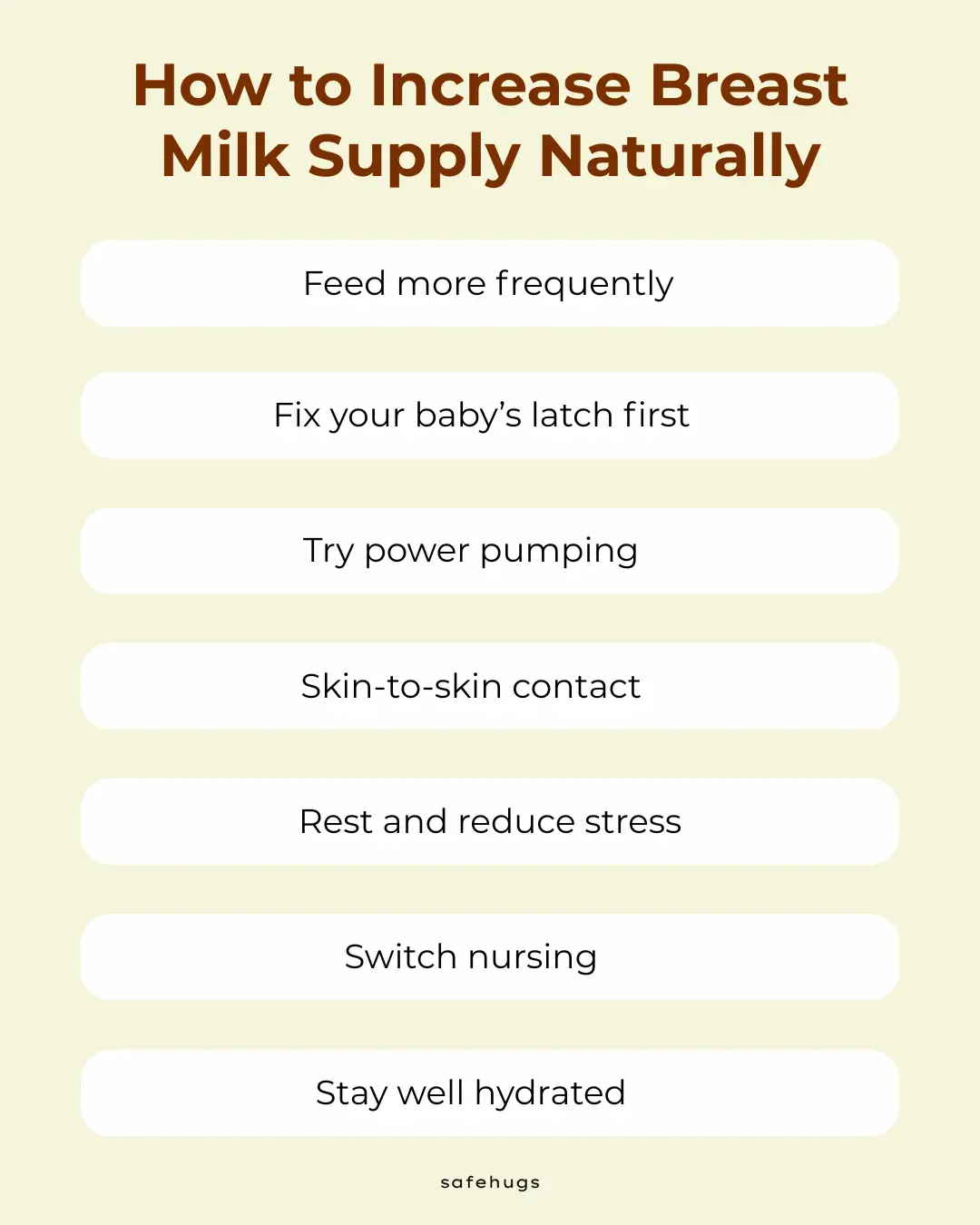
Improving milk supply often comes down to simple, and consistent practices that support your body’s natural process. Here are effective, natural ways that many moms find helpful:
Feed More Frequently
Breast milk production works on a demand-and-supply basis. The more your baby nurses, the more your body is signaled to produce milk. Try to breastfeed on demand rather than following strict schedules, especially during growth spurts.
Fix the Latch First
A proper latch ensures your baby is able to extract milk effectively and fully empty the breast. This not only helps your baby get enough milk but also stimulates your body to produce more. If you're unsure, a lactation consultant can help correct the latch.
Try Power Pumping
Power pumping mimics cluster feeding and can help boost supply. It usually involves pumping in short intervals (for example: 20 minutes pumping, 10 minutes rest, repeated over an hour). Doing this once daily for a few days can signal your body to increase production.
Pumped milk output is NOT your actual milk output. Let the baby nurse often, the more they suck, the more milk is produced. Also I saw real improvement only after power pumping + hydration and supplements alone didn't help much. - from our Mom Insider community
Skin-to-Skin Contact
Holding your baby skin-to-skin can naturally boost hormones like oxytocin, which supports milk flow. It also helps your baby feel secure and may encourage more frequent feeding.
Rest + Reduce Stress
Your body needs rest to function well, including producing milk. Lack of sleep and high stress can interfere with milk let-down. Even small breaks, asking for help, or short naps can make a difference.
Switch Nursing
Switching between breasts during a feeding session can keep your baby actively sucking and stimulate both sides more effectively. This can help increase overall milk production over time.
Stay Well Hydrated
Fluids play an important role in milk production. Make sure you're drinking enough water throughout the day. Many moms find it helpful to keep water nearby and drink before or during feeds.
Natural Foods that Help Increase Breast Milk Supply
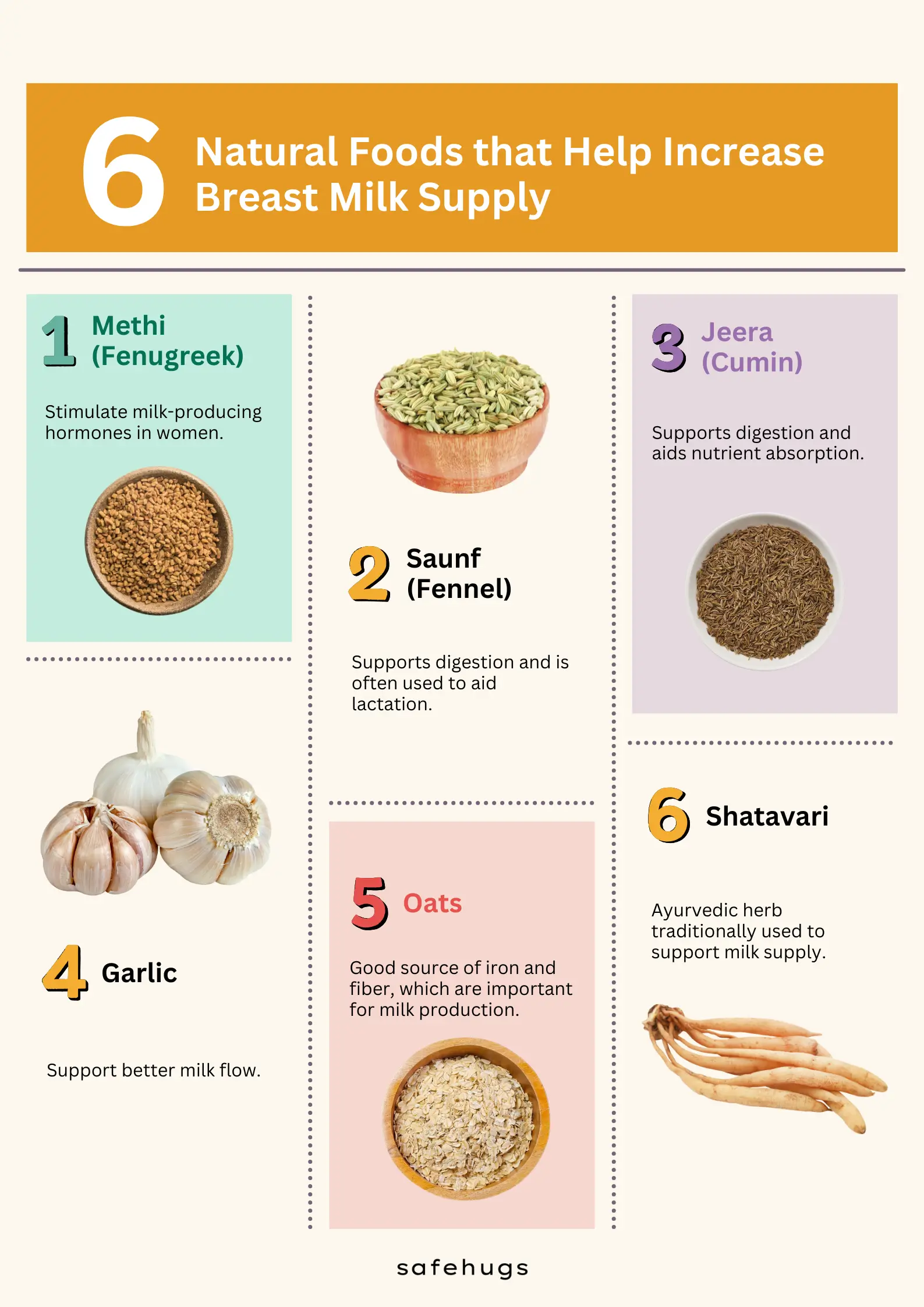
Along with feeding practices, what you eat and drink can support your milk production. While no single food works like a magic fix, certain ingredients are traditionally known to help and are widely used by moms.
Lactation-Boosting Foods
Methi (Fenugreek)
Fenugreek is one of the most commonly used natural remedies for improving milk supply. It may help stimulate milk-producing hormones in some women. You can include it in simple ways like soaking a teaspoon of methi seeds overnight and drinking the water in the morning, adding it to dals or sabzis, or consuming traditional foods like methi laddoos. It’s best to start with small quantities and observe how your body and baby respond, as it may not suit everyone.
Saunf (Fennel)
Fennel is known for supporting digestion and is often used to aid lactation. Many moms also find it helpful if their baby experiences gas. You can boil a teaspoon of saunf in water and sip it through the day, chew a small amount after meals, or add it to your regular cooking. It's a mild and easy addition to your daily routine.
Jeera (Cumin)
Jeera is a staple in Indian cooking and supports digestion and nutrient absorption, both of which are important for maintaining milk supply. An easy way to include it is by drinking jeera water, just boil a teaspoon in water and consume it warm. It can also be added generously to dals, vegetables, and soups as part of your everyday meals.
Garlic
Garlic is widely used for its health benefits and may also support better milk flow. Including fresh garlic in your cooking, such as in dals, curries, or even light soups, is an easy way to consume it regularly. However, since garlic can slightly alter the taste of breast milk, it’s helpful to observe your baby’s reaction and adjust if needed.
Oats
Oats are a good source of iron and fiber, and maintaining healthy iron levels is important for milk production. Many moms find oats helpful in supporting steady energy levels as well. You can have oats as porridge, make savory oats chilla, or combine them with fruits and nuts for a simple, nourishing meal.
Traditional Indian Support Foods
Traditional Indian postpartum foods are nourishing, and designed to support recovery and lactation. Many moms find these especially helpful when included regularly in daily meals.
Moong Dal Soup
Light, easy to digest, and rich in nutrients, moong dal soup is often recommended during the postpartum phase. It provides nourishment without putting stress on digestion, making it a good option when you're tired or not very hungry. Many moms notice that having moong dal regularly, along with good hydration, supports their milk supply.
Masoor Dal
Masoor dal (red lentils) is another protein-rich, easy-to-cook option that fits well into everyday meals. It supports overall nutrition, which indirectly helps maintain milk production. Including it as part of your regular lunch or dinner can be an easy way to stay consistent.
Ajwain-Jeera Water
A mix of ajwain (carom seeds) and jeera (cumin) boiled in water is commonly used to support digestion and reduce bloating. Since digestion plays a role in how your body absorbs nutrients, this drink can indirectly support lactation. Many moms sip this throughout the day, especially in the early postpartum period.
Shatavari
Shatavari is an Ayurvedic herb traditionally used to support milk supply. Some moms find it helpful, especially when taken consistently over time. However, it's important to use it with caution and ideally after consulting a doctor or lactation expert, as responses can vary from person to person.
You can also explore "What to Drink to Increase Breast Milk Naturally at Home" to understand which drinks may support your milk supply.
Do Supplements Really Work?
Many moms consider supplements like lactation tablets, granules, or herbal options such as shatavari when they feel their milk supply is low. These are often suggested by friends, family, or even prescribed in some cases. The reality is that supplements may help some moms, especially when used consistently and alongside other supportive practices. However, they are not a guaranteed or instant solution. Breast milk production depends on multiple factors like feeding frequency, latch, hydration, rest, and overall health.
It's important to understand that supplements work best as a support, not a replacement for the basics. If the root cause of low supply, such as poor latch, infrequent feeding, or high stress, is not addressed, supplements alone may not make a significant difference.
Granules - Small grain-like particles or tiny pieces of a substance, often found in powders, medicines, or food products.
Many moms also notice that their supply remains stable even after stopping supplements, especially if they have already improved their feeding routine and lifestyle habits. - from our Mom Insider community
Supplements to Increase Milk Supply
Commonly used supplements include Lactare tablets, which are widely prescribed and used by many moms to support milk production. Some mothers report improvement, especially when taken consistently, while others notice that their supply remains stable even after stopping, suggesting that overall habits matter more than the supplement itself.
Shatavari-based supplements like granules or capsules (including brands like Satavarex or Baidyanath Shatavari) are another popular choice in Indian households. These are rooted in Ayurveda and are often taken with milk or warm water. Many moms feel they help, but consistency and patience are key, and results can vary.
Other options moms mentioned include Wanto Lact capsules and galactagogues (lactation powders or granules) like Lacto granules. These are often recommended to boost supply, but again, their effectiveness differs from person to person.
Pumping vs Breastfeeding - What Actually Helps Supply?
Understanding the difference between pumping and direct breastfeeding can help you make better decisions for your milk supply. Both have their place, but they don't work exactly the same way.
Is Pumping Necessary?
Pumping can be helpful, but it is not necessary for every mom. Many mothers are able to maintain a good milk supply through direct breastfeeding alone. Pumping is simply a tool, it can support your journey, but it's not a requirement unless there's a specific need.
Why Direct Breastfeeding Works Better
Direct breastfeeding is usually more effective for maintaining and increasing milk supply. When your baby nurses, their sucking triggers a stronger hormonal response in your body, especially the release of oxytocin, which helps with milk flow. Babies are also generally more efficient than pumps at removing milk, which provides better stimulation and signals your body to produce more.
Oxytocin - A hormone released in the body that helps with breastfeeding, bonding, and relaxation. During breastfeeding, oxytocin helps release milk from the breasts.
When Pumping Helps
Pumping becomes useful in certain situations. It can help if your baby has latching difficulties, as it allows you to still provide breast milk. It's also helpful for building a milk stash, especially if you plan to be away from your baby. For working moms, pumping can be an important way to maintain supply when direct breastfeeding isn't always possible.
Common Breastfeeding Questions
Does Milk Supply Reduce After 6 Months?
Milk supply does not automatically decrease after 6 months. Breast milk production continues based on demand, so as long as your baby is feeding regularly, your body will keep producing milk. What often changes is your baby’s feeding pattern, as solids are introduced and routines shift.
Can Periods Affect Milk Supply?
Yes, some moms notice a temporary dip in milk supply when their periods return. This is due to hormonal changes, but it is usually short-lived. Most of the time, supply returns to normal once the cycle settles.
Can Babies Get Gas from Breast Milk?
Breast milk itself is easy to digest and usually not the direct cause of gas. Babies commonly experience gas because their digestive systems are still developing. Burping during and after feeds, along with proper positioning, can help reduce discomfort.
Babies are naturally gassy because their digestive system is immature. Burping and small adjustments help. - from our Mom Insider community
Can Infection Pass Through Breast Milk?
In most cases, infections do not pass through breast milk. In fact, breast milk contains antibodies that help protect your baby and support their immune system. Common infections are more likely to spread through close contact, such as coughing or sneezing, rather than through breast milk.
Lifestyle Tips to Boost Milk Supply
Along with feeding and nutrition, your daily routine plays an important role in maintaining a healthy milk supply.
Getting enough rest is one of the most important factors. While uninterrupted sleep may not always be possible, even short naps or periods of rest can help your body recover and function better. Fatigue can affect hormone balance, which in turn impacts milk production.
Managing stress is equally important. Breastfeeding depends on hormones like oxytocin, and high stress levels can interfere with milk let-down. Practices like deep breathing, spending quiet time with your baby can ease mental pressure.
Staying well-hydrated throughout the day supports milk production. Keeping water nearby and sipping regularly, especially before or during feeds, can help maintain consistent supply.
Eating regular, balanced meals is also essential. Skipping meals or eating too little can affect your energy levels and milk production. Focus on simple, nourishing foods rather than restrictive diets during this phase.
Breast care can also help. Light breast massage before or during feeds may improve milk flow and help with better emptying, which signals the body to produce more milk.
Lastly, try to avoid comparing your journey with others. Every mother's body responds differently, and focusing on your own routine can reduce unnecessary stress and help you stay consistent.
When to Consult a Doctor or Lactation Expert
Consult a doctor or lactation expert if your baby is not gaining weight properly, has very few wet diapers, or seems unusually sleepy or inactive. Ongoing pain during breastfeeding, difficulty with latching, or concerns about milk supply that don’t improve with basic changes are also valid reasons to seek help.
If you're considering supplements or making major changes to feeding (like increasing formula or switching to pumping), getting expert advice can help you make informed decisions.
Conclusion
Every mom's journey is different, and what works for one may not work the same for another. When it comes to how to increase breast milk supply naturally, there is no one quick fix, building sustainable habits is what truly supports your supply in the long run. If you ever feel unsure, seeking guidance from a doctor or lactation expert is always a good step forward.
Related:
Check out our blog on "What to Drink to Increase Breast Milk Naturally at Home".
Check out our blog on "Is Oats Safe for Babies".
Check out our blog on "Top Brain Foods for Toddlers & Growing Kids".
Check out our blog on "Why Is My Newborn Gagging While Sleeping".
Check out our blog on "When to Stop Waking Baby to Feed Overnight".
Check out our blog on "How Many Hours Do Newborns Sleep".