
How to Start Breastfeeding After a C-Section: For New Moms
You’ve just had surgery and are recovering from anesthesia, incision pain, and the overwhelming transition into motherhood, yet people may still ask whether your milk has come in. If you’re wondering how to start breastfeeding after a C-section, know that concerns about milk supply, pain, and positioning are completely common. Breastfeeding after a C-section can be manageable with the right support, comfortable positions, and proper information.
Table of Content
Why C-Sections Can Make Breastfeeding Harder
The First 24-48 Hours: What to Do Right Away
Common Breastfeeding Challenges After a C-Section
Best Breastfeeding Positions After a C-Section
How to Boost Milk Supply After a C-Section
Breastfeeding, Formula, and Combination Feeding After a C-Section
Why C-Sections Can Make Breastfeeding Harder
Understanding why caesareans can complicate breastfeeding helps you plan accordingly.
The Golden Hour and What Happens When You Miss It
The first hour after birth is often called the "golden hour", it is when newborns are most alert and ready to attempt their first latch. Skin-to-skin contact during this window triggers hormones in both mother and baby that support breastfeeding initiation. With a vaginal birth, skin-to-skin often happens immediately on the delivery table. With a C-section, especially an emergency one, you may be in the operating room for 30-60 minutes after delivery while your incision is closed, and your baby may be taken to a warmer or even to the NICU during this time. Missing the golden hour does not mean your breastfeeding journey is over. It is just a missed ideal hour. Many mothers who did not feed their babies in the first hour have had a successful breastfeeding journey.
How Anesthesia and Surgery Affect Milk Production
Hormones that trigger milk production, mainly the release of oxytocin and prolactin, are closely tied to labour contractions. When labour does not happen before a C-section (as in a planned or emergency procedure performed before contractions begin), these hormones may be slower to rise. This is why milk often comes in a day or two later after a cesarean compared to a vaginal birth. Some moms experienced not receiving them for even 10 days. And the fuller "milk coming in" sensation may take three to five days normally.
Oxytocin: A hormone released during breastfeeding that helps milk flow from the breast to the baby. It also supports bonding and relaxation.
Prolactin: A hormone responsible for producing breast milk. Levels increase when the baby suckles at the breast.
When the Baby Goes to the NICU
If your baby needs neonatal care after delivery, this separation will create an additional issue. You may not be able to put baby to breast at all in those first critical hours or days. This is where pumping becomes important. The key message is, a C-section makes breastfeeding more challenging in the early days. But it does not make it impossible.
The First 24-48 Hours: How to Start Breastfeeding After a C-Section
The things you do in the first two days will shape your breastfeeding journey. Here is what lactation consultants and experienced mothers recommend.

Step 1: Advocate for Yourself Before Delivery
If you know in advance that you are having a C-section, talk to your doctor and the nursing staff ahead of time. Tell them clearly that you want skin-to-skin contact as soon as it is safe to do so. And you want your baby brought to you within the first hour if possible. Also ask for a lactation consultant to see you within the first 24 hours. Many hospitals have different protocols. Some routinely bring the baby to the mother in the recovery room, while others take the baby to the nursery as standard procedure. You have the right to ask questions and state your preferences. Put it in your birth plan.
Step 2: Request Skin-to-Skin in the Recovery Room
Even if you cannot do skin-to-skin on the operating table, ask it the moment you are moved to recovery. Many hospitals now support this. Your partner or support person can also do skin-to-skin with the baby during this window, this keeps the baby calm and warm until you are ready.
Step 3: Attempt the First Latch in Recovery
Once you and your baby have some skin-to-skin time, try to attempt a latch. In the first try, the baby may not latch perfectly, or at all. Newborns mostly need several attempts before they coordinate the sucking and swallowing reflex. If the baby is sleepy, a light tickle at the bottom of the foot can keep them alert during feeding attempts.
Step 4: Start Pumping Early If Baby Cannot Latch
If your baby is in the NICU, cannot latch, or you are separated for medical reasons, ask for a breast pump and begin pumping within the first six hours if possible. Pump every two to three hours, including once at night. It helps telling your body to keep producing milk, so you can easily breastfeed when your baby is ready. Many mothers have built full milk supply entirely through pumping.
Step 5: Accept Formula Without Guilt
In the early days before your milk comes in, your baby will need supplemental formula. This is not the end of your breastfeeding journey. It is a practical to make sure your newborn is nourished. Accepting formula supplementation in the hospital does not mean your milk will never come in. It does not mean you have failed. Many mothers have combined breastfeeding and formula (called combination feeding) and gone on to exclusively breastfeed once supply was established.
Step 6: Track Output, Wet Diapers and Weight
You cannot see how much milk your baby is drinking at the breast. But you can track the output. In the first week, watch for:
At least six wet diapers per day after day four or five
Pale yellow urine (dark urine suggests dehydration)
Regular weight checks, babies typically regain their birth weight by two weeks
Your paediatrician or lactation consultant can help interpret these numbers and tell you whether a supplement is needed.

Common Breastfeeding Challenges After a C-Section
Delayed Milk Coming In
As mentioned above, full milk production will take three to five days after a C-section. In the meantime, colostrum is present. It is produced in small quantities, measured in teaspoons, not ounces, and that is completely appropriate for a newborn's tiny stomach. If your milk has not come in by day five or six, speak with a lactation consultant.
Latch Difficulties
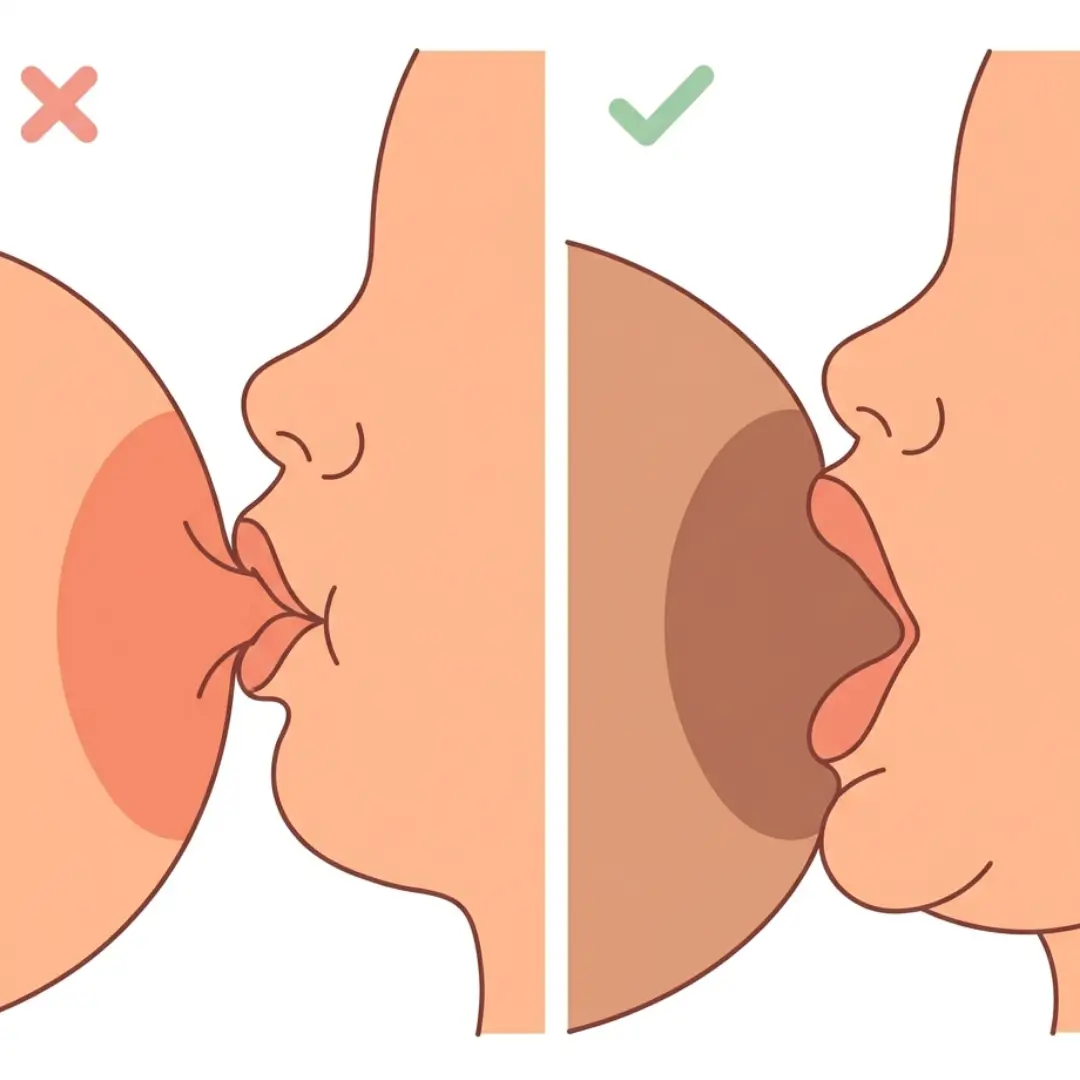
Latch problems are common regardless of birth method, but they can be more after a C-section because, the baby may have received sedating medications through you, or you may be in pain, making it hard to position the baby comfortably. It might also happen if the natural hormonal priming that happens during vaginal labour did not occur.
Signs of a good latch include the baby's mouth covering most of the areola (not just the nipple), the chin touching the breast, and audible swallowing. If you are experiencing pain, pinching, or your nipple comes out misshapen after feeds, a lactation consultant can help you correct the latch.
Back and Tailbone Pain During Feeding
This is one of the most underrated difficulty after C-section. Feeding requires you to hold your baby for 7 to 12 times per day, or even more someday. This will cause strain on your back, tailbone and shoulders. Most mothers say they experience these pain for 1 month after postpartum. The only solution here is correct positioning, which we will cover down below.
Mothers from our community find postpartum abdominal belts helpful for reducing incision discomfort and improving core support. If your doctor has not explicitly told you to avoid one, the guidance is generally to wear it if it brings comfort. A saree wrapped around the abdomen is a traditional and commonly used alternative that many Indian mothers find useful.
Exhaustion and Baby Blues
Stress and exhaustion affects milk production. Majority of the mothers experience baby blues, particularly during the 1st week after C-section, mainly if your support system is limited or the birth experience is not what you have hoped for. This is normal. What you need in this situation is someone to hold the baby when you sleep, someone to make you food, and someone to sit with you while you cry. If you experience baby blues beyond 2 weeks or feel severe, speak to your doctor.
Best Breastfeeding Positions After a C-Section
Pain management is crucial when you just had your C-section, and correct breastfeeding position can help you manage the incision pain.
Side-Lying Positions
Lie on your side in bed with the baby facing you at breast level. A pillow between your knees helps align your hips and reduces lower back strain.
Why it works: There is zero pressure on your incision. You can rest or even nap during a feed. Many C-section mothers felt this was the comfortable position during the initial days.
Football Hold (Clutch Hold)

The football hold is the top recommended position by the moms in our Mom Insider community. Here you hold the baby's body tucked under your arm like a football, with their legs extending behind you and their head at your breast.
Why it works: The baby's body is completely clear of your incision. There is no pressure on your abdomen. You have excellent visibility to check the latch, and it works well for mothers with larger breasts. Use a feeding pillow or a firm pillow under your arm to reduce shoulder strain.
Laid-Back (Biological Nurturing) Position

Recline approximately at 45-degree angle, either in a chair or propped up in bed, and lay the baby on your chest and abdomen. Gravity helps the baby maintain the latch.
Why it works: Your body is supported, there is no strain on your arms, and the baby's natural rooting reflex is activated by the position. Some mothers find this helps with babies who have latch difficulties.
Upright Koala Hold
Sit the baby upright on your thigh, facing your breast, straddling your leg. This position becomes more practical as the baby gains head control around four to six weeks.
Positions to Avoid in Early Recovery
Cradle hold position is the most commonly used breastfeeding position, it requires you to hold the baby's full weight across your abdomen. In the first four to six weeks after C-section, this can be extremely uncomfortable and put pressure on your healing incision. It is worth learning the other positions first and introducing the cradle hold later if you wish.
An uncomfortable latch or feeding posture can sometimes affect how well your baby feeds. Read about "Wrong Breastfeeding Positions".
Role of Pillows
Do not underestimate the power of pillows. Many parents experienced a flat head without using a proper pillow, though it resolves on its own, do not take it lightly. A dedicated nursing pillow (many mothers from our Mom Insider community recommend brands like Wakefit) can reduce arm fatigue and help position the baby at the right height. If a nursing pillow does not give you enough height, two regular pillows stacked will work better. Pillows behind your back while seated can reduce tailbone and lumbar pain during feeds.
How to Boost Milk Supply After a C-Section
Milk supply is based on supply and demand. The more frequently and effectively the breast is emptied, the more milk the body produces. Here is how to support that process.
Feed or Pump Every Two to Three Hours
In the early weeks, feeding on demand including waking a sleepy baby at night if needed is the most powerful thing you can do for your supply. If you are pumping, match that same frequency. Your body does not know the difference between a baby and a pump. Both send the same signal: make more milk.
Power Pumping
Power pumping mimics a baby's cluster feeding behaviour and can be used to give supply a boost. The technique involves pumping for 20 minutes, resting for 10, pumping for 10, resting for 10, then pumping for 10 a total of approximately one hour. Done once a day for three to five days, many mothers see a noticeable increase in output.
Foods That Support Lactation
Several traditional Indian foods have long been used to support milk production, and many mothers find them genuinely helpful:
Methi (fenugreek) laddus is one of the most widely used galactagogues and has some evidence of effectiveness
Gond (edible gum) laddus - it is warming, nourishing, and a traditional postpartum staple
Almonds and walnuts rich in healthy fats and calories support milk production
Ajwain (carom seeds) often used in postpartum cooking for digestion and recovery
Green leafy vegetables provide iron and folate important for recovery
Dal and khichdi - easy to digest, warming, and nutritious
Hydration Is Non-Negotiable
Breast milk is approximately 87% water. You need more fluid when you are lactating, aim for a minimum of two to three litres of water per day. Dehydration will noticeably reduce your milk output.
Skin-to-Skin Beyond the First Hours
Skin-to-skin contact continues to support milk production well beyond the newborn period. Holding your baby skin-to-skin triggers the release of oxytocin, which drives the milk let-down reflex. Even ten to fifteen minutes of skin-to-skin before a feed can help with a slow or reluctant let-down.
Breast Massage
Breast massage before and during feeding can help move milk toward the nipple and improve drainage. A lactation consultant or experienced friend can demonstrate the technique. Many mothers describe learning this from a nurse, friend, or lactation consultant as a turning point in their breastfeeding journey.
What to Limit or Avoid
Very spicy food in excessive quantities may upset some babies through breast milk
High levels of stress and sleep deprivation actively suppress let-down, prioritise rest wherever possible
Smoking and excessive alcohol can affect milk quality and production
Breastfeeding, Formula, and Combination Feeding After a C-Section
WHO recommends exclusive breastfeeding for the first six months, followed by breastfeeding with appropriate recommended foods up to two years of age. This is the evidence-based standard, and this is what most mothers follow. You should also know that combination feeding that is giving both breast milk and formula, is a valid, healthy, and widely practised choice. Many mothers do combine feed for weeks or months while building supply, or throughout their entire breastfeeding journey. Formula is not a toxin. It is a safe, regulated source of infant nutrition. When a baby needs to be fed and breastfeeding is not possible or not sufficient at that moment, formula is an apt choice. What the research consistently shows is that feeding-related stress and anxiety, particularly maternal guilt, have their own negative effects on both mother and baby. A mother who is supported, rested, and emotionally well is a better caregiver than a mother running on shame. Do what keeps your baby nourished and keeps you well. Both matter.
Takeaways
Breastfeeding after a C-section is not same as breastfeeding after a vaginal birth. There are many issues like delayed milk, latch difficulties, incision pain, back strain, separation, and the crushing weight of exhaustion and recovery. And yet, every day, mothers navigate exactly these challenges and breastfeed their babies. They do it with support. They do it imperfectly. They combine formula and breast milk. They pump at midnight. They ask for help. They accept it when it is offered. So don't try to be perfect and feel guilty or shame. How your baby is fed in the first week does not define the months ahead. Also if you are struggling, reach out to a lactation consultant. Find your community of mothers who understand. Give yourself the same compassion you would give a friend.
Related:
Check out "Wrong Breastfeeding Positions".
Check out "Why Is Your Newborn Gagging While Sleeping".
Check out "Signs of Overfeeding Newborn".
Check out "How Many Hours Do Newborns Sleep".