
What to Do When Newborn Chokes on Milk (Guide for Parents)
Milk choking or what looks like choking is one of the most common fears among new Indian parents, mainly in those first few months. Parents in our Mom Insider community share this anxiety all the time: "She started making raspberries after feeding and I thought she was choking." "He coughs 2-3 times after I put him down and his eyes go wide, it's so scary." The truth is most of it is your baby's normal reflux and not choking. Here we will help you understand what is real choking is, why do newborn chokes on milk and how to prevent it.
Table of Contents
Is Your Baby Actually Choking?
What to Do When Your Newborn Chokes on Milk
Why Does My Newborn Keep Choking on Milk?
What to Do When Your Newborn Chokes During Breastfeeding
What to Do When Your Newborn Chokes During Bottle Feeding
What to Do If Your Baby Chokes on Milk While Sleeping
How to Prevent Your Newborn from Choking on Milk
Is Your Baby Actually Choking?
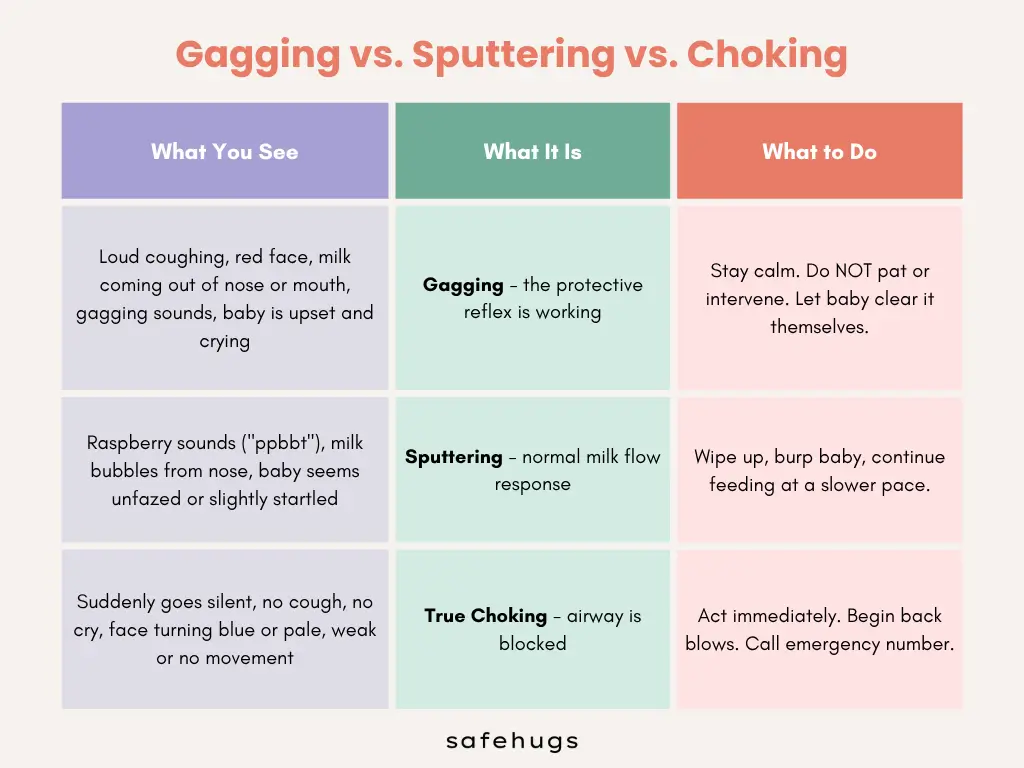
Before anything else, the most important thing to learn is telling these three things apart. They look similar but they are completely different, and they require completely different responses from you.
Gagging vs. Sputtering vs. Choking
The golden rule
A coughing baby is a breathing baby. If your newborn is coughing loudly, their airway is open and their body is doing exactly what it should. Let them cough. Only step in when the baby goes silent.
If your newborn gags while sleeping, it could be due to spit-up, reflux, or feeding position, learn the common causes and simple ways to help here.
What to Do When Your Newborn Chokes on Milk
If your baby has gone silent, stopped coughing, and you suspect their airway is blocked, follow these steps immediately. Practise them in your head now, when it happens, there is no time to Google.
Stay calm and assess first
Check whether the baby is coughing or crying. If yes, they are breathing. Do not flip them upside down, pat aggressively, or push milk out. Just support them upright and let their body do its job. Observe for 10-15 seconds before concluding it is a true emergency.
If baby is silent, give 5 back blows
Lay the baby face-down along your forearm, with their head lower than their chest and their chin supported by your fingers (not fingers on the throat). Using the heel of your other hand, give 5 firm back blows between the shoulder blades. The blows should be forceful enough to remove the blockage, not gentle pats.
Flip and give 5 chest thrusts
Turn baby face-up, supporting the head. Place two fingers on the centre of the chest, just below the nipple line. Give 5 downward chest thrusts. These help push air from the lungs to remove the blockage.
Check the mouth, don’t sweep your fingers blindly
Look inside the baby's mouth. If you can see a visible object, carefully remove it. Do not stick your finger in blindly, you risk pushing the blockage deeper. If nothing is visible, repeat back blows and chest thrusts.
Even if baby recovers, see a doctor
A real choking episode always need a pediatrician visit, even if the baby seems perfectly fine afterwards. Mention any crying after the episode, this can indicate acid reflux or throat irritation that needs attention.
What not to do
Do not hold baby upside down and shake them
Do not do the Heimlich manoeuvre on a baby (this is for adults/older children)
Do not put your finger in their mouth blindly
Do not slap their back while they are face-up
Do not wait and see if baby "seems okay" after a true silent choking episode, always get a medical review
Heimlich manoeuvre - An emergency first-aid technique used to help someone choking by giving quick abdominal thrusts to remove an object blocking the airway.
Why Does My Newborn Keep Choking on Milk?
If your baby chokes or sputters regularly, there might be some fixable reason. Here are the most common causes.
During breastfeeding
One of the most common reasons is a fast or forceful let-down, where breast milk flows faster than the baby can comfortably swallow. This can overwhelm newborns, especially in the early weeks before your milk supply regulates. A shallow latch can also contribute. If the baby is not latched deeply onto the breast, milk may flow into the mouth too quickly and bypass the normal swallowing coordination, increasing the chance of coughing or choking-like episodes. Feeding in a completely flat position may make things worse because gravity causes milk to flow directly toward the baby's throat. More upright or laid-back positions often help babies manage the flow more comfortably.
During bottle feeding
A nipple with a flow that is too fast is a very common cause of choking during bottle feeds. As babies grow, parents may switch to larger nipple sizes, but upgrading too early can make milk come out faster than the baby can handle. One parent in our Mom Insider community shared: “Initially when you change the nipple size, babies might do choking-like reactions. Give them 2-3 feeds to adjust, and always try the new size during daytime.”
The angle of the bottle also matters. Holding the bottle too steeply keeps the nipple constantly full of milk, causing continuous flow without natural pauses for breathing. This can lead to coughing, gulping, or sputtering. Some babies also swallow excess air while feeding. Air bubbles mixed with milk can cause gagging, sputtering, discomfort, and frequent breaks during feeds.
While sleeping
Sometimes babies appear to choke while lying down because of spit-up pooling in the throat after feeds. When a baby is placed completely flat immediately after feeding, small amounts of milk can travel back up and briefly irritate or partially block the airway. Reflux can also play a role. In babies with infant reflux, milk and stomach contents move back up the oesophagus and may reach the throat, even some time after feeding. This can cause coughing, gagging, swallowing noises, or choking-like episodes during sleep or while resting.

What to Do When Your Newborn Chokes During Breastfeeding
Choking or sputtering during breastfeeding is common in the first 6-8 weeks when your milk supply is still establishing itself and letdown can be quite forceful.
In the moment:
Unlatch baby immediately if they are sputtering badly or pulling away from the breast in distress
Hold them upright against your chest and gently rub or pat their back
Wait for them to settle before relatching, do not rush
Let baby set the pace, if they are pulling away or clicking sounds are coming from the latch, slow down
Let-down reflex - The natural release of breast milk from the breast when your baby sucks, caused by the hormone oxytocin.
Long-term fixes for fast letdown:
Laid-back breastfeeding position: Recline at roughly 45 degrees with baby lying on your chest, belly-to-belly. Gravity slows milk flow naturally.
Side-lying position: Both you and baby lie on your side facing each other, milk drains from the throat easily
Hand-express before latching: If your letdown is very strong, express a little milk before baby latches so the initial forceful flow has already passed.
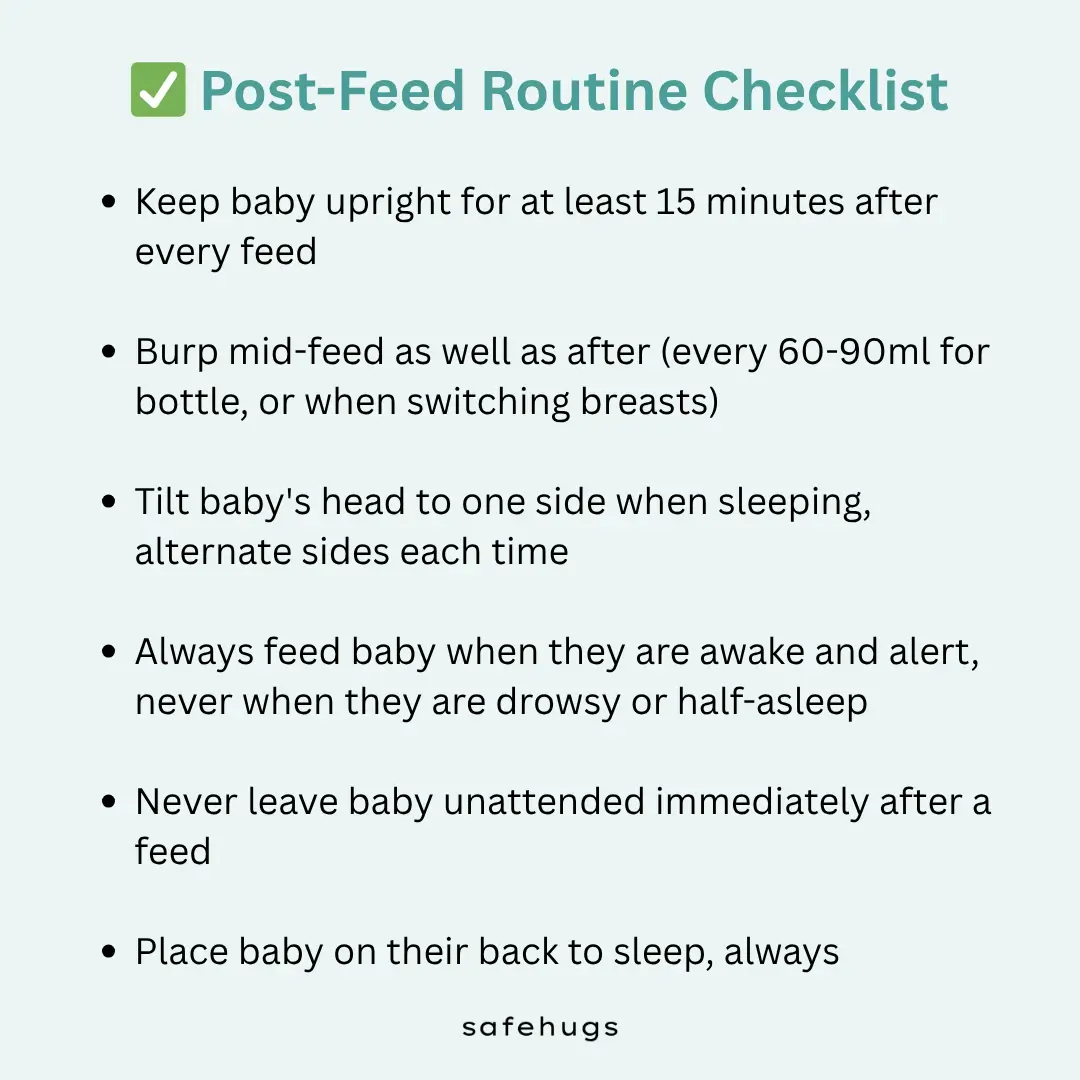
Frequent burping: Burp mid-feed (not just after) and keep baby upright for at least 5-10 minutes post-feed.
"Please try burping even if baby is too sleepy. And keep the baby upright for 5-10 minutes after the feed, this alone reduces the risk of both spit-up and post-feed choking significantly." - from our Mom Insider community.
What to Do When Your Newborn Chokes During Bottle Feeding
Newborn choking on milk during bottle feeding is particularly common when parents are feeding expressed breast milk, because the bottle flow is very different from the breast, and babies sometimes gulp too fast.
In the moment:
Remove the bottle immediately and hold baby upright
Let them cough and clear on their own if they are making sounds
Gently pat the back and wait before resuming
Preventing it going forward:
Pace feeding: Hold the bottle at roughly 45 degrees, not straight vertical. Every 1-2 minutes, tip the bottle so the nipples empties of milk, this gives babies time to breathe.
Match the nipple size to age: Slow-flow (Size 1 or Stage 1) nipples are appropriate for newborns up to about 3 months. Do not size up until baby shows consistent signs of frustration, not just occasional discomfort.
Introduce new nipple sizes during daytime feeds: As one mum shared in our Mom Insider community, "Initially babies may do choking-like actions with a new nipple, it took two to three feeds for my baby to get used to the next size." Always test a new nipple size when you are alert and watching closely.
Check nipple condition: Nipples degrade over time and flow rates change. Replace nipples every 3 months, or sooner if you notice cracks, thinning, or the flow feels faster than usual.
What to Do If Your Baby Chokes on Milk While Sleeping
The phrase "baby choking on milk while sleeping" sends a chill through every parent. The good news is that newborns have a strong protective airway reflex, when spit-up occurs, they instinctively swallow or cough to clear it, even in sleep. Research consistently shows that babies sleeping on their backs are actually safer from aspiration than stomach sleepers. Back sleeping is also the official guidance of the Indian Academy of Pediatrics (IAP) and the WHO.
To prevent it happening:
Keep baby upright for 15-20 minutes after every feed before putting them down, this is the single most effective step
Tilt baby's head to one side after they fall asleep, alternate left and right sides, so that if spit-up occurs, it flows out rather than pooling.
Avoid overfeeding, a very full baby before sleep is far more likely to spit up
Never prop the cot mattress, inclined sleeping surfaces are not recommended as they can cause baby to slump into a chin-on-chest position, which can restrict breathing
What If My Baby Aspirated Breast Milk?
Aspiration means milk has entered the lungs rather than the stomach. This is different from sputtering and requires medical attention. Aspiration can happen during a choking episode if the milk was inhaled, or it can happen in babies with reflux.
Signs of possible milk aspiration:
Continuous coughing or wheezing after feeding, not just the feed itself, but in the hours after
Rapid breathing or breathing that seems laboured
Fever developing within 24-48 hours after an episode
Baby refuses to feed, or cries in distress during every feed
A consistently hoarse or wet-sounding cry
If you notice any of these signs, especially after a choking episode, do not wait for a scheduled appointment. Contact your pediatrician or visit a hospital that day. Aspiration pneumonia in infants is treatable when caught early.
Aspiration vs. Sputtering: Sputtering is a one-time event during or immediately after a feed, and baby recovers fully within seconds. Aspiration signs persist for hours or days after the feed.
How to Prevent Your Newborn from Choking on Milk
Most milk choking is preventable with a few consistent habits. Here is everything that works, backed by pediatric guidance and real parent experience.
Feeding positions that reduce choking risk
For breastfeeding: Laid-back (biological nurturing) position, you recline, baby lies on your chest face-down against gravity. This slows milk flow naturally and reduces sputtering.
For bottle feeding: Semi-reclined position, baby at roughly a 45-degree angle, never flat on their back. This slows gravity-driven milk flow and mirrors a more natural feeding position.
General rule: The more upright the baby is, the more control they have over the feed pace.
Hunger cues matter more than you think
Babies who are allowed to reach a state of frantic, screaming hunger before a feed almost always gulp aggressively, swallowing air and milk together, which causes sputtering and gas. Learn your baby’s early hunger cues (rooting, sucking motions, bringing hands to mouth) and feed before they reach the crying stage.
Rooting reflex - A natural newborn reflex where a baby turns their head and opens their mouth when their cheek or mouth is touched, helping them find the breast or bottle for feeding.
Takeaways
Seeing your newborn sputter and cough on milk is one of the most frightening moments of early parenthood, and it happens to almost every family. What you can do is be prepared: know the difference between normal gagging and true choking, practise the steps in your head before you ever need them, and build a few simple post-feed habits that dramatically reduce the chances of an episode happening at all. And if something ever does feel off, if baby keeps coughing after every feed, cries persistently, or you are just worried, your pediatrician is always the right call.
Related:
Check out "How to Burp a Baby".
Check out "Why Is My Newborn Gagging While Sleeping".
Check out "Side Effects of Bottle Feeding".