Baby Feeding Chart (0-12 Months): How Often to Feed
Table of Content
Newborn Feeding Chart (0-1 Months)
Infant Feeding Chart (1-6 Months)
6 Month Baby Feeding Chart
Feeding Schedule After 12 Months
Baby Feeding Chart by Weight
Common Feeding Mistakes
A baby feeding chart helps parents understand how much and how often to feed their baby based on their age, weight, and development. It gives us ideas for feeding whether you are breastfeeding or formula feeding. Breastfeeding babies usually feed more frequently because breastmilk is digested faster, while formula fed babies may stay fuller longer and feed less frequently. These differences are normal and acceptable. Likewise every baby is different, some may need more milk than others or less. Here you can learn how to use a feeding chart in a practical way, so you can feed your baby according to their natural cues.
Newborn Feeding Chart (0-1 Months)
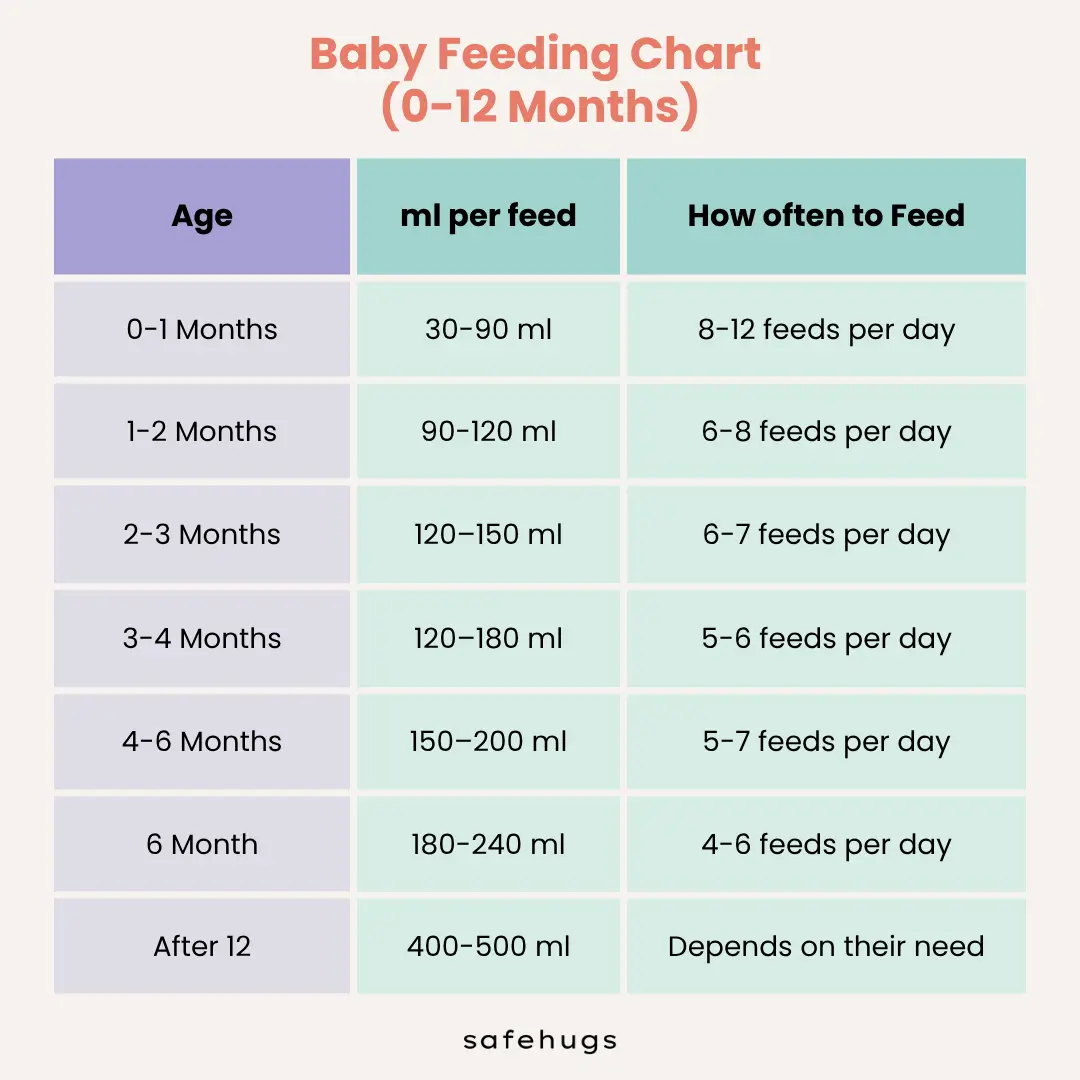
In the first month, feeding is frequent and demand-driven because a newborn's stomach is very small and grows quickly in the first few weeks. Most newborns need to be fed every 2-3 hours, which usually adds up to about 8-12 feeds per day. In terms of quantity, babies typically take around 30-90 ml per feed, depending on their age, weight, and whether they are breastfed or formula-fed. Breastfed babies may feed more often, as breast milk is digested faster, while formula-fed babies may take slightly longer gaps between feeds.
According to pediatric guidance, it's important not to stretch feeds too long in the newborn stage, especially in the early weeks when steady feeding supports healthy weight gain and development. Night feeds are also essential during this period and should not be skipped. For Indian parents, feeding patterns may vary slightly based on factors like birth weight, weather, and overall growth. Some babies may want to feed more frequently during hot weather or growth spurts, which is completely normal.
My baby is 6 weeks old, feeds for 20-25 minutes, but weight gain feels slower than expected. - from our Mom Insider community
Infant Feeding Chart (1-6 Months)
Bottle Feeding (1-2 Months)
At 1-2 months, your baby starts taking slightly larger feeds, and the feeding pattern becomes a bit more predictable. Most babies will drink around 90-120 ml per feed and usually feed every 3-4 hours, adding up to about 6-8 feeds in a day. You may notice your baby staying full for longer compared to the newborn stage, but feeding is still not on a strict schedule. Some babies may continue to ask for feeds more frequently, especially during growth spurts.
For bottle-fed babies, it becomes easier to track how much they are drinking, but it's still important to watch their cues, like rooting, sucking, or turning away when full, rather than focusing only on numbers. In Indian conditions, things like heat, sleep patterns, and growth phases can slightly affect feeding frequency. As long as your baby is active, satisfied after feeds, and gaining weight well, their intake is on track.

Bottle Feeding (2-3 Months)
By 2-3 months, your baby's feeding pattern becomes more settled, and you may start noticing a clearer routine throughout the day. Their appetite continues to grow, and feeds become more efficient compared to the earlier weeks. At this stage, most babies take around 120–150 ml per feed every 3-4 hours, though some may take slightly more or less depending on their needs. You may also see longer gaps between feeds as your baby begins to stay full for a longer time.
Bottle-fed babies often show a more predictable pattern, but it's still important to follow hunger cues such as sucking on hands, fussiness, or rooting, rather than sticking to a fixed schedule. As always, focus on your baby’s overall well-being. If they are active, feeding comfortably, and gaining weight well, their feeding pattern is likely just right.
Bottle Feeding (3-4 Months)
At 3-4 months, feeding starts to feel easier for many parents as babies develop a more regular rhythm. They are usually more alert during feeds and may get less distracted, allowing them to finish feeds more efficiently. Most babies at this stage take about 120-180 ml per feed, with feeds spaced roughly every 3-4 hours. Some babies may naturally begin to reduce night feeds, while others may still need them, both patterns are normal.
This is also a phase where growth spurts can briefly change feeding habits. Your baby might suddenly demand more milk or feed more often for a few days before settling back into their usual pattern. You may also notice your baby showing curiosity during family mealtimes, like watching you eat or reaching out. While this doesn’t mean they are ready for solids yet, it's a sign of growing awareness.
Growth Spurts - Growth spurts are short periods when a baby grows quickly in size and development, often leading to increased hunger and more frequent feeding.
Bottle Feeding (4-6 Months)
Between 4-6 months, your baby continues to rely mainly on milk, but feeding patterns may start to shift as they grow and become more active. Feeds are usually more spaced out, and babies tend to stay full for longer periods. Most babies take around 150-200 ml per feed, with feeds every 3-4 hours. By the time they approach 6 months, some babies may increase intake slightly or adjust their feeding frequency based on their routine.
This is also the stage where many parents begin thinking about solids. While some babies show early interest, milk (breast milk or formula) should still remain the primary source of nutrition during this period. You might notice your baby watching you eat, opening their mouth when food is nearby, or trying to grab things. These are early signs of curiosity, but solids should only be introduced when your baby shows full readiness.
6 Month Baby Feeding Chart
At 6 months, your baby's feeding routine begins to include both milk and solid foods. However, breast milk or formula still remains the main source of nutrition, with solids introduced as a complement. Most babies at this stage continue to take around 180-240 ml per feed, about 4-5 times a day, along with 2-3 small solid meals. The exact pattern can vary depending on your baby’s appetite and routine.
You may notice your baby showing strong interest in food, watching you eat, reaching out, or opening their mouth when offered food. This is a good time to gradually introduce simple, soft foods while continuing regular milk feeds.
Started with simple foods like mashed banana and fruit purees. Also used homemade foods like ragi, oats, and simple grain mixes. - from our Mom Insider community
How Much Solid Food for a 6 Month Old?
When starting solids, begin with small portions and increase gradually based on your baby’s comfort.
Start with 1-2 tablespoons per meal
Offer solids once or twice a day initially
Slowly increase to 2-3 meals per day
At this stage, solids are mainly for practice and exposure, not to replace milk. Your baby may eat very little at first, and that is completely normal. As always, follow your baby’s cues. Some babies may be eager eaters, while others take time to adjust.
Feeding Schedule After 12 Months
After 12 months, your baby gradually transitions from a milk-based diet to eating a wide variety of solid foods. According to the World Health Organization (WHO), breastfeeding can be continued up to 2 years and beyond, but after the first year, most of a child’s nutrition should come from solid foods. At this stage, toddlers usually follow a simple routine of three main meals and two to three snacks in a day, along with about 400-500 ml of milk. Milk still plays an important role, but it is no longer the primary source of nutrition.
The Indian Academy of Pediatrics (IAP) recommends offering a balanced diet that includes cereals, pulses, fruits, vegetables, and protein-rich foods like eggs or dairy. For Indian parents, this typically means transitioning to regular home-cooked meals such as rice, dal, roti, idli, vegetables, and other soft, easy-to-eat foods with mild spices.
You may also notice your child becoming more independent with eating. It is common for toddlers to want to self-feed, explore different textures, or even refuse certain foods. Appetite can vary from day to day, and this is a normal part of development. Instead of focusing on how much your child eats in a single meal, it is better to look at their overall intake across the day or week.
Identifying Allergies, Intolerances, Sensitivities
As your baby starts trying new foods, it's important to watch for how their body responds. While most babies adjust well, some may show reactions that could indicate a food allergy, intolerance, or sensitivity. A food allergy usually involves the immune system and can cause symptoms like rashes, swelling (especially around the lips or eyes), vomiting, wheezing, or difficulty breathing. These reactions can appear quickly after eating and may require immediate medical attention.
Intolerance - Intolerance is when a baby has difficulty digesting a certain food or ingredient, leading to discomfort, but it does not involve the immune system like an allergy.
A food intolerance is different and usually affects digestion. It may lead to symptoms like gas, bloating, diarrhea, or fussiness after eating certain foods. These are generally less severe and develop more gradually. Some babies may also have food sensitivities, which are milder reactions such as slight skin irritation, mild stomach discomfort, or changes in stool pattern. These can be harder to identify and may vary from baby to baby.
According to the Indian Academy of Pediatrics (IAP), it's best to introduce new foods one at a time, with a gap of 2-3 days. This makes it easier to identify any reaction and understand which food may be causing it. If you notice any unusual symptoms after feeding, stop the suspected food and consult your pediatrician. Severe symptoms like breathing difficulty, persistent vomiting, or swelling require immediate medical care.
Introduced one new food and waited 2-3 days before adding another. - from our Mom Insider community
Baby Feeding Chart: Formula vs Breast Milk
When using a baby feeding chart, it's important to understand that feeding patterns can differ between breastfed and formula-fed babies. Both provide essential nutrition, but the way babies consume and digest them is slightly different.
Breast milk is naturally designed for babies and is easier to digest. Because of this, breastfed babies tend to feed more frequently, often every 2-3 hours, especially in the early months. The exact amount is harder to measure, but babies usually regulate their intake based on hunger and fullness cues. Formula, on the other hand, takes a little longer to digest. This means formula-fed babies may feed every 3-4 hours and often take slightly larger quantities per feed, which can be measured in ml. This makes it easier for parents to track intake using a feeding chart.
According to the World Health Organization (WHO), breastfeeding is recommended as the primary source of nutrition for the first 6 months, as it provides antibodies that support immunity and overall development. However, infant formula is a safe and nutritionally complete alternative when breastfeeding is not possible or needs to be supplemented.
Baby Feeding Chart by Weight
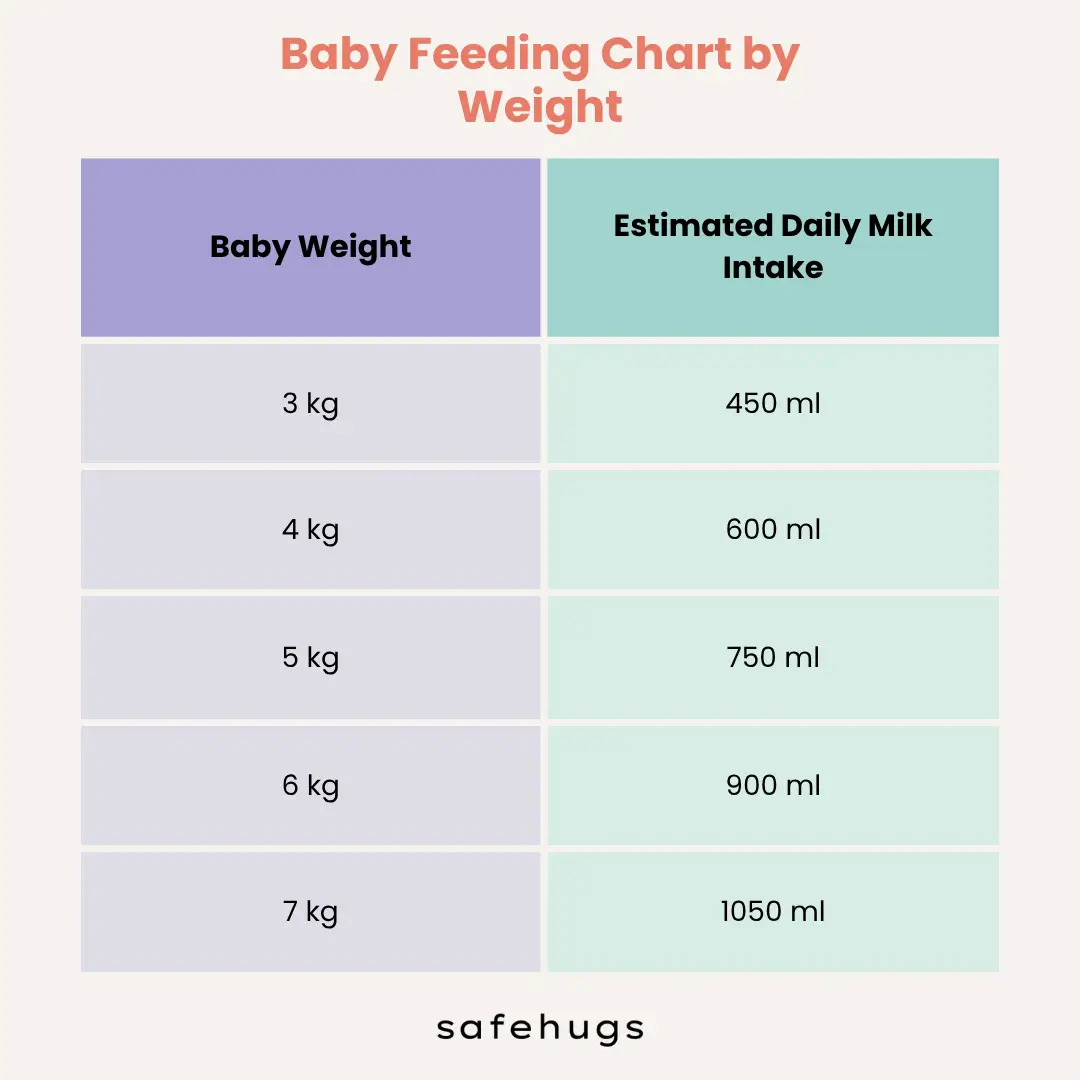
A simple way to estimate how much milk your baby needs is based on their weight. Pediatric guidance suggests that babies generally require about 150 ml of milk per kg of body weight per day.
How Much Breastmilk Should a Newborn Eat?
For newborns, it's harder to measure exact intake when breastfeeding. Instead of focusing on quantity, pediatric experts recommend watching feeding patterns and baby cues. In the first few weeks, a newborn typically feeds 8-12 times a day, taking small amounts that gradually increase as their stomach grows. By the end of the first month, feeds become slightly longer and more efficient.
How Often to Feed Newborns?
Newborns need frequent feeding because their stomach is small and milk is digested quickly. Most babies need to be fed every 2-3 hours, whether breastfed or formula-fed.
Day
During the day, newborns usually feed every 2-3 hours. It's important not to let long gaps go without feeding, especially in the early weeks, to support healthy weight gain.
Night
At night, feeding every 2-3 hours is still important in the newborn stage. Some babies may sleep slightly longer stretches, but they often need to be gently woken for feeds in the first few weeks if they don't wake on their own.
Common Feeding Mistakes
Feeding a baby can feel overwhelming, and small mistakes are common, especially for new parents. One of the most common mistakes is focusing too much on exact quantities instead of watching the baby's hunger and fullness cues. Every baby is different, and forcing a fixed amount can lead to overfeeding or discomfort. Another frequent issue is overfeeding or underfeeding based on assumptions. For example, assuming every cry means hunger or stretching feeds too long to follow a schedule can disrupt your baby’s natural rhythm.
Some parents may also introduce solids too early, before the baby shows clear signs of readiness. This can affect digestion and increase the risk of choking or food aversion. Using incorrect bottle techniques, such as fast-flow nipples or improper positioning, can lead to gulping, gas, or spit-ups. Similarly, frequent switching between feeding methods without a clear pattern can sometimes confuse the baby.
When to Worry About Baby Feeding
While variations in feeding are normal, there are certain signs that may need attention. If your baby is not gaining weight, appears constantly lethargic, or shows very little interest in feeding, it's important to consult a pediatrician.
Frequent vomiting (not just spit-up), persistent diarrhea, or signs of dehydration like fewer wet diapers can also be warning signs. Difficulty breathing during feeds, choking often, or refusing feeds repeatedly should not be ignored. According to the Indian Academy of Pediatrics (IAP), parents should seek medical advice if feeding issues affect the baby’s growth, hydration, or overall activity levels.
Expert Tips for Healthy Feeding Routine
Building a healthy feeding routine doesn't mean following a strict schedule, it’s about understanding your baby's needs and creating a rhythm that works for both of you. Pediatric experts suggest focusing on responsive feeding, where you feed based on hunger cues rather than the clock. Signs like rooting, sucking hands, or restlessness often indicate hunger, while turning away or slowing down signals fullness.
Consistency helps, so try to maintain a flexible daily routine with regular feeding times, sleep, and play. This creates a sense of security for your baby without being restrictive. It's also important to ensure proper feeding technique, especially with bottle feeding. Holding your baby in a slightly upright position and using the right nipple flow can help prevent gas and overfeeding.
Allowing the baby to touch and explore food made feeding easier over time. - from our Mom Insider community
Key Takeaways
A baby feeding chart is a helpful guide, but it should not replace your baby's natural hunger cues. Feeding patterns change quickly in the first year, becoming more structured over time.
Milk remains the primary source of nutrition for the first 6 months, after which solids are gradually introduced while continuing milk feeds.
There is no one-size-fits-all approach. Some babies feed more often, while others take larger feeds with longer gaps. Both can be normal as long as the baby is growing well.
Tracking wet diapers, weight gain, and overall activity is more important than focusing only on how much your baby eats in a single feed.
Related:
Check out our blog on "How to Stop Breastfeeding at Night".
Check out our blog on "Signs of Overfeeding Newborn".
Check out our blog on "How Many Hours Do Newborns Sleep".