
Signs Your Pregnancy Is Going Well in the First Trimester
Table of Content
What Happens in the First Trimester
Common Signs Your Pregnancy is Going Well in the First Trimester
Foetal Development in the First Trimester
Red Flags That Need Attention
How to Feel Reassured in the First Trimester
Early pregnancy often comes with a lot of questions. It’s common to notice every small change and wonder if everything is progressing as it should. The first trimester is a crucial stage of development, and while it can bring discomfort, many of these signs are actually a normal part of a healthy pregnancy. Understanding the signs your pregnancy is going well in the first trimester can help reduce unnecessary worry and make this phase feel more manageable.

What Happens in the First Trimester
During the first trimester, your body goes through rapid changes to support your baby's growth. Pregnancy hormones like hCG and progesterone rise quickly, helping to sustain the pregnancy while also causing common symptoms such as nausea, fatigue, and mood changes. At the same time, early baby development begins, with the brain, heart, and other vital organs starting to form and the foundation for growth being established. Because so much is happening in a short period, symptoms can feel more intense or unpredictable. This is a normal part of your body adjusting to support early development, and understanding these changes can help you see that many symptoms are signs of a progressing pregnancy.
hCG (Human Chorionic Gonadotropin) - It is a pregnancy hormone produced after implantation. It helps support the early stages of pregnancy and is the hormone detected in pregnancy tests.
Progesterone - Progesterone is a hormone that helps maintain pregnancy by supporting the uterus lining and creating a healthy environment for the baby to grow.
How long is the first trimester?
The first trimester lasts from week 1 to week 12 of pregnancy. It begins from the first day of your last menstrual period, even though actual conception happens a couple of weeks later. This is the earliest and one of the most important phases of pregnancy.
Common Signs Your Pregnancy is Going Well in the First Trimester
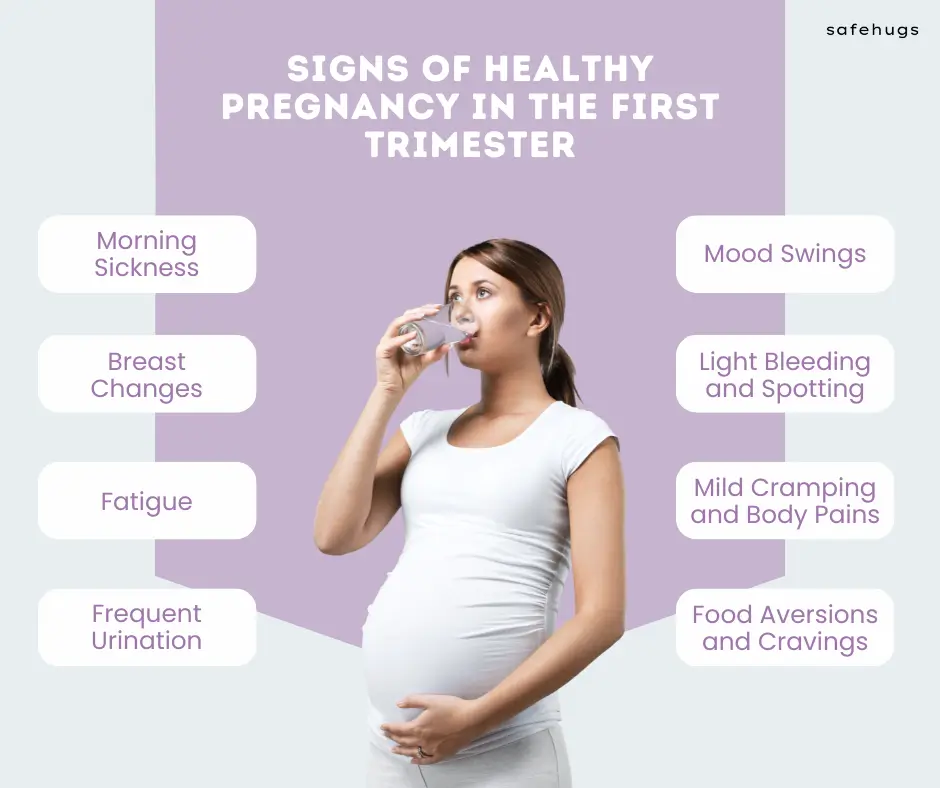
Consistent Pregnancy Symptoms (Nausea, fatigue, breast tenderness)
Experiencing ongoing symptoms like nausea, tiredness, or breast tenderness is often a sign that pregnancy hormones are active and supporting your body. These symptoms can vary in intensity, but their presence generally indicates that your body is adjusting as expected.
Morning Sickness
Morning sickness, which includes nausea with or without vomiting, is commonly linked to rising hormone levels. While it can be uncomfortable, it is often considered a reassuring sign that the pregnancy is progressing. However, not experiencing nausea can also be completely normal.
In the first trimester, it's honestly about just getting through the day. If eating feels difficult, just eat what you can. Even small things like fruits help. - from our Mom Insider community
Breast Changes
Breast tenderness, fullness, or darkening of the areola are common in early pregnancy. These changes happen as your body prepares for breastfeeding and are a normal response to hormonal shifts.
Fatigue
Feeling unusually tired is very common in the first trimester. Your body is using a lot of energy to support early development, and increased progesterone levels can make you feel more sleepy than usual.
Frequent Urination
An increased need to urinate can begin early in pregnancy due to hormonal changes and increased blood flow to the kidneys. This is a normal and expected symptom.
Mood Swings
Hormonal changes can affect your emotions, leading to mood swings or increased sensitivity. Feeling more emotional than usual is a common part of early pregnancy.
Light Bleeding and Spotting
Light spotting can occur in early pregnancy, sometimes around the time of implantation. It is usually mild and short-lived. However, it’s important to monitor it and consult a doctor if it becomes heavy or persistent.
I experienced spotting for a couple of days in early pregnancy. I was told light spotting can happen, but it’s always better to stay in touch with your doctor. - from our Mom Insider community
Mild Cramping and Body Pains
Mild cramping can happen as the uterus expands to accommodate the growing baby. Some women may also feel stretching or pulling sensations. These are generally normal, but severe or persistent pain should be checked by a doctor.
I used to feel different kinds of pain during pregnancy. One doctor said it was normal, but another later gave me medication and it improved. It’s always better to check if something feels off. - from our Mom Insider community
Food Aversions and Cravings
Changes in taste and smell are common, leading to strong aversions or sudden cravings. These shifts are caused by hormonal changes and are a normal part of early pregnancy.
Bloating and Acidity
Bloating and acidity are frequent in the first trimester due to hormonal changes slowing digestion. While uncomfortable, these symptoms are usually normal and tend to improve over time.
I had intense bloating till around 12 weeks. It was uncomfortable most days, but it did settle gradually after that. - from our Mom Insider community
Emotional and Physical Fluctuations
It's common for symptoms and energy levels to change from day to day. Some days you may feel more tired or symptomatic, while other days may feel easier. These fluctuations are part of how your body adjusts during early pregnancy.
For me, stretching and light yoga helped with body pain. If I stayed active, the discomfort felt more manageable the next day. - from our Mom Insider community
Doctor Confirmation and Scans
Medical confirmation through checkups and scans is the most reliable reassurance that your pregnancy is progressing well. While symptoms can provide clues, regular medical guidance gives a clearer picture of your baby's development.
Not sure what to avoid during pregnancy? Read Foods to Avoid During Pregnancy to make safer, healthier food choices.
Foetal Development in the First Trimester

The first trimester is a critical phase of development, where the foundation for your baby’s growth is established. During these early weeks, the baby's heartbeat begins, often detectable by around 6-7 weeks, which is an important milestone. At the same time, major organs start forming, including the brain, spine, and heart. This is also a period of rapid growth, where the baby develops from a tiny cluster of cells into a more defined form with basic structures in place.
Many of the symptoms you experience during this time are closely linked to this development. The rise in pregnancy hormones supports this rapid growth, which is why symptoms like nausea, fatigue, and breast changes are common. Understanding this connection can help you see that these symptoms are often a natural part of your body supporting your baby’s early development.
A Few Common Myths
There are many misconceptions around early pregnancy, especially in the first trimester. These can often create unnecessary worry. Understanding what's true and what's not can help you feel more informed and reassured.
Myth: No nausea means an unhealthy pregnancy
Not experiencing nausea does not mean something is wrong. Pregnancy symptoms vary widely, and some women may have little to no nausea and still have a completely healthy pregnancy.
Myth: Spotting always means miscarriage
Light spotting can be common in early pregnancy and is not always a sign of miscarriage. However, it’s important to monitor it and consult your doctor if it becomes heavy or is accompanied by pain.
Myth: More symptoms mean a stronger pregnancy
The intensity or number of symptoms does not determine how healthy a pregnancy is. Some women experience many symptoms, while others have very few. Both can be normal.
Red Flags That Need Attention
When to Call Your Doctor
While many first trimester symptoms are normal, some signs should not be ignored. These may not always indicate a serious problem, but they do require medical attention to ensure everything is progressing safely.
Light spotting can be normal, but bleeding that is similar to or heavier than a period, especially if it includes clots or is accompanied by pain, needs immediate attention.
Mild cramping can happen as the uterus expands, but sharp, intense, or one-sided pain that does not go away should be evaluated by a doctor.
Occasional nausea is common, but if you are unable to keep food or fluids down, feel dizzy, or show signs of dehydration (such as very dark urine or reduced urination), it may need treatment.
A high temperature or feeling unusually unwell can indicate an infection and should be checked promptly.
Feeling lightheaded occasionally can be normal, but frequent dizziness, fainting, or extreme weakness should not be ignored.
Symptoms can come and go, but if you notice a sudden disappearance of symptoms along with a general feeling that something isn't right, it's best to consult your doctor.
Any unusual changes that feel different from typical pregnancy symptoms should be discussed with a healthcare provider.
Even if something is considered normal, you should still ask your doctor. And if you’re not getting clear answers, it's okay to take a second opinion. - from our Mom Insider community
How to Feel Reassured in the First Trimester
The first trimester can feel uncertain, but a few simple steps can help you stay calm and confident during this phase.
Regular checkups: Attending your scheduled doctor visits helps track your baby's development and gives you reliable reassurance. If you have concerns between appointments, it’s always okay to reach out to your doctor.
Rest and nutrition: Your body is working hard, so getting enough rest and eating balanced meals can support both your health and your baby’s growth. Even if eating feels difficult at times, focus on what you can manage.
Limit over-Googling: Searching every symptom online can increase anxiety. Try to rely on trusted sources and your doctor’s guidance instead of comparing your experience with others.
Listen to your body: Pay attention to how you feel. Rest when you're tired, eat when you’re hungry, and don’t ignore anything that feels unusual. Trusting your body while staying informed can help you feel more in control.
Expert Insights
Pregnancy symptoms can vary widely from one person to another. Some may experience multiple noticeable symptoms, while others may have very few. Both situations can be completely normal, which is why comparing experiences can often lead to unnecessary worry.
While symptoms can give general reassurance, medical confirmation remains the most reliable way to understand how your pregnancy is progressing. Regular checkups, scans, and your doctor's guidance provide a clearer and more accurate picture than symptoms alone.
Takeaways
Many common symptoms in the first trimester are positive signs that your body is supporting your pregnancy.
Some level of discomfort, such as nausea, fatigue, or mild cramping, is normal during this phase.
Every pregnancy is different, and symptoms can vary from person to person.
When in doubt or if something feels unusual, it's always best to check with your doctor.
Related:
Check out our blog on "Foods to Avoid During Pregnancy".