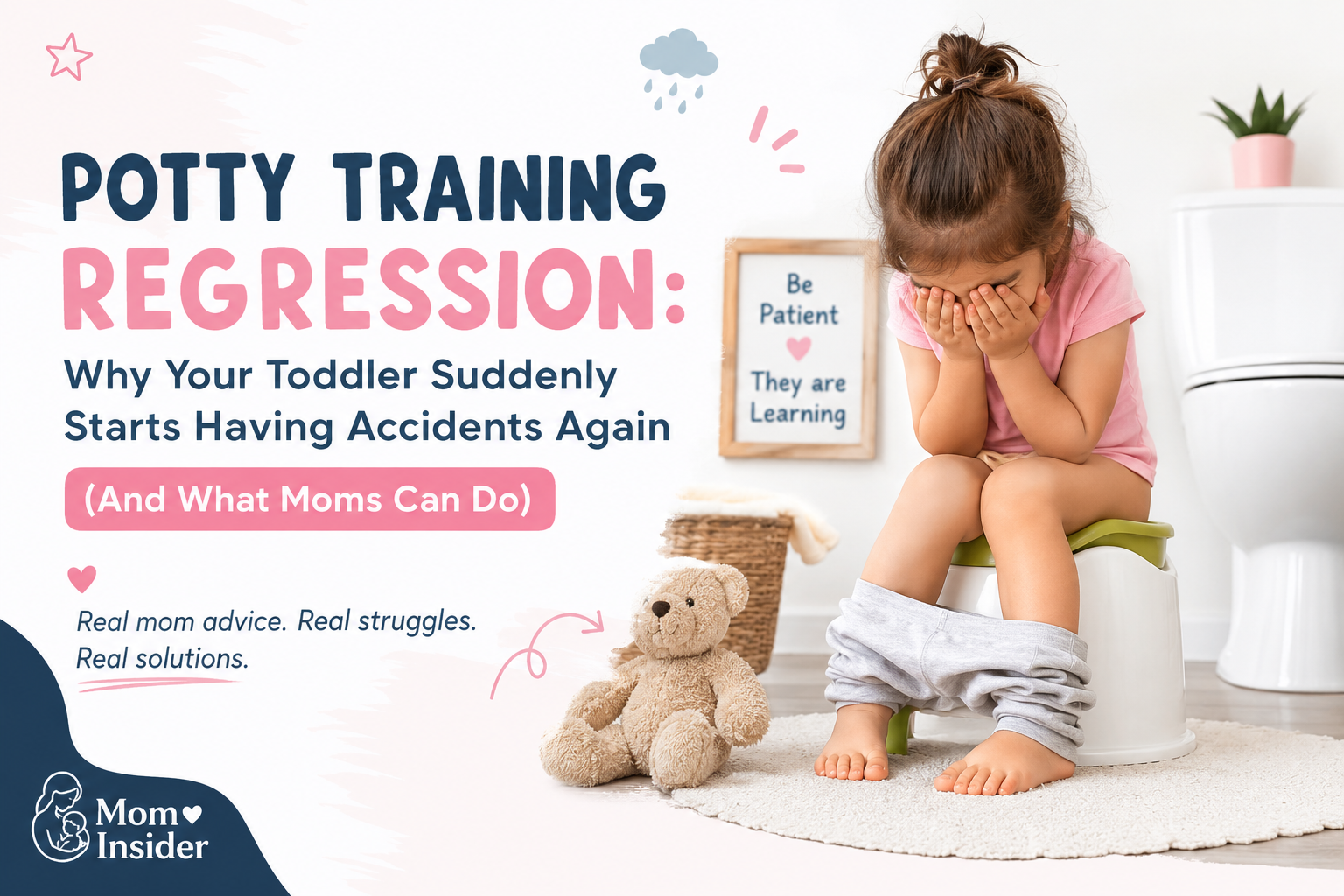
Potty Training Regression: Why Toddlers Have Accidents
Potty training regression is a temporary phase where a child who was previously using the potty successfully starts having accidents again. While it can feel frustrating and confusing, it is surprisingly common among toddlers between the ages of 2 and 4. Regression can happen due to developmental changes, routine disruptions, travel, illness, stress, distractions, or simply because the novelty of potty training has worn off.
The good news is that potty training regression usually does not mean your child has forgotten the skill. In many cases, children simply need reminders, consistency, and reassurance. Moms in the MomInsider community shared that staying calm, taking children to the bathroom at regular intervals, and avoiding pressure helped their toddlers return to successful potty habits. Understanding why regression happens can make this phase much easier for both parents and children.
Key Terms Parents Should Know
Potty Training Regression
A temporary setback where a child who was previously potty trained begins having frequent accidents again.
Scheduled Toileting
A method where parents take children to the bathroom at regular intervals instead of waiting for the child to ask.
Developmental Regression
A short-term loss or decline in a previously learned skill that often occurs during periods of rapid growth or developmental change.
Why Is My Potty-Trained Toddler Suddenly Having Accidents Again?
Bottom line: Most potty training regressions are temporary and are often caused by distractions, routine changes, or developmental growth.
Many parents assume that once potty training is complete, accidents should disappear forever. In reality, potty training is rarely a straight-line process.
Toddlers are learning many new skills simultaneously. As they become more engaged in play, language development, social interactions, and exploration, remembering to use the toilet can sometimes take a back seat.
Changes such as starting daycare, welcoming a new sibling, traveling, moving homes, or even minor illnesses can also contribute to temporary setbacks.
Is Potty Training Regression Normal?
Bottom line: Yes, regression is a normal part of the potty-training journey for many children.
One MomInsider member recently shared her concern after her two-year-old, who had been doing well with potty training, suddenly started having multiple accidents every day despite reminders and rewards.
Several experienced moms responded by sharing similar experiences.
One mom shared:
“My daughter was quite prompt in telling us initially. Then she also regressed because it wasn’t a new thing for her anymore. The excitement was lost and she would forget.”
Another mom added:
“One of her friends who was potty trained also went through a phase where she had many accidents. It eventually improved.”
These experiences highlight an important truth: regression is often a temporary phase rather than a sign of failure.
What Should I Do If My Toddler Starts Having Accidents Again?
Bottom line: Focus on consistency instead of starting over.
Parents often wonder whether they should stop potty training altogether when accidents increase. Most experts and experienced parents suggest staying consistent while reducing pressure.
Strategies that many parents find helpful include:
Taking your child to the bathroom at regular intervals.
Keeping bathroom visits calm and routine.
Avoiding punishment or criticism.
Celebrating successes without creating pressure.
Watching for patterns in timing, meals, and activities.
One mom from the MomInsider community explained:
“We countered it by taking her to the bathroom at regular intervals to pee.”
Simple consistency often works better than introducing new reward systems or stricter rules.
Should I Take a Break From Potty Training?
Bottom line: Most mild regressions improve without taking a complete break.
If your child is showing extreme resistance, illness, or emotional distress, a short pause may be helpful. However, for most children, maintaining a gentle routine works better than stopping entirely.
The key is removing pressure while keeping expectations realistic.
Remember that accidents are part of learning.
When Should Parents Be Concerned?
Bottom line: Seek medical advice if regression is accompanied by pain, constipation, or significant behavioral changes.
Consider speaking with your pediatrician if your child:
Complains of pain while urinating.
Has ongoing constipation.
Suddenly regresses after months of success.
Experiences frequent urinary infections.
Shows signs of significant distress.
A healthcare professional can rule out physical causes that may be contributing to the problem.
What Moms in the MomInsider Community Shared
One of the most reassuring themes from our community discussion was that many families experience the same challenge.
Here are some of the practical lessons moms shared:
“Keep at it.”
“Regressions are common.”
“The excitement was lost and she would forget.”
“Taking her to the bathroom at regular intervals helped.”
Parents repeatedly emphasized patience, consistency, and understanding rather than punishment or frustration.
A Helpful Resource Recommended by Moms
One experienced mom recommended the book Oh Crap! Potty Training and shared:
“This is the best resource on potty training. I followed it properly and it worked beautifully.”
While every child is different, many parents find structured potty-training resources useful during challenging phases.
Key Takeaways
Potty training regression is common and usually temporary.
Many toddlers experience setbacks between ages 2 and 4.
Scheduled bathroom visits often help reduce accidents.
Avoid punishment and focus on consistency.
Most children regain their potty-training skills with time.
Consult a pediatrician if physical symptoms are present.