Good Touch Bad Touch: A Parent Guide to Child Safety
Table of Content
Understanding Good Touch Bad Touch
Examples of Good Touch and Bad Touch
Body Safety Rules Every Child Should Know
How to Teach Good Touch Bad Touch to Kids
Good Touch Bad Touch Chart
How to Set Boundaries Without Hurting Relationships
Good Touch Bad Touch Activities for Kids
Child safety is something every parent cares about, yet it's not always easy to talk about. Studies suggest that most children who face unsafe touch know the person involved, which makes awareness at home even more important. This is why understanding good touch bad touch is not just a topic for schools, but something parents need to be aware of early on. In reality, these situations are not always obvious. They can appear in small, everyday moments where a child's comfort is overlooked. Teaching children about safe and unsafe touch begins with these moments, and the boundaries we choose to set as parents.

Understanding Good Touch Bad Touch
Most people think good touch bad touch is something children need to learn when they grow older. But in reality, it begins with small, everyday moments. Someone picking up your baby without asking. A relative insisting on hugs or kisses. A stranger at the park getting a little too friendly. On the surface, these may seem harmless, but as a parent, you can feel when something is not sitting right with you.
Some moms share that they feel deeply uncomfortable when people touch their baby’s face or try to hold them, but hesitate to say anything because they don't want to come across as rude. Others mention how difficult it is when family members suggest practices that don’t feel safe, yet expect you to agree out of respect.
What is Good Touch?
A good touch, also called a safe touch, is any touch that makes a child feel safe, cared for, and comfortable. This could be a hug from parents, holding hands while crossing the road, or a doctor’s check-up when a parent is present. A good touch usually feels warm, gentle, and okay for the child.
What is Bad Touch?
A bad touch, or unsafe touch, is any touch that makes a child feel uncomfortable, scared, confused, or upset. This includes situations where someone touches their private parts, forces hugs or kisses, or asks them to keep something a secret. One simple way to explain this to children is: if a touch doesn’t feel right, it’s not okay.
What About "Confusing Touch"?
Sometimes, children may experience what we call a confusing touch. These are situations where they are not sure how they feel, not fully scared, but not comfortable either. It could be someone they know getting too close, or play like tickling that doesn’t stop when they want it to. These moments are important because they teach children to trust their instincts.
Examples of Good Touch and Bad Touch
Let us explore some good touch bad touch examples that children can easily understand.
Good Touch (Safe Touch)
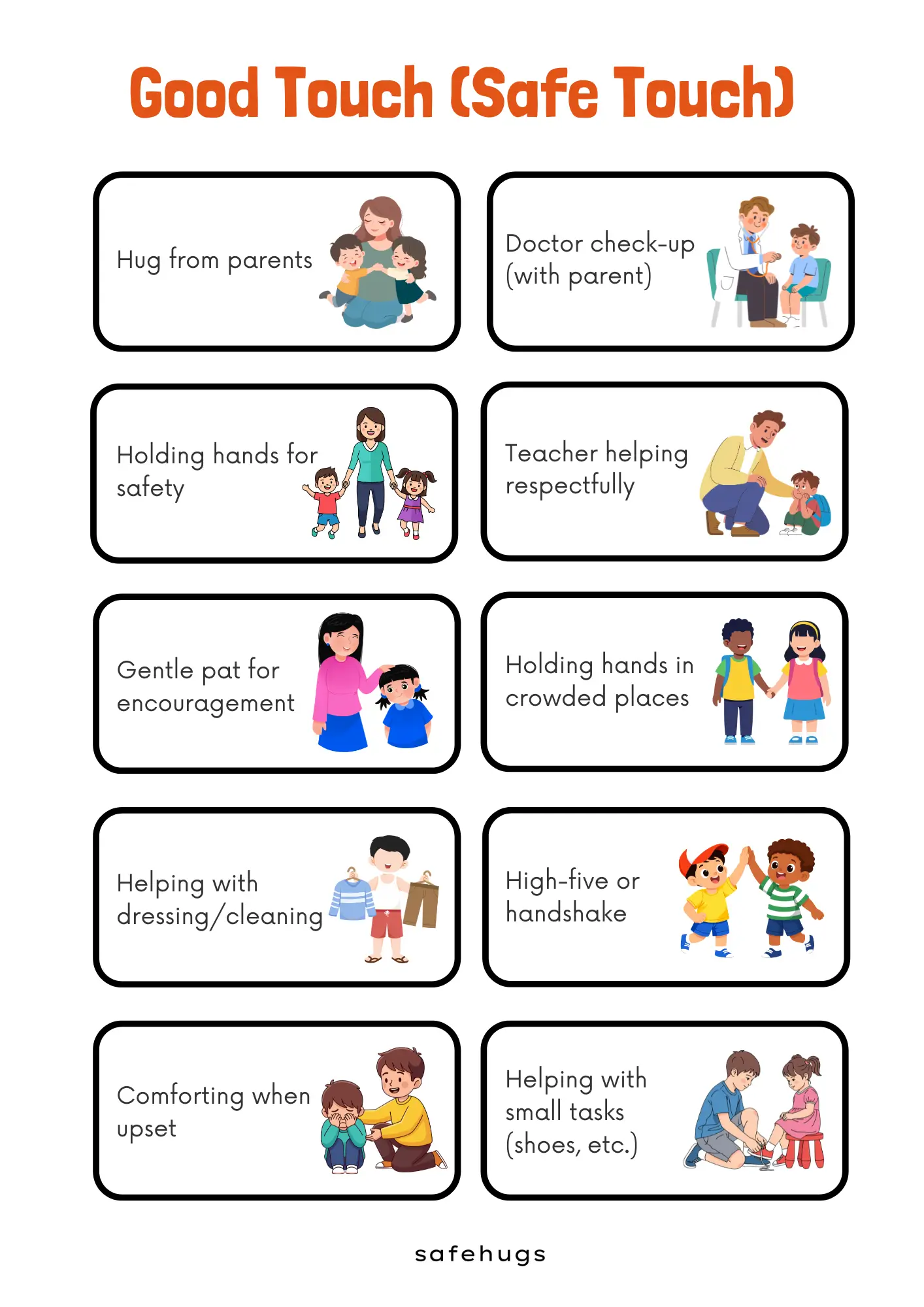
A parent hugging or comforting a child
Holding hands while crossing the road
A gentle pat on the back for encouragement
Helping a child get dressed or cleaned (by a parent/caregiver)
A doctor’s check-up with a parent present and explained properly
A teacher helping a child in a caring and respectful way
Bad Touch (Unsafe Touch)
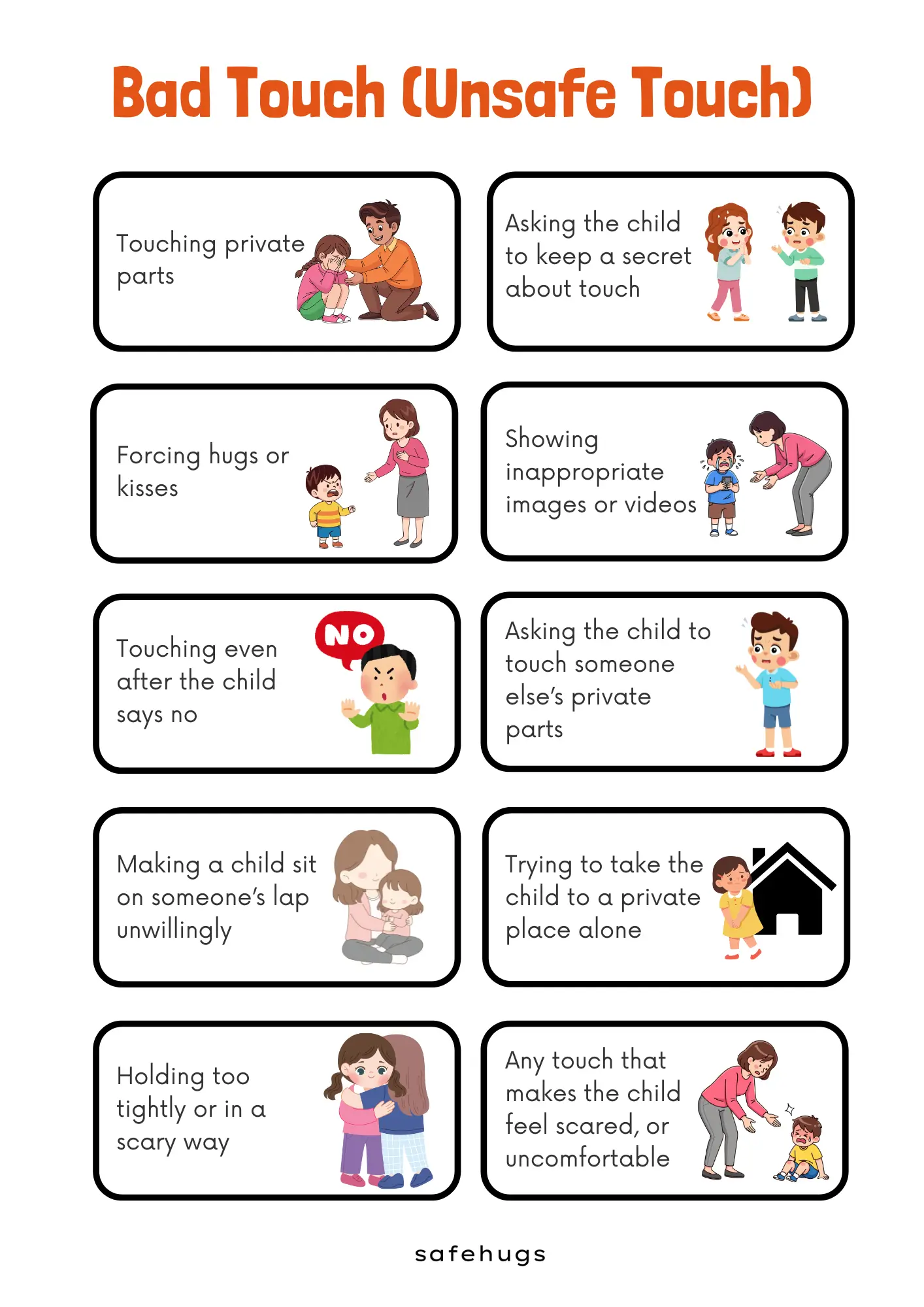
Touching a child's private parts
Forcing hugs or kisses when the child says no
Continuing to touch even when the child pulls away
Making a child sit on someone’s lap against their will
Holding or touching in a way that feels uncomfortable or scary
Asking a child to keep a touch a secret
Showing or asking the child to look at inappropriate things
Confusing Touch (Not Clearly Safe or Unsafe)
Tickling that continues even after the child asks to stop
Play that suddenly feels uncomfortable
Someone standing too close or touching in a way that feels “not right”
A familiar person behaving in a way that makes the child uneasy
Body Safety Rules Every Child Should Know
Once children begin to understand good touch bad touch, the next step is giving them simple, clear rules they can remember and use in real-life situations.
My body belongs to me is the first and most important rule. Children should know that their body is their own, and they have the right to decide who can touch them and how. Even with familiar people, they should feel allowed to say no if they are not comfortable.
Private parts are private is another key rule to teach early on. You can explain that the parts of the body covered by underwear are private, and no one should touch or see them except for health or hygiene reasons, and always with a parent’s awareness.
It’s okay to say NO helps children understand that they don’t have to accept any touch that feels uncomfortable. Saying no is not rude, it is a way of protecting themselves. They should feel confident using their voice when something doesn’t feel right.
Run away and tell a trusted adult gives children a clear action to take. If they ever feel unsafe or confused, they should move away from the situation and immediately tell someone they trust, like a parent, teacher, or caregiver.
No secrets about touching is an important rule that protects children from manipulation. Teach them that no one should ask them to keep secrets about touching, and if someone does, they should always tell a trusted adult.
When Parents Should Start this Conversation
Many parents wonder if there is a "right age" to talk about good touch bad touch, but the truth is, this conversation can begin much earlier than most people think. Children as young as 2 to 3 years old can start understanding simple ideas about their body when explained in an age-appropriate way. At this stage, it doesn’t need to be a serious discussion. It can be as simple as teaching correct names for body parts and introducing the idea that some parts are private.
How to Teach Good Touch Bad Touch to Kids
Start early and keep it simple. You don’t need to wait until a certain age. Even young children can begin to understand basic ideas when explained in simple language. Using clear words like “safe” and “not safe” is often easier for them to grasp than long explanations.
Use everyday moments to teach. Teaching doesn’t have to happen in a formal setting. Small situations like helping them get dressed, playing, or even when someone tries to hug them can become learning moments. These real-life situations make the concept easier to understand and remember.
Focus on feelings, not fear. Instead of making children scared, help them notice how they feel. Teach them that if something feels uncomfortable, confusing, or not right, they can trust that feeling. This approach builds confidence rather than fear.
Repeat and reinforce regularly. Children don’t learn this in one conversation. Bringing it up naturally again and again helps them remember. Short, simple reminders work better than long discussions.
Create a safe space for communication. Make sure your child feels comfortable telling you anything without fear of being scolded or ignored. When children know they will be heard and believed, they are more likely to speak up.
Teach them what to do, not just what to avoid. It’s important for children to know the action steps, say no, move away, and tell a trusted adult. Giving them a clear response makes them feel more prepared.
Use stories, play, and activities. Children learn best through play. Storytelling, role play, or simple activities can make learning about good touch bad touch feel natural instead of serious or overwhelming.
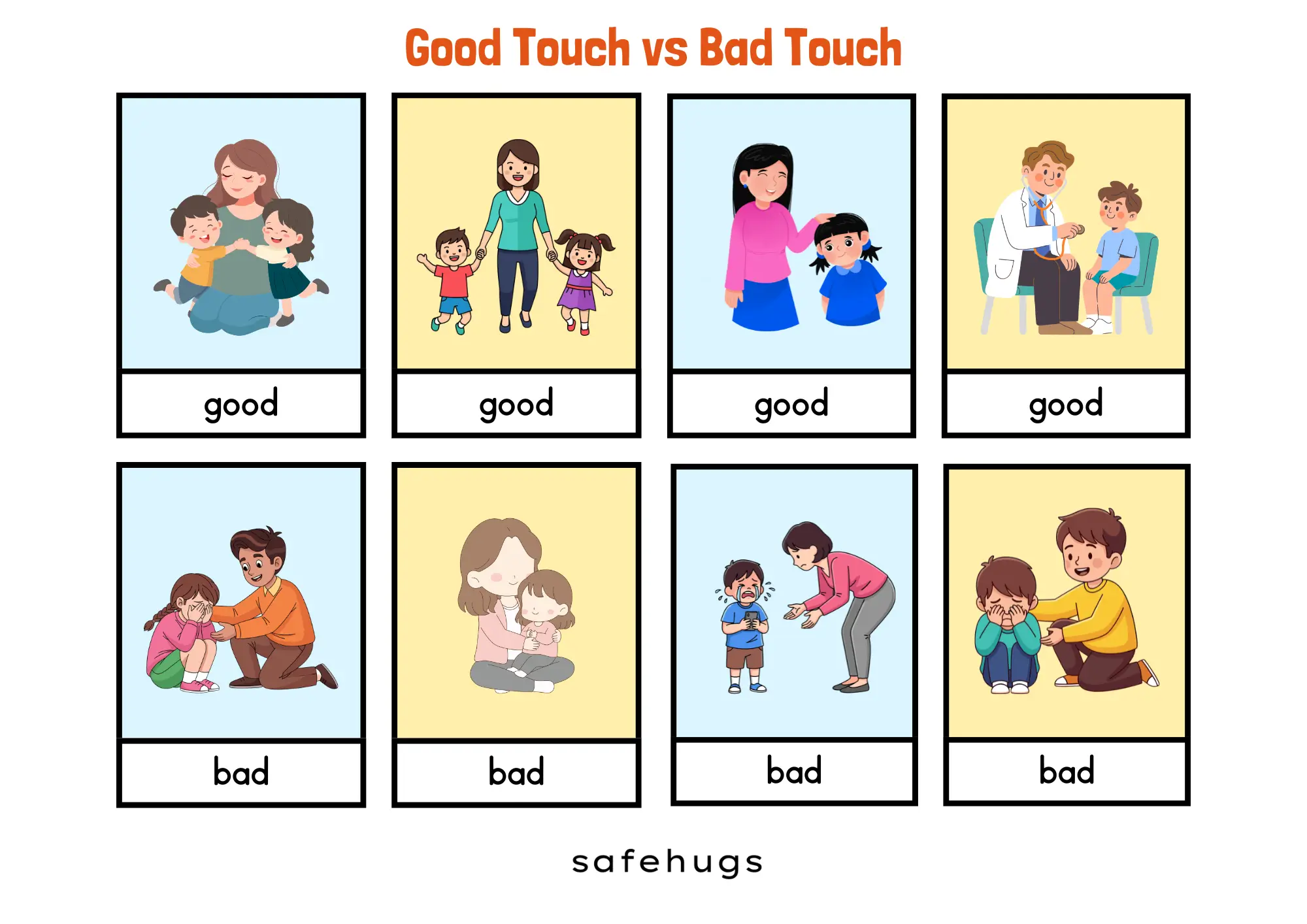
Good Touch Bad Touch Chart
How to Set Boundaries Without Hurting Relationships
Setting boundaries around your child can feel uncomfortable, especially when it involves family or close friends. You don’t want to come across as rude or ungrateful, but at the same time, ignoring your instincts doesn’t feel right either. The truth is, most parents find themselves in this space at some point.
Start with gentle, clear communication. You don’t always need to be harsh to be firm. Simple, polite statements can go a long way. Saying things like “He’s not comfortable right now” or “We’re avoiding face touching” helps you express your boundary without sounding confrontational.
Focus on the child, not the person. Framing your response around your child’s comfort makes it easier for others to understand. Instead of making it about what someone is doing wrong, you’re simply sharing what works best for your child.
Be consistent, even if it feels awkward at first. The first few times might feel uncomfortable, and you may worry about how others perceive it. But when you repeat your boundaries calmly and consistently, people begin to understand and respect them over time.
Accept that not everyone will agree. Even when you explain things politely, some people may feel disappointed or disagree with your choices. That doesn’t mean you are wrong. Parenting decisions don’t always need approval from others.
Choose your battles wisely. Not every situation needs a strong reaction. Many parents find it helpful to draw a line between what is truly harmful and what is simply a difference of opinion. Being firm where it matters and flexible where it doesn’t can reduce unnecessary stress.
Use tone and body language to support your words. A calm tone, a small smile, or gently moving your child closer to you can reinforce your boundary without needing long explanations.
I get so uncomfortable when people keep touching my baby’s face. I stay quiet at first, but eventually I have to say no. Setting boundaries is hard. - from our Mom Insider community
Good Touch Bad Touch Activities for Kids
Role play is one of the most effective ways to teach. You can act out small situations with your child, like someone asking for a hug or trying to hold their hand. Guide them on how to respond by saying “no,” moving away, or coming to you. Practicing this in a safe space helps them feel more confident in real situations.
Storytelling makes learning relatable. Create simple stories where a character experiences both safe and unsafe situations. Ask your child what they think the character should do. This encourages thinking and helps them understand feelings without direct pressure.
The “safe circle” activity builds awareness. You can help your child identify a few trusted people they can always go to, like parents, grandparents, or a teacher. Drawing or talking about this circle helps them clearly know who they can turn to if something feels wrong.
Use everyday situations as learning moments. When someone tries to hug or touch your child, gently ask them how they feel about it. This helps them connect real experiences with what they are learning about good touch bad touch.
Practice saying “no” confidently. Turn it into a simple game where your child practices saying “no” in a clear voice. You can make it fun so they don’t feel scared or shy about using their voice.
Use drawings or simple visuals. Children often understand better through visuals. You can draw simple body outlines and explain private parts or different types of touch in a child-friendly way.
Signs a Child May be Uncomfortable or Unsafe
Sudden changes in behavior are often one of the first signs. A child who was previously active or cheerful may become quiet, withdrawn, or unusually clingy. These changes may not always have a clear reason, but they are worth paying attention to.
Avoiding certain people or places can also be a signal. If a child suddenly resists going near a specific person or becomes anxious in certain situations, it may indicate that they are not feeling comfortable or safe.
Unexplained fear or emotional reactions like crying, irritability, or anger without an obvious cause can sometimes be linked to discomfort. Younger children, especially, express emotions through behavior rather than words.
Changes in sleep or routine such as trouble sleeping, nightmares, or sudden changes in eating habits can also be signs that something is affecting them internally.
Reluctance toward physical contact is another important sign. If a child suddenly resists being touched, even in normal situations, it may be their way of expressing discomfort.
Using unusual words or showing awareness beyond their age can sometimes indicate exposure to something they don’t fully understand. This doesn’t always mean something is wrong, but it’s a cue to gently check in.
What to Do If Something Feels Wrong
Start by staying calm. Your reaction sets the tone for your child. Even if you feel worried or upset inside, responding calmly helps your child feel safe and not scared to share more.
Listen without interrupting or questioning too much. If your child tries to say something, give them your full attention. Avoid jumping to conclusions or asking too many leading questions. Let them speak in their own way and at their own pace.
Believe your child and reassure them. One of the most important things a child needs to hear is that they are not wrong for speaking up. Let them know they did the right thing by telling you and that they are safe with you.
Remove your child from the situation if needed. If you feel there is any risk, calmly ensure your child is no longer around the person or environment causing discomfort. Creating distance is an important immediate step.
Avoid blaming or scolding. Children should never feel at fault for what happened. Keeping your response supportive helps build trust and encourages them to open up in the future as well.
Take the next steps thoughtfully. Depending on the situation, this may involve talking to the concerned person, informing a trusted adult, or seeking professional help. The goal is always to protect your child while handling the situation responsibly.
What should Parents Do If a Child Reports Bad Touch
Stay calm and composed. Even if you feel overwhelmed, try to keep your reaction steady. A strong emotional response can sometimes make a child feel scared or hesitant to continue sharing.
Listen carefully without interrupting. Allow your child to speak in their own words and at their own pace. Avoid asking too many questions or pushing for details immediately. What matters most is that they feel heard.
Believe your child. Children rarely make up such experiences. Let them know you trust what they are saying and that they did the right thing by telling you. This reassurance is very important for their emotional safety.
Reassure them that it is not their fault. Children may feel confused or guilty, even when they have done nothing wrong. Gently remind them that they are not to blame and that you are there to protect them.
Ensure their immediate safety. If needed, calmly remove your child from the situation or from contact with the person involved. Creating a safe environment should be your priority.
Avoid reacting with blame or anger in front of the child. While your emotions are valid, expressing anger openly can sometimes make the child feel responsible for what is happening. Keeping your response supportive helps maintain trust.
Take appropriate action. Depending on the situation, this may include speaking to the concerned person, informing school authorities, or seeking professional and legal help. It’s important to handle this step carefully and responsibly.
10 Important Points on Good Touch Bad Touch
Here are some simple and important points every parent can remember while teaching good touch bad touch to children:
A good touch makes a child feel safe, comfortable, and cared for, while a bad touch creates discomfort, fear, or confusion.
Children should know that their body belongs to them, and they have the right to say no to any touch they don’t like.
Private parts are private, and no one should touch or see them except for hygiene or medical reasons, with a parent’s awareness.
It’s okay for children to say “no” loudly and clearly, even to elders or familiar people.
If something feels wrong, children should move away and tell a trusted adult immediately.
No one should ask a child to keep secrets about touching. Safe adults do not ask for such secrets.
Children should be taught to trust their feelings, if a touch feels uncomfortable, it is not okay.
Teaching should start early and be repeated regularly in simple, age-appropriate ways.
Parents should create a safe environment where children feel comfortable sharing anything without fear.
Learning about good touch bad touch is not a one-time lesson, but an ongoing conversation that builds awareness and confidence over time.
Real-Life Situations Parents Faced
One of the most common situations parents face is when relatives or close friends constantly touch, kiss, or pick up the baby without asking. While it often comes from love and excitement, many parents quietly feel uneasy, especially when it happens repeatedly or without respecting the child’s comfort.
Another situation arises when boundaries are crossed “playfully.” Things like forcing hugs, excessive tickling, or continuing physical interaction even when the child seems uncomfortable are often dismissed as harmless. But for parents, these moments raise an important concern, whether the child is learning that their discomfort can be ignored.
Family dynamics can make things even more complicated. Parents often receive advice or suggestions that don’t align with what they feel is safe or right for their child. Saying no in these situations can feel difficult, especially when it leads to visible disappointment or unspoken tension.
Public spaces bring their own challenges. Strangers or even other children may try to touch or interact with a baby out of affection, putting parents in a position where they have to respond instantly while still trying to be polite. Many parents also talk about the emotional side of these experiences, the guilt of saying no, the fear of being misunderstood, and the pressure to balance relationships while protecting their child. Over time, this constant balancing can feel mentally exhausting.
Through these experiences, many parents slowly come to a simple understanding: not every situation can be handled perfectly. Some choose to take a firm stand when something feels unsafe, and let go of smaller differences to reduce stress. This balance helps them protect their child while also maintaining their peace of mind.
One thing I learned the hard way, we cannot have the best of both worlds. I used to feel overwhelmed trying to make everyone understand. Now I follow a simple rule: if something is harmful, I take a firm stand. If it's just a difference of opinion, I let it go. I might be wrong, but I’m not stressed anymore. - from our Mom Insider community
Video and Other Resources to Teach Kids
If you're looking for simple ways to explain good touch bad touch, these videos, books, and programs can make the conversation easier and more effective for both you and your child.
Videos & Programs
Gracie's Corner Awareness Videos
NCPCR Educational Campaign Videos
Programs & Educational Resources
Arpan NGO Personal Safety Education Program
Books to Teach Good Touch and Bad Touch
Books can be one of the most powerful ways to introduce good touch bad touch to children. They make the topic feel safe, simple, and easy to understand through stories and visuals.
Here are some helpful books:
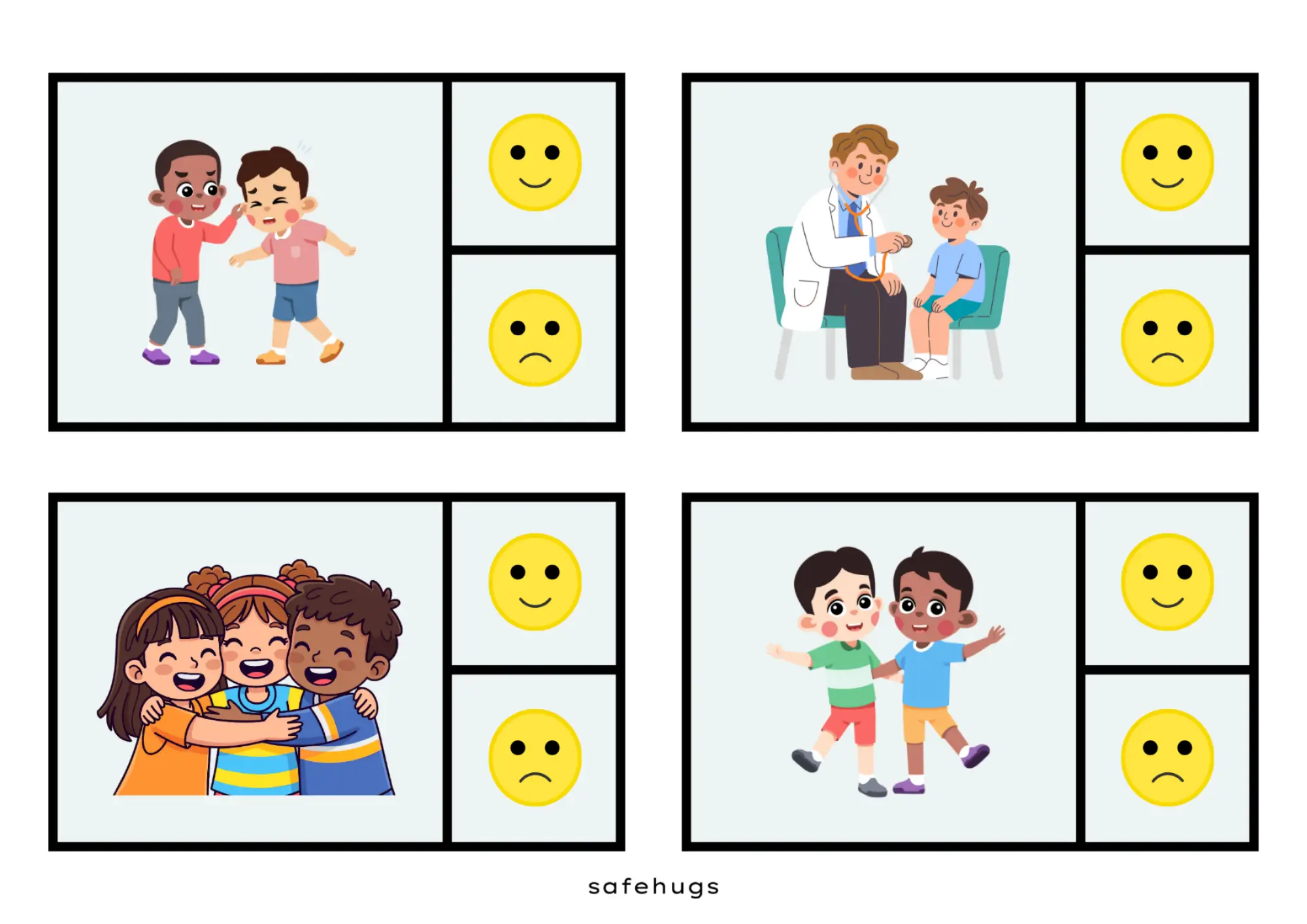
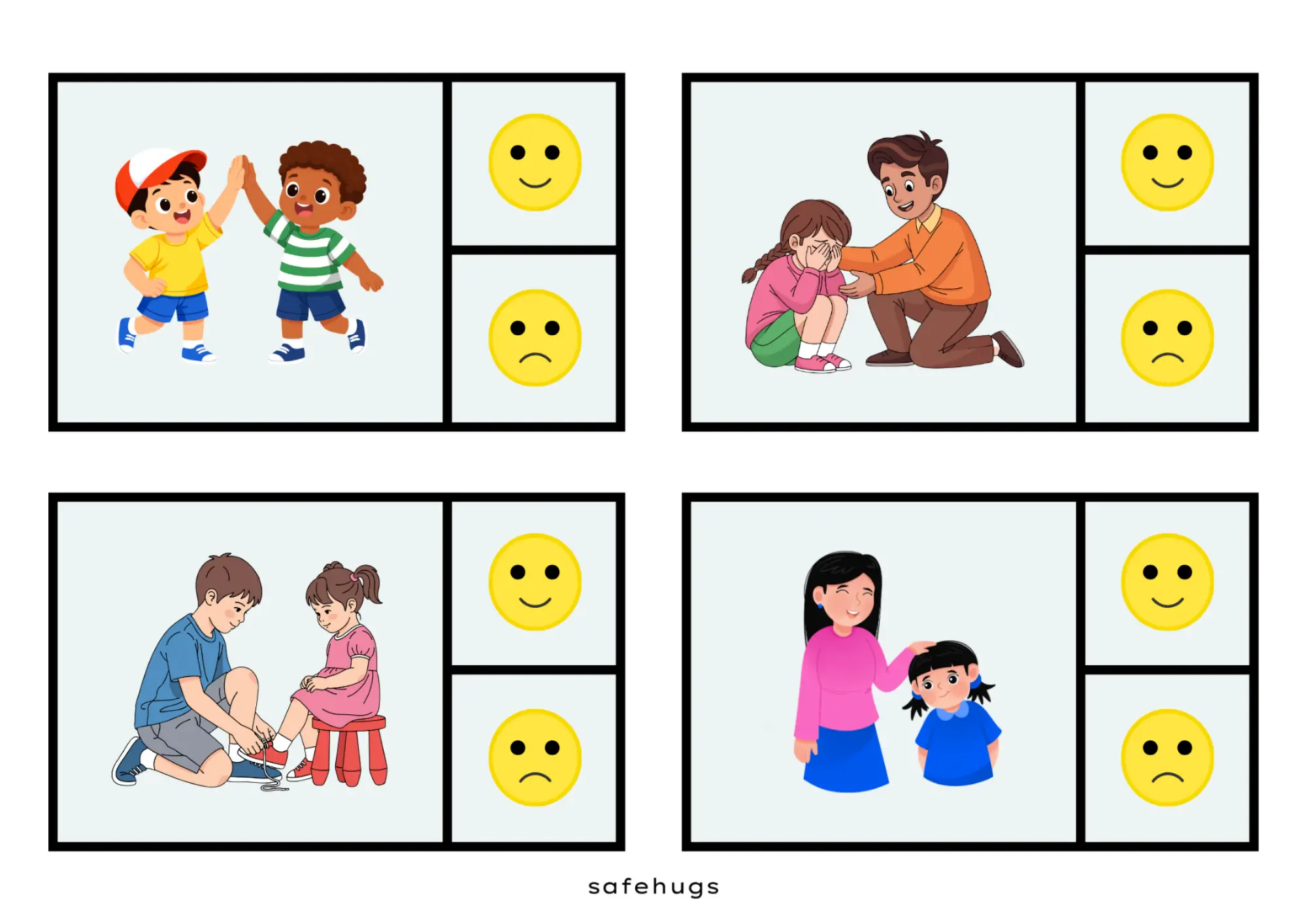
Worksheets and Teaching Resources
Look at each picture and circle the happy 😊 emoji if it shows a good (safe) touch, or the sad 😟 emoji if it shows a bad (unsafe) touch.
Takeaways
Teaching good touch bad touch is not a one-time lesson, but an ongoing conversation. What matters most is helping your child feel safe, heard, and confident to speak up. You may not always handle every situation perfectly, and setting boundaries can feel uncomfortable at times. But trusting your instinct and prioritizing your child’s comfort is what truly matters. In the end, it’s not just about teaching children, it’s about creating a safe, respectful environment where they know their body and their voice are important.
Related:
Check out our blog on "Healthy Snacks for Kids".
Check out our blog on "Bedtime Routines for Preschoolers (2-5 Years)".
Check out our blog on "Top Brain Foods for Toddlers & Growing Kids (0-10 Years)".
Check out our blog on "Best Immunity Boosting Foods for Kids".
Check out our blog on "Is Oats Safe for Babies?".