
Bedtime Routines for Preschoolers (2-5 Years) That Work
Table of Content
What's Actually Happening at Bedtime
How Much Sleep Do Preschoolers Need?
Steps to Create a Bedtime Routines for Preschoolers
A Realistic Bedtime Routines for Preschoolers
How to Handle Bedtime Struggles Without Power Struggles
Bedtime Do's and Don'ts for Preschoolers
Healthy Sleep Habits to Support Bedtime Routines
Bedtime routines for preschoolers are often seen as the key to better sleep, but for many parents, bedtime still feels like a daily challenge. One night goes smoothly, and the next feels long and exhausting, filled with frequent night waking, needing constant comfort, and a child who simply doesn't want to sleep. At the same time, sleep during the preschool years (ages 2-5) is essential for a child’s growth, behaviour, and learning. Quality sleep supports emotional regulation, improves attention, and helps children stay active and healthy throughout the day.
In everyday life, many parents face situations like:
children resisting bedtime even after following a routine
waking up multiple times during the night
needing constant comfort or a parent’s presence to fall asleep
late sleep timings gradually becoming a habit
These challenges are common, and they often make bedtime feel more difficult than expected.

Patterns Noticed by Moms (Real-Life Sleep Experiences)
When it comes to bedtime routines for preschoolers, one thing becomes very clear from real-life experiences, there is no one-size-fits-all formula. Looking at patterns across different families helps set more realistic expectations and builds confidence in what actually works over time.
Why Consistency Takes Time to Work
Many parents expect a bedtime routine to show results within a few days. In reality, consistency works slowly. Children need repeated exposure to the same signals, same time, same sequence, same environment, before their body and mind begin to associate it with sleep. It may take days or even weeks before you start seeing smoother bedtimes.
Earlier my baby used to sleep at 2-3 AM. It took me months of sticking to a routine to slowly shift it. Now he sleeps by 11:30 PM. Routine really is the key, but it takes time. - from our Mom Insider community
How Daytime Sleep Affects Night time Sleep
Daytime naps and activity levels play a major role in how easily a child falls asleep at night. Late or long naps, especially in the evening, can reduce sleep pressure, making bedtime more difficult. On the other hand, an overtired child can also struggle to settle down. Finding the right balance during the day often improves night time sleep.
I make sure my baby doesn’t nap after 5-6 PM. That one change helped improve night sleep a lot. Otherwise bedtime keeps getting pushed. - from our Mom Insider community
Why Some Children Resist Sleep Even with Routines
Even with a well-established routine, many preschoolers resist sleep. This is often linked to growing independence, curiosity, or the desire to stay engaged with their surroundings. Some children may delay bedtime with repeated requests, while others may need more reassurance. Resistance doesn’t always mean the routine isn’t working, it can be a normal part of development.
Even with a routine, my baby would cry as soon as bedtime started. Sometimes we had to change things or ‘trick’ her because she knew it meant sleep. - from our Mom Insider community
Every Child's Sleep Pattern Is Different
One of the most important patterns parents notice is that every child is different. Some children adapt quickly to routines, while others take longer. Sleep timing, duration, and habits can vary based on temperament, daily schedule, and developmental stage. What works for one child may not work for another, and that's completely normal.
Why Bedtime Routines for Preschoolers Are Important
Help children transition from an active day to a calm state, making it easier to fall asleep
Support physical growth through proper rest and hormone release
Aid brain development by improving memory and learning
Improve emotional regulation and reduce irritability
Enhance focus, attention, and daytime behaviour
Create a sense of security through predictability
Reduce anxiety and bedtime resistance
Encourage healthy, long-term sleep habits
What's Actually Happening at Bedtime
Bedtime is a transition where a child's body and mind need to shift from activity to rest. This doesn't always happen smoothly, which is why some children resist sleep, delay routines, or wake up frequently.
Overtired vs Under-tired Children
When a child is overtired, they may appear cranky, restless, or unusually active, making it harder for them to settle down and fall asleep. On the other hand, an under-tired child may not feel sleepy enough, leading to delays, playing at bedtime, or difficulty falling asleep. Maintaining a balance between daytime naps and activity helps improve night-time sleep.
Emotional Needs and Separation Anxiety
Many preschoolers need reassurance at bedtime. After a full day, being away from parents can feel uncomfortable, which may lead to requests for extra hugs, more stories, or calling out after lights are turned off. This is a normal need for comfort and security, not just an attempt to delay sleep.
Sleep Resistance and Growing Independence
At this stage, children are developing independence and often test boundaries. Bedtime can become a time where they ask for more time, delay routines, or refuse to sleep. This resistance is a normal part of development and does not always mean there is a problem with the routine.

How Much Sleep Do Preschoolers Need?
Preschoolers between the ages of 2 and 5 typically need 10 to 13 hours of sleep in a 24-hour period. This includes night-time sleep and, for some children, a daytime nap. As children grow closer to 4-5 years, many begin to reduce or stop daytime naps, shifting most of their sleep to night-time. It’s also important to look beyond just the number of hours and observe your child’s behaviour. A child who wakes up easily, stays energetic during the day, and falls asleep without much difficulty is likely getting enough rest. On the other hand, signs like irritability, frequent tantrums, difficulty concentrating, or trouble waking up may indicate that your child needs more sleep or a better sleep routine.
Ideal Bedtime for Preschoolers
Most children between the ages of 2 and 5 do best with an early and consistent bedtime that aligns with their natural sleep rhythm. In general, an ideal bedtime for preschoolers falls between 7:00 PM and 9:00 PM. This range allows children to get the recommended 10-13 hours of sleep, depending on their wake-up time and whether they take daytime naps.
The right bedtime for your child depends on a few factors. If your child wakes up early in the morning, they will need an earlier bedtime. If they take long or late naps during the day, bedtime may need to be adjusted slightly. The goal is to find a timing where your child falls asleep easily and wakes up feeling rested. Consistency matters more than the exact time. Keeping bedtime and wake-up time similar each day helps regulate your child’s internal clock, making sleep more predictable and easier over time.
Steps to Create a Bedtime Routines for Preschoolers
Set a Consistent Bedtime
Keeping the same bedtime every day helps regulate your child’s internal clock. Consistency makes it easier for children to understand when it is time to sleep.
Internal Clock - The body's internal clock is the natural system that controls sleep, wake-up times, hunger, energy levels, and other daily body functions. It is also called the body clock or circadian rhythm.
Wind Down Activities (30-60 Minutes Before Bed)
Engaging in calm activities before bed helps children relax. Quiet play, reading, or conversations can signal that it is time to slow down.
Limit Screen Time Before Sleep
Screens should be avoided at least one hour before bedtime, as they can interfere with sleep by making it harder for the body to relax.
Create a Calm and Sleep-Friendly Environment
A quiet, dimly lit, and comfortable room supports better sleep. Reducing noise and distractions helps children settle more easily.
Follow a Predictable Sequence
Repeating the same steps each night, such as brushing teeth, changing into night clothes, and reading a story, helps children know what to expect and prepares them for sleep.
End with a Comforting Activity
Finishing the routine with a calming activity, such as a short story, lullaby, or a few quiet moments together, helps children feel secure and ready to sleep.
A Realistic Bedtime Routines for Preschoolers
A bedtime routine works best when it follows a simple, predictable flow. Here's a practical example with time slots that you can adjust based on your child's schedule:
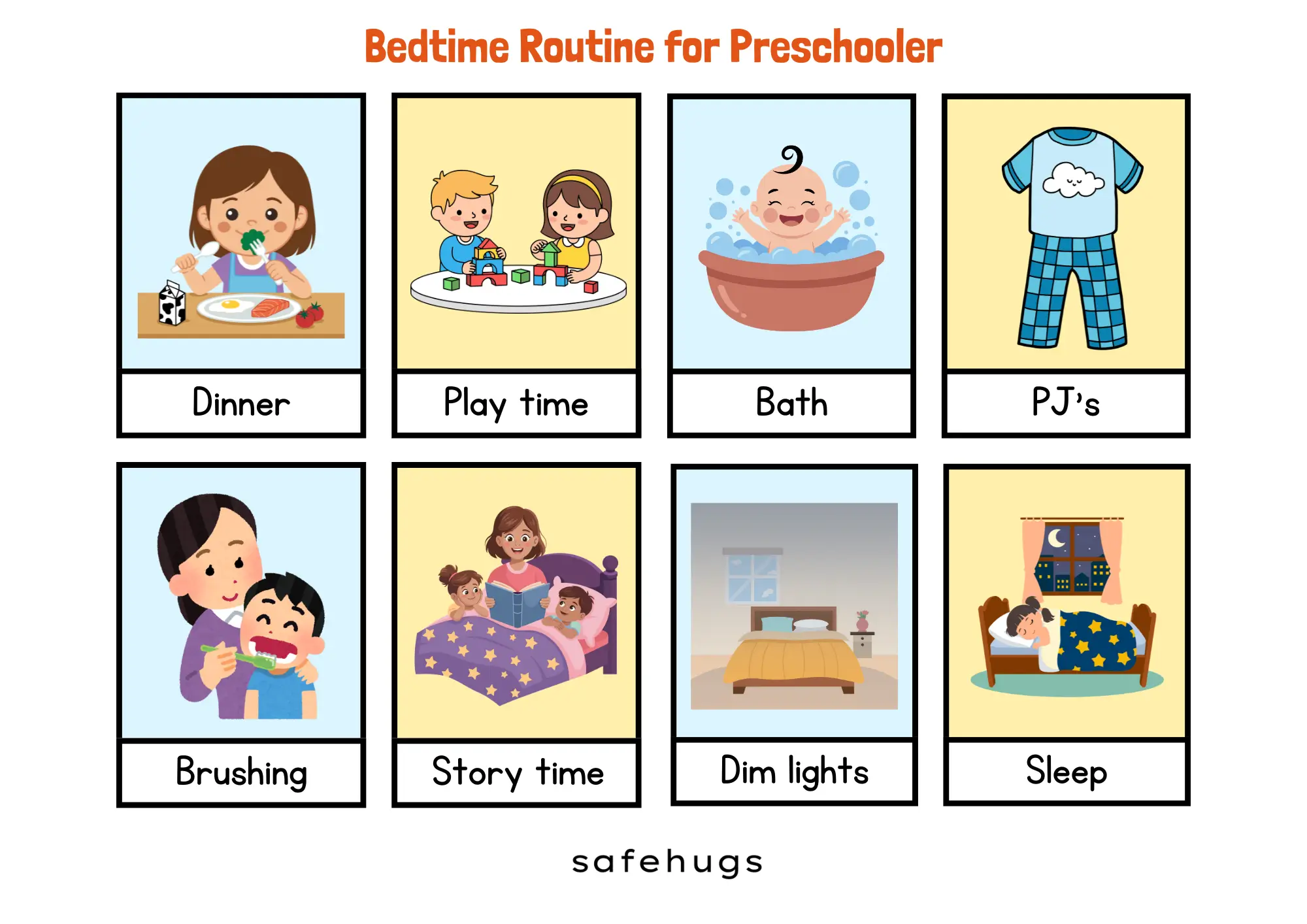
6:30 PM - Dinner
A light, balanced meal helps avoid hunger at bedtime. Try to finish dinner at least 1-1.5 hours before sleep so your child has enough time to digest. Avoid very heavy, sugary, or stimulating foods close to bedtime, as they can affect sleep.
7:00 PM - Quiet Play / Wind Down
This is the transition phase from activity to rest. Replace active play with calmer options like puzzles, colouring, building blocks, or simple conversations. Keeping this time relaxed helps the body and mind start slowing down naturally.
7:20 PM - Hygiene Time
Brushing teeth, washing up, and changing into night clothes signal that the day is ending. Keeping this step calm and predictable helps children understand what comes next without resistance.
7:30 PM - Calm Activity
This is one of the most important parts of the routine. Activities like reading a short story, singing a lullaby, or quiet bonding time with a parent create emotional comfort and security. Avoid screens or anything too stimulating during this time.
7:45 PM - Lights Dim + Settle in Bed
Dim the lights, reduce noise, and take your child to bed. A darker and quieter environment helps the body prepare for sleep. This step should feel calm and reassuring, not rushed.
8:00 PM - Sleep Time
Say goodnight and allow your child to fall asleep. Try to keep this timing consistent every day so the body clock adjusts naturally. Some children may fall asleep quickly, while others may take time, both are normal.
This is just a sample. The exact timing can shift based on your child's wake-up time, naps, and family routine.
Common Bedtime Problems (And Why They Happen)
Refusing to Go to Bed
Some children simply refuse bedtime, even when they are tired. This can happen when they want to continue playing, feel they are missing out, or are not ready to transition from activity to rest.
Asking for Repeated Delays (Water, Stories, etc.)
It is common for preschoolers to ask for extra water, more stories, or one last hug. These repeated requests are often ways to delay sleep or seek more attention and reassurance.
Fear of Darkness or Being Alone
Fear of the dark or being alone at night is common at this age. As children’s imagination develops, they may feel anxious or uncomfortable in a dark or quiet environment.
Waking Up at Night
Some children wake up during the night and may need help settling back to sleep. This can be due to habit, need for comfort, or changes in routine. Consistent responses can help them return to sleep more easily.
Many parents notice phases where sleep suddenly becomes difficult, even if everything was going well earlier. These phases are often temporary and can be linked to growth, development, or changes in routine. - from our Mom Insider community
How to Handle Bedtime Struggles Without Power Struggles
Staying calm and consistent. Children often pick up on stress and resistance. Staying calm, even when your child delays or resists, helps keep the situation from escalating. Consistency in your response each night builds trust and reduces confusion.
Setting clear and gentle boundaries. Simple, clear limits help children understand expectations. For example, deciding how many stories or how much time is allowed and sticking to it reduces repeated negotiations. Being gentle but firm helps avoid turning bedtime into a struggle.
Reassuring your child. Many children need reassurance at bedtime. Offering comfort through a short conversation, a hug, or staying nearby for a few minutes can help them feel secure. This reduces anxiety and makes it easier for them to settle down.
Building independent sleep habits gradually. Independent sleep does not happen overnight. Small steps, like reducing the amount of help over time or encouraging your child to fall asleep on their own, can build confidence. Gradual changes are more effective and less stressful for both the child and the parent.
Bedtime Do's and Don'ts for Preschoolers
What to Do for Better Sleep Habits
Keep bedtime consistent every day so your child’s body gets used to a regular sleep schedule. Follow a simple, predictable routine that includes calming activities like reading or quiet play. Create a comfortable sleep environment with dim lights and minimal noise. Encourage physical activity during the day so your child is naturally ready to rest at night. Stay calm and patient at bedtime, as your response helps your child feel secure.
What to Avoid Before Bedtime
Avoid screen time at least one hour before sleep, as it can make it harder for children to relax. Do not allow late or long naps in the evening, as they can delay bedtime. Avoid stimulating activities like active play, loud noise, or exciting games close to bedtime. Try not to change routines frequently, as inconsistency can confuse children. It is also best to avoid giving in to repeated delay requests, as this can turn into a habit over time.
Healthy Sleep Habits to Support Bedtime Routines
Building a consistent bedtime routine becomes easier when supported by healthy habits throughout the day. What children do during the day directly affects how well they sleep at night.
Importance of Physical Activity
Regular physical activity helps children use their energy in a healthy way, making it easier for them to feel naturally tired by bedtime. Active play during the day supports deeper and more restful sleep at night.
Exposure to Natural Light
Spending time in natural light, especially in the morning and early evening, helps regulate the body’s internal clock. This supports a more consistent sleep-wake cycle and makes it easier for children to fall asleep at night.
Balanced Meals and Daily Rhythm
Regular meal times and a predictable daily routine help the body maintain a steady rhythm. Eating balanced meals and avoiding heavy or sugary foods close to bedtime can support better sleep and make bedtime routines more effective.
When to Seek Help for Sleep Issues
Most sleep challenges in preschoolers are common and improve with time and consistency. However, there are situations where it may be helpful to seek guidance from a pediatrician or sleep specialist.
Persistent Sleep Struggles
If your child continues to resist bedtime, takes a very long time to fall asleep, or struggles with sleep despite a consistent routine over several weeks, it may need further attention.
Frequent Night Waking
Waking up occasionally is normal, but frequent night wakings that disrupt your child’s sleep (and yours) regularly may indicate an underlying issue or a pattern that needs support.
Signs of Possible Sleep Concerns
Look for signs such as loud snoring, breathing difficulties during sleep, extreme restlessness, or ongoing daytime tiredness and behavioural changes. These may require professional evaluation.
In Short
Bedtime routines for preschoolers are not about perfection but about creating a sense of comfort, predictability, and calm at the end of each day. With time, children adapt, and bedtime becomes easier and more manageable for both parents and children.
Related:
Check out our blog on "Best Immunity Boosting Foods for Kids".
Check out our blog on "Top Brain Foods for Toddlers & Growing Kids (0-10 Years)".
Check out our blog on "Good Touch Bad Touch".
Check out our blog on "Healthy Snacks for Kids".
Check out our blog on "Side Effects of Bottle Feeding".
Check out our blog on "When to Stop Waking Baby to Feed Overnight".