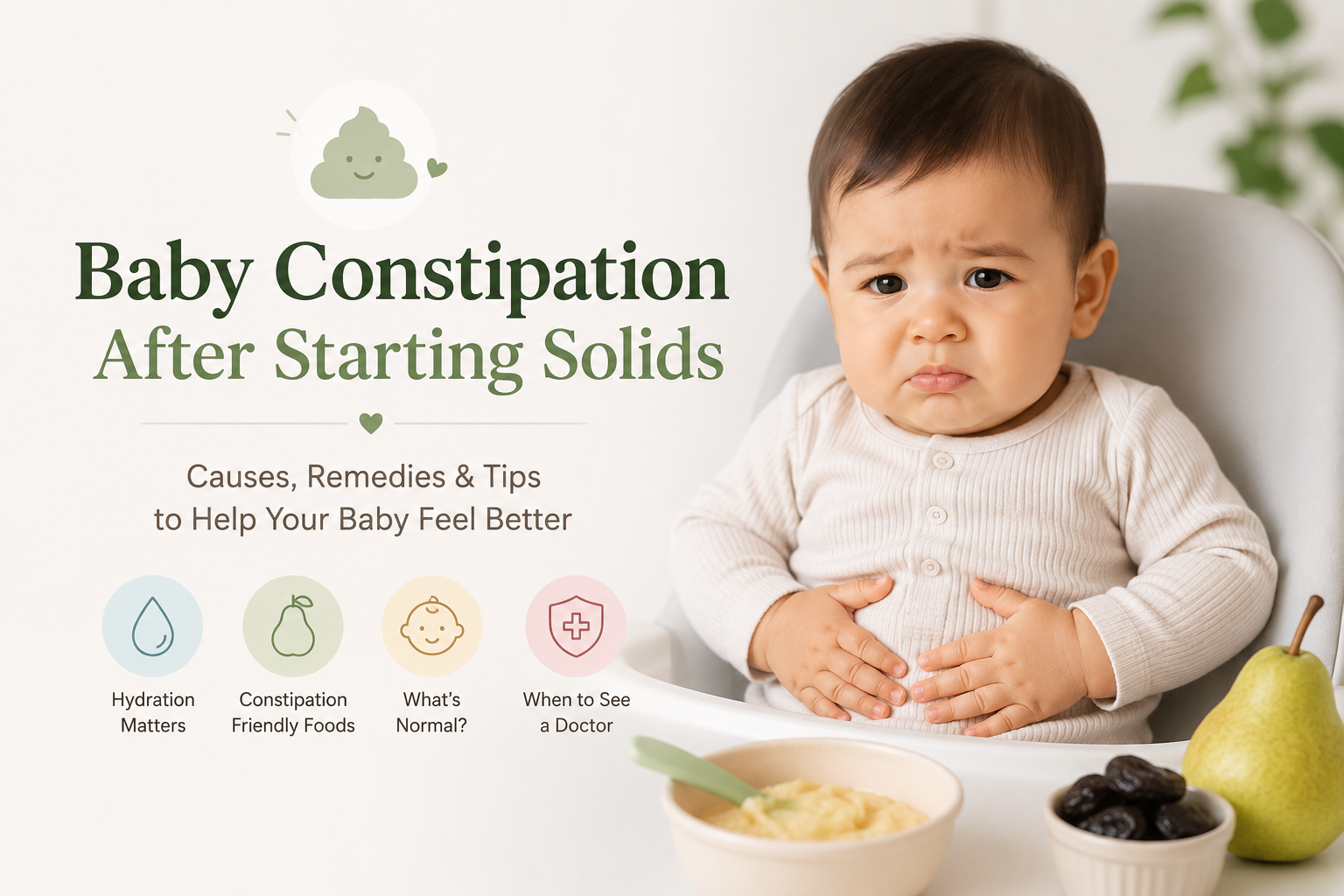
Baby Constipation After Starting Solids: Causes, Remedies & When to Worry
Many babies experience constipation after starting solids, especially between 6 and 8 months of age. This happens because their digestive system is adjusting from an all-liquid diet to foods that require more digestion. You may notice fewer bowel movements, harder stools, straining, or discomfort during pooping.
In most cases, constipation after starting solids is temporary and improves with adequate fluids, breastmilk or formula feeds, and constipation-friendly foods such as prunes, pears, papaya, and kiwi. While it can be concerning to see your baby struggle, occasional constipation during weaning is common and usually not a sign of a serious problem.
What Does “Constipation” Mean In Babies?
BLUF: Constipation in babies is more about stool consistency than how often they poop.
Constipation
Constipation occurs when stools become hard, dry, and difficult to pass, often causing discomfort or straining. This can be a temporary phase as your baby’s digestive system adjusts to solid foods.
Is It Normal For Babies To Get Constipated After Starting Solids?
BLUF: Yes, mild constipation during the transition to solids is extremely common.
A baby’s digestive system is designed to process breastmilk or formula. When solids are introduced, the gut suddenly has to break down more complex foods, absorb nutrients differently, and handle varying amounts of fiber. This transition can lead to harder stools, less frequent bowel movements, straining, and changes in stool color and smell.
- Harder stools
- Less frequent bowel movements
- Straining while pooping
- Changes in stool color and smell
Many parents notice constipation within the first few weeks of introducing solids. This is a natural part of your baby’s digestive system adapting to new foods.
Why Does Baby Constipation Happen After Starting Solids?
BLUF: The most common causes are dietary changes, lower fluid intake, and certain first foods.
1. Reduced Fluid Intake
When solids increase, some babies naturally drink less milk, reducing overall fluid intake. This can lead to harder stools as the body has less liquid to help soften them.
2. Low-Fiber Foods
Foods such as:
- Rice cereal
- Banana
- Cooked carrots
- Refined grains
may contribute to firmer stools in some babies. These foods are low in fiber and can slow down the digestive process, leading to constipation.
3. Digestive System Adjustment
Your baby’s gut is learning how to process different textures, proteins, and fibers. This adjustment period can cause temporary constipation as their body gets used to these new foods.
4. Insufficient Water
Once solids begin, pediatricians often recommend offering small sips of water alongside meals. Adequate hydration is crucial for preventing constipation in babies who are transitioning to solid foods.
Breastfed Babies And Constipation After Starting Solids
Even breastfed babies can experience constipation after starting solids. While breastmilk is a natural laxative, the addition of solid foods can disrupt this balance and lead to harder stools. This is especially common if your baby is eating more than usual or if you introduce new foods that are more likely to cause constipation.
What Foods Can Cause Constipation In Babies?
BLUF: Some first foods are more likely to firm up stools.
Potentially constipating foods include:
- Banana
- Rice cereal
- Cooked carrots
- White bread
- Excess dairy in older babies
- Excess processed snacks in toddlers
Every baby responds differently. A food that causes constipation in one child may be perfectly tolerated by another. It’s important to monitor your baby’s reaction to different foods and adjust their diet accordingly.
What Are The Best Foods For Baby Constipation Relief?
BLUF: Fruits containing natural sorbitol and fiber are often the most effective.
Prunes
Prunes are one of the most recommended foods for baby constipation. They contain natural fiber and sorbitol, which can help soften stools naturally.
- Natural fiber
- Sorbitol content
- Easy to puree
Pears
Pears are gentle on digestion and frequently recommended by pediatricians. They contain natural laxatives that can help ease constipation without causing discomfort.
Papaya
Papaya may help soften stools naturally, thanks to its digestive enzymes and fiber content.
Kiwi
Kiwi contains fiber and water that support bowel movements. It’s a great addition to your baby’s diet if they are constipated.
Dragon Fruit
Many parents report improved bowel movements after introducing dragon fruit. Its high water content can help keep stools soft and easy to pass.
Watermelon & Muskmelon
Hydrating fruits like watermelon and muskmelon can support digestion and soften stools, making them easier for your baby to pass.
How To Help A Baby With Constipation After Starting Solids
BLUF: Most babies improve with hydration, movement, and constipation-friendly foods.
Try these steps:
Offer Water
Small amounts of water can help support digestion. Encourage your baby to drink more fluids, especially if they are eating a lot of solids that might be harder on their system.
Continue Breastfeeding Or Formula
Milk remains the primary source of nutrition before age one. Ensure your baby continues to get enough breastmilk or formula in addition to solid foods.
Add Fiber-Rich Fruits
Incorporate fruits like:
- Pears
- Prunes
- Papaya
- Kiwi
These can help soften stools and make them easier to pass. Puree these fruits if your baby is younger or has difficulty swallowing whole pieces.
Encourage Movement
For younger babies:
- Bicycle legs
- Tummy time
- Gentle abdominal massage
Movement can help stimulate the digestive system and encourage regular bowel movements. Gently massaging your baby’s tummy in a clockwise direction can also be beneficial.
Monitor Food Triggers
Keep a simple food diary to identify foods that worsen symptoms. This will help you make informed decisions about what to include or exclude from your baby’s diet.
Should I Stop Solids If My Baby Is Constipated?
BLUF: Usually no. Adjust the diet rather than stopping solids completely.
Instead of stopping solids, try adjusting the types and amounts of foods your baby is eating. Continue to offer age-appropriate foods while increasing fluids and adding more fiber-rich fruits. Reducing foods that seem to worsen constipation can also be helpful.
Most babies simply need time for their digestive system to adapt. Be patient and monitor their progress closely, making adjustments as needed.
Baby Not Pooping For 3 Days After Starting Solids: Is That Normal?
BLUF: It can be normal if your baby remains comfortable and stools are soft when passed.
Call your pediatrician if:
- Stools are very hard
- Baby seems distressed
- Blood appears in stool
- Abdomen becomes swollen
- Feeding decreases significantly
Frequency alone is usually not the best indicator of constipation. Focus on your baby’s comfort and the consistency of their stools.
When Should You Call A Pediatrician?
BLUF: Seek medical advice when constipation causes significant discomfort or warning signs appear.
Contact your doctor if your baby has:
- Blood in stool
- Persistent vomiting
- Fever
- Significant abdominal swelling
- Weight loss
- Refusal to eat
- Severe pain during bowel movements
Final Thoughts
Constipation after starting solids is one of the most common concerns parents face during weaning. In most cases, it is temporary and improves as your baby’s digestive system adjusts to new foods.
Focus on hydration, continue milk feeds, introduce fiber-rich fruits, and monitor your baby’s comfort rather than obsessing over the exact number of bowel movements.
Remember: every baby’s poop schedule is different, but hard stools and discomfort are signs worth paying attention to. If you have any concerns, don’t hesitate to reach out to your pediatrician for guidance.